 Air defence architectures across the Asia-Pacific were designed around aircraft, cruise missiles and ballistic threats. The problem occupying planners today sits far below that: small uncrewed aircraft that cost a them, arrive in numbers, and increasingly operate beyond the reach of fraction of the systems built to stop conventional RF jamming.
The shift is recent and technical. Much of the counter-drone capability fielded over the past decade has centred on radio frequency detection and defeat. Locate the control link, disrupt it, and the aircraft falls. That logic held while drones were flown over radio. It holds far less well against an aircraft flown down a fibre optic spool, which offers no control link to find and none to jam. Add swarming behaviour, and the defender faces multiple simultaneous tracks with an effector set that may have no answer for several of them.
The implications extend well beyond the counter-drone community. ASELSAN sees the lowest tier of air defence as an increasingly critical layer, where most engagements now take place and where the cost exchange can be particularly challenging for the defender. This makes the ability to address low-altitude and low-cost threats an essential requirement for any modern air and missile defence architecture, rather than an auxiliary capability.
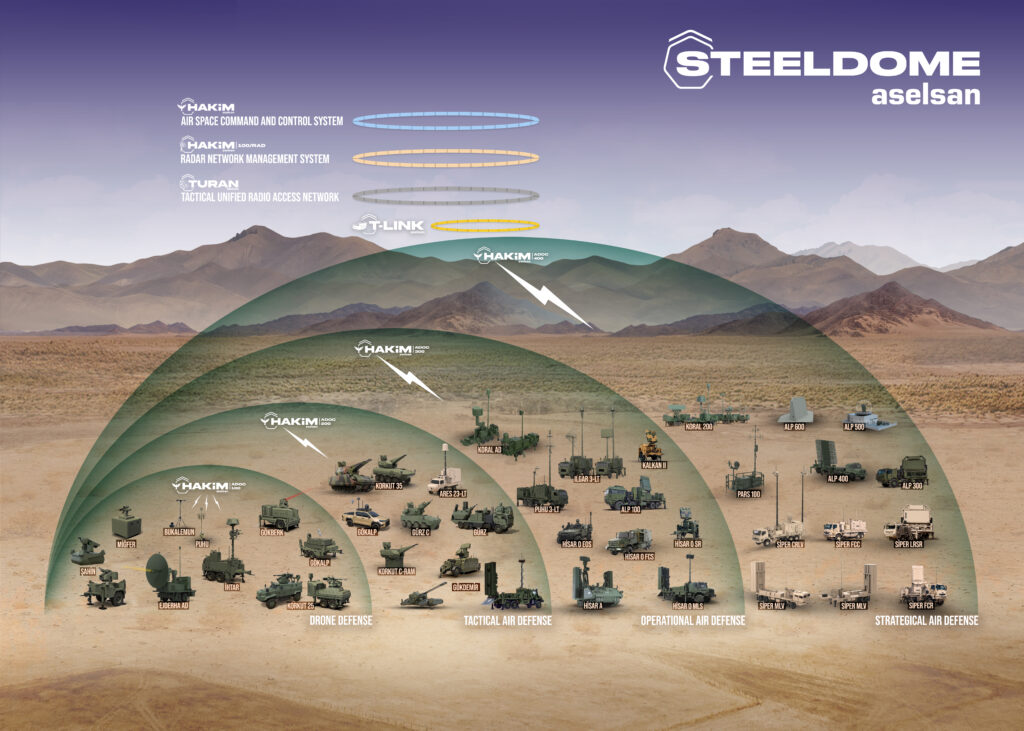
This approach is at the heart of Steel Dome, the integrated air and missile defence architecture developed by ASELSAN. Rather than bringing together individual systems after they have been developed, Steel Dome was designed from the outset as a single, layered architecture operating under a common command-and-control framework.
For ASELSAN, layering is an engineering requirement. No single effector optimised for one class of threat can effectively address the full spectrum of threats facing modern air defence. Steel Dome therefore brings together multiple effectors and sensors within a networked architecture, enabling the command layer to identify the most appropriate response and direct the available capability against each threat.
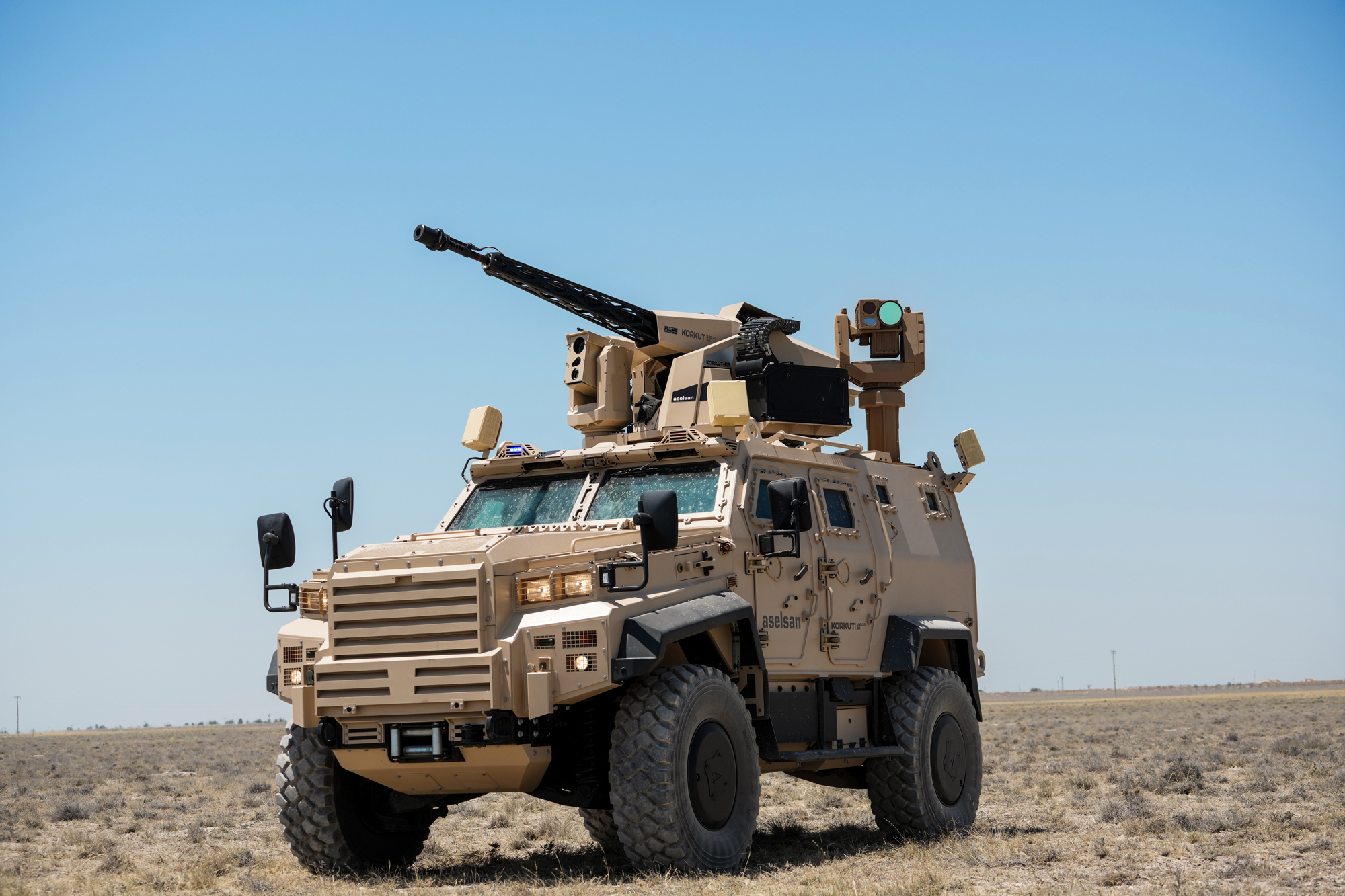
DRONEDEF is the innermost layer of ASELSAN’s Steel Dome architecture, dedicated to mini and micro uncrewed aircraft. Detection and command and control are provided by İHTAR, combining AESA radar with electro-optics and radio frequency detection and jamming. Effectors range from programmable airburst gun systems such as KORKUT 25 through to directed energy systems such as GÖKBERK.
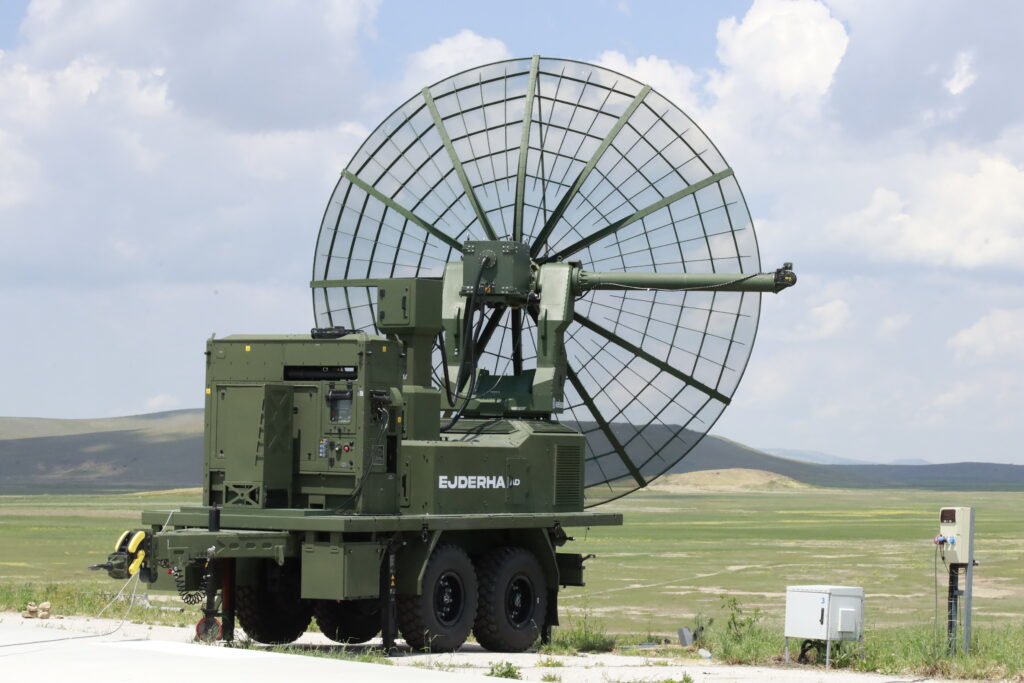
The layer was exercised in June, when ASELSAN ran a controlled two-day demonstration in Ankara before delegations from twenty countries. The scenario was built around threat type rather than product sequence. Two fibre optically controlled drones approached in swarm formation and were assigned to the EJDERHA high power electromagnetic system, which neutralised both. Two wirelessly controlled aircraft followed on separate axes and were defeated by İHTAR‘s soft kill, the appropriate effect in that case because a control link existed to attack. A final fibre optic target was engaged and destroyed by the GÖKBERK laser.
The two directed energy effects solve different problems. EJDERHA AD 200 acts on the drone’s onboard electronics, so the effect does not depend on the presence of a radio frequency control link, and the system can operate in either a fixed narrow beam or a broader scanning mode. GÖKBERK provides a precise engagement option where limiting fragmentation effects is important. Neither replaces the other, and neither replaces kinetic effect entirely.
Australia has committed up to seven billion dollars to counter-small uncrewed aerial systems over the next decade under its Integrated Investment Program. With an integration partner and a command-and-control system already selected, the question is becoming more specific: what should be added to the effector layer as the threat evolves?
This layered approach also defines what ASELSAN brings to the Australian market. Its offering centres on a set of effects proven within a layered architecture, designed to be tasked rather than to command, and positioned alongside the domestic industry already delivering into Australia’s programs. ASELSAN brings the effects, while seeking to build the broader capability locally with Australian partners, particularly in integration and sustainment.
This approach builds on ASELSAN’s experience of operating within established allied defence architectures. The company has previously supplied Mode 5 identification friend or foe equipment to NATO air defence units under a Support and Procurement Agency framework contract, demonstrating its ability to integrate its capabilities into multinational defence structures.
ASELSAN will display DRONEDEF at Land Forces 2026 in Perth
from 6 to 8 October, at Booth 1G03.
For Editorial Inquiries Contact:
Editor Kym Bergmann at [email protected]
For Advertising Inquiries Contact:
Group Sales Director Simon Hadfield at [email protected]