Infantry Fighting Vehicle turret selection a complex business

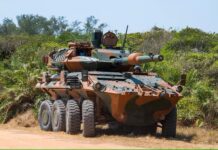
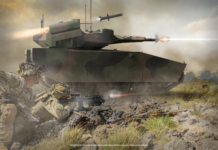
One of the surprising capability choices made by Army for LAND 400 Phase 3 is to persevere with an inhabited turret – something that experts say is already at the point of obsolescence because of rapid advances in technology. The situation is compounded by the time line for the project, which means vehicles will not start to enter service until the middle of the decade. Nevertheless, the contenders Rheinmetall and Hanwha are both offering solutions designed to meet Army’s requirements for lethality and survivability.

The selection of a turret is no trivial matter because it contains all of the weapons for the IFV and the majority of its sensors. Typically it is also a major cost driver, representing more than 25% of the price of the vehicle. Both bidders are offering a two-person turret with weapons specified by the Army and there are noticeable differences between…

Read more in the current issue of APDR (Free to read with registration or via Facebook/Linkedin): https://venturaapdr.partica.online/apdr/apdr-march-2020/features/infantry-fighting-vehicle-turret-selection-a-complex-business

 

Previous articleMore Attack-class submarine contracts announced
Next articleAPDR March 2020: Future Infantry Fighting Vehicles to pack a punch
Kym Bergmann
Kym Bergmann has more than 35 years of experience in journalism and Australian and international defence industry. After graduating with Honors from the Australian National University, he joined Capital 7 television, holding several positions including foreign news editor and chief political correspondent. After 2 years on the staff of a Federal Minister, he moved to the defence sector and held senior positions in several companies, including Blohm+Voss, Thales, Celsius and Saab. In 1997 he was one of 2 Australians selected for the Thomson CSF 'Preparation for Senior Management' MBA course, the other being Chris Jenkins - formerly the CEO of Thales Australia. He has also worked as a consultant for a number of companies, including Raytheon, Tenix (now part of BAES) and Martin Marrietta (now part of Lockheed Martin). He had several board appointments, including Thomson Sintra Pacific (1994 - 96) and Saab Pacific (1998 - 2003). He retains good personal links with senior figures in Government, as well as in industry and the media. He decided to return to journalism in May 2008, and holds the position of editor for Asia Pacific Defence Reporter (APDR) and Defence Review Asia (DRA). He is also a podcaster and commentator on defence and national security issues.

LEAVE A REPLY

Please enter your comment!
Please enter your name here