



 The U.S. is continuing to demonstrate its unreliability as a security partner on an almost daily basis – something our politicians and Defence officials refuse to acknowledge is happening. Latest pieces of idiocy include Donald Trump’s decision to try to rename Lake Ontario to Lake America as a deliberate and childish insult to Canada.
More disturbingly, a Pentagon report has been leaked saying the US plans to recognise Argentina’s claim over the Falkland Islands if the UK doesn’t increase Defence spending to 5% of GDP – an outrageous piece of blackmail.
In Australia, the Saturday by-election for the WA seat of Secret Harbour has seen the election of a One Nation candidate with a massive 18% swing against Labor. Normally, State by-elections aren’t hugely consequential for Federal governments – but this one might have national security implications.
Just five days before the vote the Federal government announced a massive $12 billion investment (out of a total of $25 billion) in the nearby Henderson maritime precinct. Rather than impress voters, this huge infrastructure spend might have had the opposite effect.
Also, Defence Minister Richard Marles has left for yet another visit to the US and UK spruiking complete nonsense about the strength of the relationship with Washington. He is unable to see what everyone else can – and that is the US is unravelling further almost every day.
To listen to the podcast, click here.

For Editorial Inquiries Contact:
Editor Kym Bergmann at [email protected]
For Advertising Inquiries Contact:
Group Sales Director Simon Hadfield at [email protected]


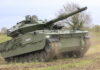


In other news, Sweden will phase out its land-based NH90s from 2027, citing poor availability and high sustainment costs:
https://theaviationist.com/2026/08/27/sweden-phasing-out-nh90-tth-by-2027/#deny
Sweden joins Australia, Norway and Belgium in truncating or cancelling their NH90 programs.
Qatar lost an aircraft in March, killing 7, apparently due to a technical malfunction. Weirdly there has been no open release of the aircraft type, but assumed to be an NH90:
https://www.globalmilitary.net/air_forces/events/202603-566/
Do you know if any of the other disgruntled users have destroyed their entire fleet in less than 2 months to sell some spares and bury everything else?
The Airbus NH90 fleet surpasses 500,000 flight hours with upgrades and support contracts extending service life to 50 years into the 2080s.
Indeed. And New Zealand has just marked the milestone of 3,000 hours of NH90 operations.
The total cumulative in-service time across the entire global NH90 fleet is approximately 5,200 to 5,800 ‘in-service years’.
This calculation uses mathematical midpoints for each age bracket across the ~530 active operational aircraft:
15+ Years Bracket: ~60 aircraft × 17.5-year average = 1,050 years
10–15 Years Bracket: ~240 aircraft × 12.5-year average = 3,000 years
5–10 Years Bracket: ~150 aircraft × 7.5-year average = 1,125 years
Under 5 Years Bracket: ~80 aircraft × 2.5-year average = 200 years.
The global NH90 fleet recently surpassed 500,000 total flight hours. Dividing those 500,000 flight hours by the ~5,400 cumulative in-service years means that on average, an individual NH90 flies roughly 92 hours per year.
If an RNZAF aircraft has managed approximately 200 hrs a year for 15 years, that is great, but bear in mind your average Black Hawk achieves 250 hrs or more a year in military service, and most civilian rotorcraft operators expect 500-600 hrs a year from their aircraft in commercial service.
But comparison is the thief of joy. 500,000hrs is a great milestone for the NH90 fleet.
I appreciate the analysis. One of the things I learned when researching this is NH90 (Taipan) flight hours are measured when the thing is in the air – duh – a computerised weight-off-wheels measurement. This in turn is data from the fully digital flight control computers. However, for a Black Hawk it is always measured from when a mission starts and ends. So all that time that a Black Hawk is sitting on the ground with its engines on and blades rotating is classified as “flight time”.
This is an apples and oranges comparison. If the two helicopters were conducting an identical mission, the flight time for an NH90 might be 60 minutes – but the flight time for a Black Hawk would be counted as two hours because it counts in all the time its engines are running. A clearer example is when the flight crew are doing their pre-flight checks. For a Black Hawk this is counted as part of a flight hour. For an NH90 it isn’t because the helicopter isn’t actually in flight.
It would be fair to say that the level of local consultation regarding Henderson and the basing decisions of SSNs at HMAS Stirling has been very close to zero.
No, but I know the RNZAF has elected to buy MH-60R.
That’s no surprise given their overwhelming desire for commonality with Australia. What I learned from the entire sorry Taipan saga – as you might recall from our discussions – is that support arrangements can be quite complex and it is not simply a matter of blaming the helicopter. If Australia had thrown as much money at Taipan as we are now doing with Black Hawk (a much simpler machine) the story might have been quite different.
Anyway, Army got the result that they wanted and I hope they are happy with a robust, simpler helicopter that has far less endurance and can’t fly in bad weather. But it’s what the Americans use and that seems to be more important than anything else.
exactly. However, how long are the US going to use it? The U.S. Army has selected the Bell V-280 Valor to replace the UH-60 Black Hawk helicopter, with plans for the new aircraft to enter service by the mid-2030s
Hey Google, how long does the US Army plan to operate UH-60M?
“The Army expects to fly the M-model past 2050, more than 44 years after its 2006 introduction.
Broader UH-60 family operations may stretch even further into the 2070s.”
Thanks Google!
Hey Google – when will Black Hawk production end? It was to be 2027 but now looks stretched to 2032 while the US Army investigates a number of uncrewed technology alternatives.
There are still plenty of Boeing 707s flying and production stopped in 1991. Would you buy a new one today? Well, obviously not because they are no longer being built – but more importantly, they have been superseded by much more modern airframes.
That’s one way to look at it. The situation was certainly complicated.
I thought you might be interested in what was happening in the global fleet given your previous interest in the program.
Thanks John – I certainly am, and please keep up the flow of information when you can. It’s a complex and cautionary tale. Some users – France, Germany, Italy and Spain – are delighted with the performance they are getting. I used to speak with the French very regularly. So I think the quick breakdown is 90% of users happy, 10% unhappy and have retired (or destroyed) their fleets.
In December last year Spain ordered another 31 NH90s; earlier in the year the Netherlands bought another three. A couple of months ago France started taking delivery of 18 NH90 Block 2 helicopters for Special Forces use and I’m told they are extremely happy with the day / night all weather capability they are getting. One day I might write about Australia’s SF requirement and the role that also played in the destruction of Taipan – after the besmirching of its reputation.
Without relitigating what has been a couple of years of generally productive discussion on the topic, by 2018 – and involving a big effort on the part of Army, CASG and Airbus – availability of the Taipan fleet had reached 80%. Same for Tiger. But then it was all thrown away, which I still regard as an enormous waste.
But, as I write, the senior ranks in Army achieved what they wanted. The politicians were too stupid and indifferent to what was taking place under their noses. If the $3 billion we are spending on acquiring new Black Hawks (a fine helicopter) had instead been spent supporting the Taipan fleet they would probably still be flying in 2060.
My question regarding UH-60M’s is what happened to the equipment they were supposed to be equipped with? DSCA transmittal 22-51 has Blackhawks fitted with Colour Weather Radar, MX-10D EO/IR pod and full EWSP suite amongst other devices. Yet the aircraft delivered so far are not fitted with any of these devices? This list was published in 2021 when the former government first announced the programme, did the current government cancel these capabilities?
I have been asking these exact questions and the answer I continue to receive from Defence & Army is it will happen “in the future.” I’m starting to get the sneaking suspicion that someone is lying – not for the first time.
“So all that time that a Black Hawk is sitting on the ground with its engines on and blades rotating is classified as “flight time” / “ A clearer example is when the flight crew are doing their pre-flight checks. For a Black Hawk this is counted as part of a flight hour.”
That is not quite true. For most aircraft, airframe hours are logged when the aircraft starts moving. In a skidded helicopter, this means first lift off, in a wheeled helo it means first brake release and ground taxi. The run-up and pre flight checks are not logged as flight hours or airframe hours in any aircraft.
The median flight duration in a helicopter like the NH90 is about 2 hrs, with operational flights lasting much longer, with rotors-turning (hot) refuelling. In a 2hr flight, with no refuel, an NH90 might log 1h 45, if there were several intermediate landings, or 1h 55 if it was just a straight transit. A Black Hawk would log 2 hrs in either case.
A very long mission, like an ASW mission, or a logistics resupply task across multiple LZs might last 8 hrs. In this mission, an NH90 might need to refuel twice, and reload 6 times, for a total time on ground of 90 minutes. It would log 6h 30. A Black Hawk would refuel three or four times, spend the same time on the ground reloading, and would log 8 hrs.
So the un-logged hours per mission range from about 15 minutes in a 2 hr mission =12.5%, to 90 mins on an 8 hr mission = 18.75% at most. Longer operational flights with multiple landings are much rarer, but for the sake of argument, let’s assume the NH90 is actually flying for 17.5% longer than the equivalent traditional cargo aircraft on any given mission to allow a comparison with Black Hawk or Puma or Mi-17 or whatever.
So now the NH90 flies 92 hrs + 17.5% = 108.1hrs a year. Let’s be generous and round it up to 112.5 hrs a year. What explains the fact that Black Hawk now ‘only’ flies twice as much per aircraft per year? Could it be what the Belgians, Swedes and Norwegians cited as their reason for terminating their NH90 program?
Thanks for the additional information / analysis. I’ve probably gathered enough over the course of a few years to be able to write a decent book,
You might be able to clarify: if during a mission such as landing troops somewhere and then waiting for them with the engines running, for an NH90 that time on the ground is not counted as flight time, but for a Black Hawk it is.
We all agree that an NH90 is more complicated and therefore more expensive to maintain than a Black Hawk. Apparently most users think the extra all weather performce is worth it, a few do not. Australia is unique in that in secrecy – and at unprecedented speed – we destroyed the entire fleet.
I haven’t done a thorough analysis of the unhappy customers but I do recall a few things. Norway went for the ASW variant but then added their own dipping sonar and lightweight torpedo. I’m told the integration issues were massive and led (not unexpectedly) to a lot of finger-pointing and mutual recrimination.
The Swedes for reasons known only to themselves, insisted that the ceiling of the already generous cabin be raised a further 10cm, or something like that. By the way, the Swedes are continuing to fly their nine NH90s until they are phased out in a year or two. The Naval versions will continue to operate their other nine NH90s until their natural end of life of type.
Belgium only has eight NH90s – with four in the troop transport version and four in the naval configuration. I imagine that supporting such a small mixed fleet would not be easy. Instead, Belgium is getting 15 Airbus H145Ms – the militarised version of the very popular civilian H145, which was a top contender for Australia’s Special Forces requirement until the entire program was scrapped.
“if during a mission such as landing troops somewhere and then waiting for them with the engines running, for an NH90 that time on the ground is not counted as flight time, but for a Black Hawk it is.” That is correct.
But it is very rare for that time on the ground to even approach 20% of flight time. The examples I gave are based on real usage profiles; the difference will practically never get above 15% fleet-wide.
The problems that have led to program cancellation by AS, NO, BEL and SWE are also experienced by every other user; this can be revealed by a simple google search along the lines of “which NH90 users have reported problems or difficulties with the aircraft”.
The NH90, as good as it is, takes twice the maintenance effort and three times the cost to sustain compared to its competitors. This is revealed in the hrs/acft/yr metric I posted above.
If 10 of the 14 NH90 customers are prepared to endure this, that’s great. But the four users who have terminated their program did so for a reason.
Things must’ve changed. When I first learnt to fly the navigation laws stated the flight time was when the rotors were first started until the rotors were stopped at the end of flight on the ground. However, laws can change, and it’s been many years since I had anything to do with it all
And I must admit, I did not know that the air frame time was measured differently
The NH90 and other very modern aircraft have Health Usage Monitoring (HUMS), which are designed to reduce maintenance demand by allowing engineers to focus only on components that are likely to fail – based on vibration, temperature and other parameters. The way NH90 logs flight hours is part of that philosophy. Other aircraft assume a certain amount of time on the ground per flight hour to predict maintenance requirements. Many engines and gearboxes have their own usage counters, logging time separate from flight hours.
Maybe logging hours was you describe it reflected the demands of actually having to fly that rotor, regardless of whether the aircraft is airborne? It would be interesting to know how maintenance hrs as opposed to flight time were recorded for your aircraft.
John – you might be able to clear up another point of contention. I have it from several sources that the Defence support system could never aggregate calendar based maintenance and hourly-based component maintenance. So if an NH90 came in for a 6 monthly check and the gearbox (or whatever) had done 296 hours out of 300, rather than doing everything at the same time the helicopter had to depart, fly the further 4 hours and then come back for a gearbox overhaul. Does that sound plausible?
I’m also told that the Army and RAN systems were so stovepiped that if one service urgently needed a part and the other service had an abundance of them it made no difference. The service wanting the spare had to go back to the OEM (with all the inherent delays involved in that) because the paperwork involved in some sort of service-to-service transfer had never been put in place. This particularly disadvantaged Navy with their small fleet of 6 Taipans that had a woeful availability rate of around 30%.
The date-based vs hours-based based servicing issue was real, but not as you describe. The parts sharing / stovepipe issue is not real.
The ADF could have been more efficient in the way the planned and conducted maintenance – but this would have been at the expense of operational predictability. From my recollection of visits reports, a large part of the RNZAF’s high levels of serviceability can be attributed to them planning their flying around their servicing, and trying to avoid operational commitments when the aircraft wouldn’t be available. The ADF and most other users attempted to generate aircraft for a specific level of operational readiness, meaning they conduct maintenance to ensure they can deploy with a certain number aircraft with a certain number of hours clear of major servicing. This usually entails doing servicing earlier than they would otherwise be required in the ideal situation – meaning more maintenance than the theoretical minimum (notwithstanding penalty maintenance for unscheduled unserviceability).
Army and RAN used the same pool of spares, provided by the same engineering agency – Airbus – which was contracted to Defence as the Authorised Engineering Organisation. Army and RAN regularly shipped parts between operational bases. If there ever was a situation where Airbus went back to Europe on behalf of the ADF for spares that were already “in the system” it would have been because the spares were on a ship, or quarantined for an imminent embarkation or other deployment.
There was only one sustainment office, which reported to CA as the Capability Manager. CA was also responsible to support 808 SQN. There was no ‘stovepipe’, and so no withholding of spares between services as you describe. If Navy didn’t get something, it would have been because the overall system demand (Army + Navy) exceeded system capacity at that time, and a priority call had to be made. This affected both services.
Many thanks – that’s extremely useful additional data. I’m still puzzled why RAN Taipan availability was much lower than what Amy was achieving.
Hey Google – when will Black Hawk production end?
“Production of the Sikorsky UH-60 Black Hawk helicopter is currently projected to officially end in 2032.
While assembly lines in Stratford, Connecticut are expected to fall silent in the early 2032 window, the Army is actively studying midlife modernization efforts to keep its existing fleet operational past 2050”
Google also told me that civilian 707s were produced from 1956 to 1978; 22 years!. Military variants were produced from 1978 to 1991; 13 years.
Coincidentally the US Army’s first Black Hawk was also delivered in 1978. It’s quite remarkable that they will still be in production 54 years later, and in service potentially for 90 years.