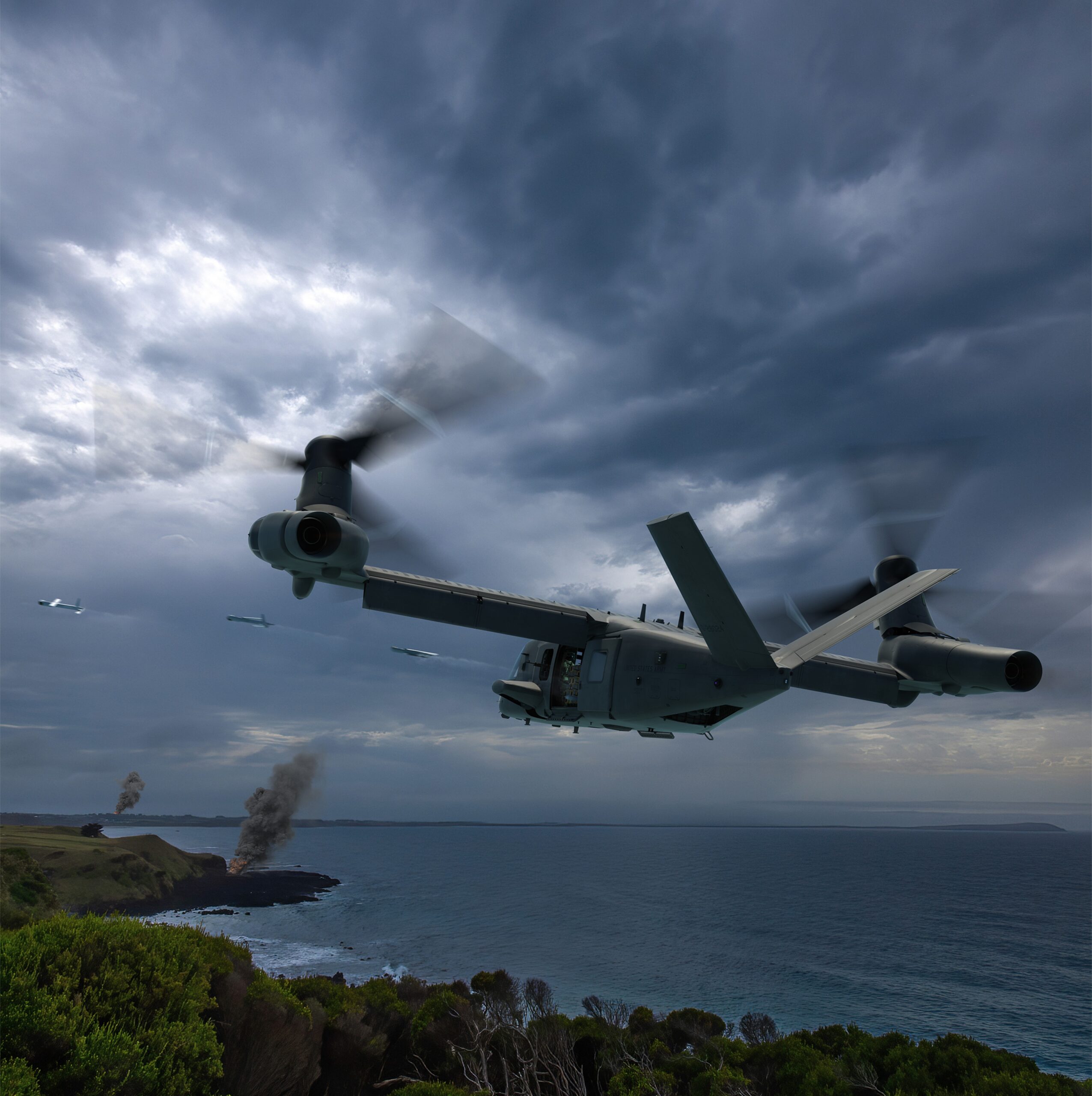
 Bell Textron announced that the U.S. Army officially designated the MV-75 as the Cheyenne II. Consistent with the U.S. Army tradition of honouring Native American tribes, the MV-75 honors the heritage of the Cheyenne Tribes, two federally recognised nations: the Northern Cheyenne Tribe in Montana and the Cheyenne & Arapaho Tribes in Oklahoma.
In 2025, the Army revealed the Mission Design Series (MDS) MV-75. The “MV” signals that it is a multi-mission vertical takeoff aircraft and the “75” commemorates the U.S. Army’s founding year, 1775. While the MDS honors the Army’s origin, the common name, Cheyenne II, honors the Cheyenne Tribes and their enduring legacy.
“In naming the MV-75 Cheyenne II, we honor the enduring contributions of the Cheyenne people to our Nation – both their distinguished service in uniform and their legacy as steadfast protectors of their way of life, said COL Jeffrey Poquette, Project Manager, FLRAA. “The name also reflects a connection to the bold vision of the AH-56 Cheyenne, while ‘II’ signifies a new era of innovation and capability. It is a name that pays tribute to an indomitable warrior spirit and signals a decisive step forward for Army aviation.”
Throughout their history, the Cheyenne demonstrated remarkable adaptability, resilience, and determination in the face of shifting environments and external pressures. As the Cheyenne relocated multiple times due to threats from rival nations and westward expansion, they developed new skills, reorganized their communities, and remained agile in rapidly changing conditions.
The MV‑75 Cheyenne II reflects these same qualities. With its speed, range, lethality, and multi-mission adaptability, the Cheyenne II provides commanders with rapid options to mass combat power while reducing exposure in contested environments. Its Modular Open Systems Approach (MOSA) ensures the platform can evolve with the demands of the modern battlefield.
The Cheyenne developed a strong warrior ethos defined by courage, discipline, and an unwavering commitment to protecting their people. Their warriors were celebrated for strength, endurance, and steadfastness in harsh conditions. The MV-75 Cheyenne II brings increased lethality to the Army, enabling commanders to have more options against adversaries to overwhelm them in battle. Its endurance enables the Army to operate at vast distances outside of the densest threat rings. A capability unavailable to them with current rotorcraft.
With its new name, the MV-75 represents two distinct groups of warriors – the U.S. Army and the Cheyenne tribes. Both share a heritage of skill, confidence, and commitment to the mission. The MV‑75 Cheyenne II embodies these values as it becomes the centerpiece of the Army’s long‑range air assault mission.
“Bell is proud that the MV-75 carries the name of the Cheyenne Tribes as we revolutionize Army Aviation. The Cheyenne heritage represents everything that the MV-75 will bring to the future fight,” said Ryan Ehinger, senior vice president & program director, FLRAA, Bell. “This is a significant milestone that comes right as we are accelerating assembly and production to deliver the MV-75 capability to warfighters faster.”
Bell and the Army remain on schedule as the team advances toward the delivery of the first test aircraft. Assigning an official name demonstrates the shared commitment to fieldling this critical next generation capability.
Bell Textron establishes entity in Ukraine
Bell Textron announced its formation of a subsidiary in Ukraine and plans to open a dedicated office as part of its long-term approach to industrial cooperation in the country. The new subsidiary, named Bell Textron Ukraine, will serve as the hub for Bell’s activities in Ukraine, with a permanent office location yet to be confirmed. It will support Bell’s planned and future activities in Ukraine focused on helicopter assembly, maintenance, and repair. The announcement follows the signing of Letters of Intent in October between Bell Textron and Ukraine’s Ministry of Economy, Ecology and Agriculture to explore areas of cooperation.
“This is a meaningful step toward building a practical, mutually beneficial cooperation with the Ukraine defense and industrial base,” said Jeffrey Schloesser, senior vice president of Strategic Pursuits, Bell. “Bell is committed to establishing a presence in Ukraine to promote collaboration and long-term growth.”
Bell Textron is a global provider of commercial and military aircraft. Its H-1 platforms, including the Bell AH-1Z Viper and Bell UH-1Y Venom, are designed to operate seamlessly together, offering high parts commonality and operational flexibility. The company sees strong potential for these aircraft to support Ukraine’s defense capabilities while forming the foundation of a lasting industrial partnership.

For Editorial Inquiries Contact:
Editor Kym Bergmann at [email protected]
For Advertising Inquiries Contact:
Group Sales Director Simon Hadfield at [email protected]