
GE Aerospace will supply LM2500+G4 gas turbines to S. Korean Navy
GE Aerospace wins Defense Innovation Unit deal for HyCAT program
By APDR
•Sep 3, 2026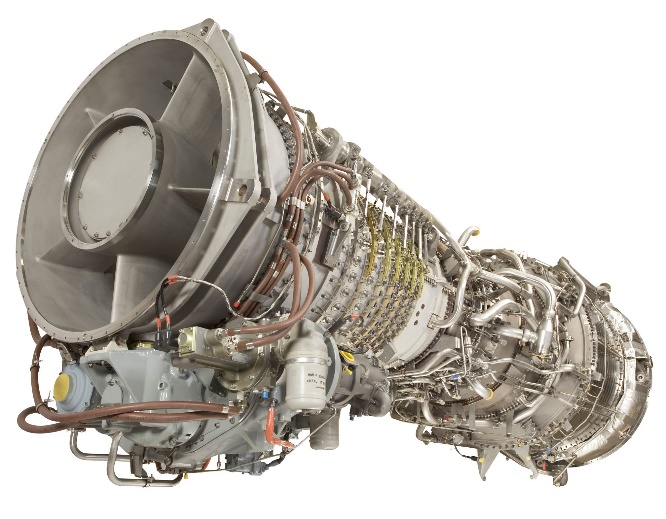
GE Aerospace will supply 12 LM2500+G4 marine gas turbine engines to power six ships of the Republic of Korea Navy’s next-generation destroyer project, KDDX. The LM2500+G4’s integration with KDDX’s full electric propulsion configuration offers the ships superior operational flexibility and fuel economy, power for future growth, and optimal survivability/redundancy. The configuration with the LM2500+G4 will satisfy the power demands of the first ship in Korean Navy history outfitted with stealth-integrated radar and armed with anti-aircraft missiles and land-attack missiles. “The transition to full electric propulsion is a step toward the next generation of naval power. We are honored to be a part of this project incorporating the latest advancements in shipbuilding. The selection of GE Aerospace’s LM2500+G4 technology strengthens our strong collaborations in Korea and demonstrates our commitment to local manufacturing,” said Asha Belarski, Vice President & General Manager, GE Aerospace’s Marine Engines & Systems. Each KDDX destroyer will be powered by two LM2500+G4 engines, enclosed by GE Aerospace’s new lightweight composite enclosure. This enclosure offered KDDX ship designers significant advantages compared to the previous steel enclosure, including a weight reduction of over 2,500 kg while maintaining the same footprint as the base LM2500 gas turbine. Additionally, the enclosure provides the ship’s crew with benefits like less noise (60% quieter) and cooler wall temperatures (reduction of 25°F to 50°F degrees). GE Aerospace’s gas turbines are proven to meet the most demanding needs of the world’s navies. To date, the ROK Navy has procured 163 GE Aerospace marine gas turbines for 95 ships. GE Aerospace’s longstanding in-country partner, Hanwha Aerospace, will manufacture various engine components as well as assemble, test, and provide service support in country. The lightweight composite engine enclosure will also be manufactured locally by NRTEC in Busan, Korea. The LM2500+G4 marine gas turbine was introduced in 2012 and currently powers Italian, French, Egyptian, and Moroccan FREMM frigates and was selected for the U.S. Navy’s Constellation-class (FFG-62) program. Most recently, the LM2500+G4 was selected to power the U.S. Navy’s DDG(X) Land Based Test Site as the Navy develops the final design for its future destroyer class. The LM2500 family of engines has significant commonalities, as all are two spool engines. The LM2500+G4 differs from the base LM2500 in that it has a zero-stage high pressure compressor blisk and technical improvements to allow for 33% greater air flow as well as higher firing temperatures while maintaining the same footprint as the base LM2500. These engines serve demanding marine and industrial markets in mechanical and electrical generation applications, like KDDX. GE Aerospace wins Defense Innovation Unit deal for HyCAT program GE Aerospace announced it has been awarded a contract by the Defense Innovation Unit (DIU), part of the US Department of Defense, to advance development of a hypersonic test bed under the Hypersonic and High-Cadence Airborne Testing Capabilities (HyCAT) program. The award marks the next phase of development for a liquid-fuelled hypersonic test platform, building on initial funding awarded in 2023 to support concept development and team formation. Under this latest phase, GE Aerospace will design and develop a combined booster and cruiser system, together forming an all-up-round (AUR) test bed, to enable hypersonic testing. “Acceleration in this type of hypersonic testing are critical to advancing next-generation capabilities at speed and scale,” said Steve “Doogie” Russell, Vice President and General Manager of Edison Works at GE Aerospace. “This work with DIU builds on years of investment and progress, and we are proud to help deliver a flexible, responsive test solution to support national defence priorities.” Since 2023, the program has progressed through multiple development milestones. Following initial concept development, GE Aerospace advanced subsystem refinement and evaluation in 2024, and moved into preliminary design review of the all-up-round in 2025. This newly awarded phase in 2026 will focus on full integration of the AUR, along with first qualification and component-level testing of key subsystems. For Editorial Inquiries Contact: Editor Kym Bergmann at [email protected] For Advertising Inquiries Contact: Group Sales Director Simon Hadfield at [email protected]
Previous article
TKMS sends INS DRAKON submarine on its way to Israeli Navy
Comments
Loading comments...