

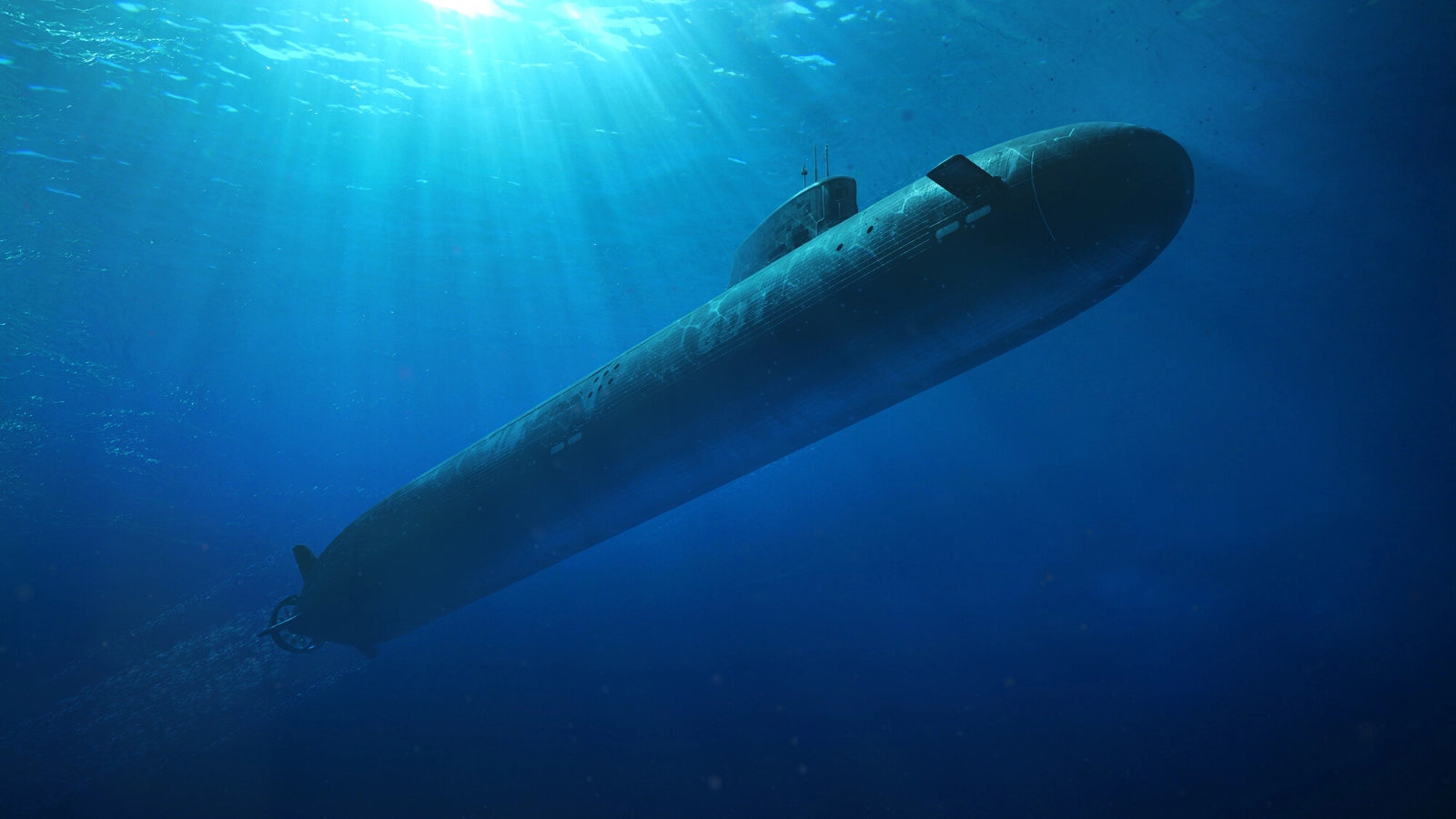
 NEC Corporation has been awarded a contract for “Research on Underwater Acoustic Foundation Models Using Self-Supervised Learning (Part 1),” with a focus on dual-use applications, as part of the “Innovative Breakthrough Research” program conducted by the Defense Innovation Science and Technology Institute of Japan’s Agency for Defense Equipment. NEC has commenced research on this project and aims to complete development of a foundation model by fiscal year 2027.
This project involves training a model on vast amounts of underwater acoustic data to build a world-leading foundational model for underwater acoustics. The goal is to realise general-purpose generative AI, similar to large language models (LLMs), in the field of underwater acoustics.
Utilising this foundational model will enable more accurate and rapid understanding of underwater phenomena and facilitate the creation of a digital twin of the ocean. This is expected to greatly enhance application possibilities, not only for defence purposes but also for areas such as the exploration of marine life, resources and environmental monitoring, as well as for high-precision earthquake prediction and other uses.
Oceans cover more than 70% of the Earth’s surface and hold many mysteries. Today, efforts are underway to promote their sustainable use—including the exploration of marine life, resources, and the prediction of events occurring on the seafloor. Since light and radio waves barely penetrate the water, the use of sound waves is an effective method for a wide range of observations and recognition tasks. Underwater sound waves are captured as underwater acoustic data using sonar and hydrophones, and are analysed by skilled experts who employ advanced signal processing techniques and expertise. However, analysing such vast amounts of data requires a great deal of time and concentration, and there are limitations to the level of accuracy that can be achieved.
While the development of language foundation models is advancing worldwide, few general-purpose foundation models for underwater acoustics have been realised, and development has been limited to AI models specialised for specific applications or tasks. Conventional AI models require large amounts of “labeled data,” making them difficult to apply to applications or tasks where only a small amount of labeled data can be collected. In the field of underwater acoustics in particular, collecting labeled data is challenging, making it difficult to build large-scale AI models.
Building on over 90 years of experience in sonar technology development, NEC will develop a general-purpose underwater acoustics foundation model. This effort will leverage the large-scale learning expertise gained through “cotomi”, NEC’s proprietary AI technology, as well as AI technology based on self-supervised learning, which enables the utilisation of large volumes of data even in the absence of labeled data. The large-scale underwater acoustics data used for training will be collected through public-private partnerships.
NEC will collaborate with the Defense Innovation Science and Technology Institute, aiming to develop this foundational model, demonstrate its effectiveness, and complete its construction by fiscal year 2027.
Moving forward, NEC will continue to promote research and development aimed at high-precision visualisation and a better understanding of the underwater environment. Furthermore, by contributing to both the strengthening of defence capabilities and the development of the maritime industry through the implementation of this foundational model—and by accelerating dual-use applications—NEC will contribute to the realization of a safe, secure, and sustainable society.

For Editorial Inquiries Contact:
Editor Kym Bergmann at [email protected]
For Advertising Inquiries Contact:
Group Sales Director Simon Hadfield at [email protected]









Fixed seafloor and tethered acoustic, magnetic anomaly, LIDAR, infrared and radioactive detectors researched and deployed by Japan with the US are very useful for the detection of Russian, Chinese and North Korean submarine movements.