
Home › Joint Projects
Lockheed Martin, Rheinmetall move forward with ATACMS co-production
Lockheed Martin Australia passes 20-year milestone on Australia air defence
By APDR
•Jul 9, 2026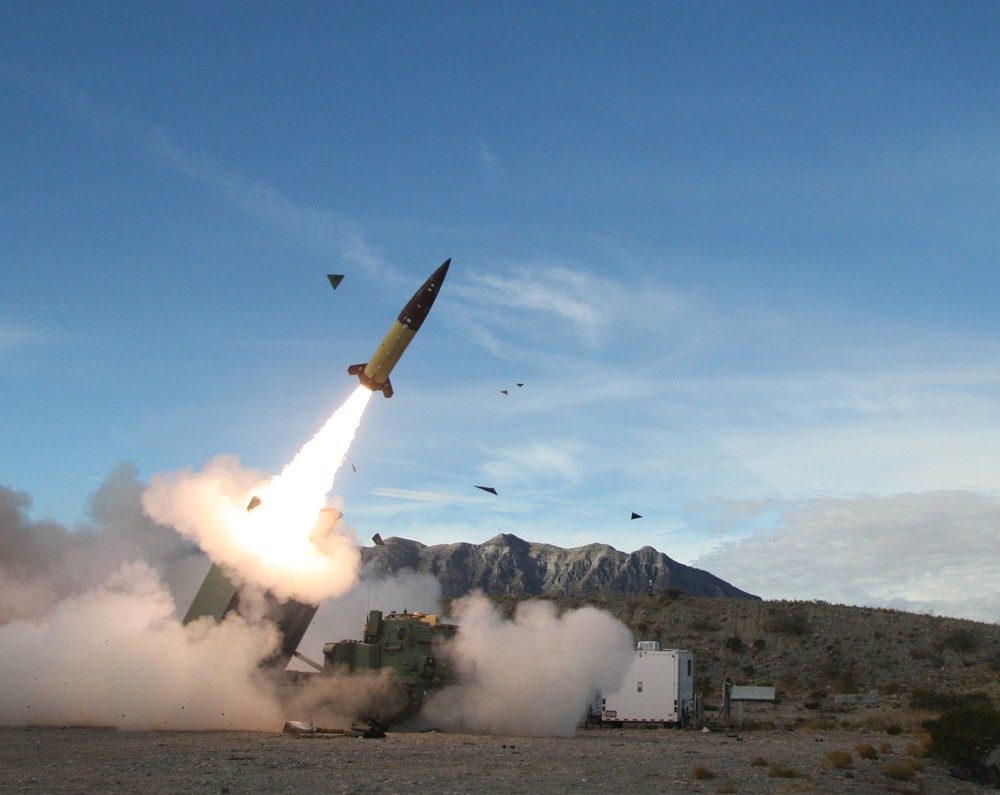
Lockheed Martin and Rheinmetall announced the signing of a memorandum of understanding (MOU) that addresses the immediate demand for locally produced munitions in Europe. With the support of the United States and German governments, the agreement marks the next step toward establishing a joint venture to create the first European centre of excellence for the manufacturing, integration and distribution of ATACMS across NATO and allied European forces. “This partnership marks a watershed moment for European security and allied industrial cooperation. By combining Lockheed Martin’s unmatched missile expertise with Rheinmetall’s manufacturing excellence, we’ll deliver combat-proven capabilities faster and more efficiently to our allies,” said Jay Pitman, president, Lockheed Martin International. “Bringing ATACMS co-production to Germany is a strong signal for Europe’s defense industry and for NATO’s long-term resilience. This partnership combines proven U.S. technology with European manufacturing strength, creating industrial value in Germany while expanding the capacity allies need to meet growing security demands.” said Dennis Goege, chief executive for Europe at Lockheed Martin. Armin Papperger, CEO Rheinmetall AG: “Our aim is to strengthen the defence capabilities of Germany and Europe. Together with our friends at Lockheed Martin, we are now establishing the industrial base in Germany for modern defence systems, which are in great demand by the armed forces of Europe. By establishing ATACMS production at Rheinmetall’s Unterluess site, we are creating new capabilities for Germany and Europe, securing supplies for our customers and strengthening our autonomy in defence policy. We are grateful that Rheinmetall has been selected to set up and operate the world’s first and only production facility for ATACMS guided missiles outside the United States.” Commissioned over 125 years ago, Rheinmetall’s Unterluess facility is one of the company’s most important sites. A total of about 4,000 employees work there. Its core competencies include the production of weapon systems and ammunition, as well as the development, manufacture, and maintenance of tracked vehicles. Unterluess is the largest privately owned firing range in Europe. Last year, the “Werk Niedersachsen”—one of the most modern production facilities for artillery ammunition—was put into operation. A rocket motor factory is currently nearing completion. Production of rocket motors and guided missile components is scheduled to begin as early as 2027. By co-producing ATACMS missiles on European soil, the partnership supports local capability, increases allied deterrence and contributes to economies on both sides of the Atlantic. Backed by decades of extensive combat employment, ATACMS has consistently proven its operational effectiveness, precision, and mission reliability in high-intensity conflicts. With significant global demand for ATACMS, Lockheed Martin will continue operating its current production line in Camden, Arkansas until transition is complete. Lockheed Martin Australia passes 20-year milestone on Australia air defence In partnership with the Royal Australian Air Force, Lockheed Martin Australia marks two decades of sustaining the AN-TPS‑77‑based Tactical Air Defence Radar System (TADRS), a critical capability that underpins the nation’s ground based air and missile defence. Over the last 20 years, the TADRS has delivered more than 150,000 hours of operational service, enabling the Australian Defence Force (ADF) to detect, track and counter airborne threats in real time across the Indo‑Pacific and beyond. As part of the sustainment effort in the Hunter region, Lockheed Martin Australia has grown a regional industrial base of over 65 highly skilled individuals, worked with over 170 regional suppliers, and forged key industry partnerships with Daronmont Technologies, Varley Group, R&R Murphy, AFL Telecom and Rojone. These collaborations drive continuous hardware and software upgrades, advanced systems integration, and technology enhancements that keep the radar dependable, secure and mission-ready. To align with the ADFs priorities to field agile, layered air and missile defences, Lockheed Martin Australia has re-designed elements of the TADRS to reduce its operational footprint, improve safety, increase mobility and accelerate rapid deployment. As part of this ongoing evolution Lockheed Martin Australia delivered five new command and control systems to support the ADF’s ground‑based battle management during Talisman Sabre 2025, and upgraded the TADRS with integrated voice‑communication technology for international deployments. These achievements are underpinned by a focused technology‑transfer program from Lockheed Martin Corporation, which has brought cutting‑edge radar technology, expertise and production know‑how into the Australian industrial base, securing long‑term capability and local industry growth. “We have built a highly responsive and technically proficient team at Williamtown that has consistently adapted to the evolving needs of the ADF,” said Philip Gordon, Director International Strategy & Business Development, Rotary and Mission Systems, Lockheed Martin Australia. “The lessons learned from sustaining the legacy TADRS will be carried forward into the air battle management enterprise, ensuring a seamless transition to future air defence platforms and a stronger, more integrated defence capability for Australia.” Jeremy King, Chief Executive of Lockheed Martin Australia and New Zealand, said, “I commend the Royal Australian Air Force and industry on this remarkable milestone. It is a testament to the enduring partnership between the ADF and our industry partners. TADRS has been a mainstay of Australia’s security operations. For 20 years, the joint team has proudly sustained the ‘eyes’ of Australia’s ground-based air defence, working together to deliver the capabilities Australia needs to respond to advancing air and missile threats.” For Editorial Inquiries Contact: Editor Kym Bergmann at [email protected] For Advertising Inquiries Contact: Group Sales Director Simon Hadfield at [email protected]
TAGSLockheed MartinRheinmetall
Previous article
Saab Australia says 100th MFC ready for export