
NATO signals intent to expand maritime ISR with MQ-4C Triton
Boeing’s MQ-28 flies with US Air Force in Indo Pacific
By APDR
•Jul 9, 2026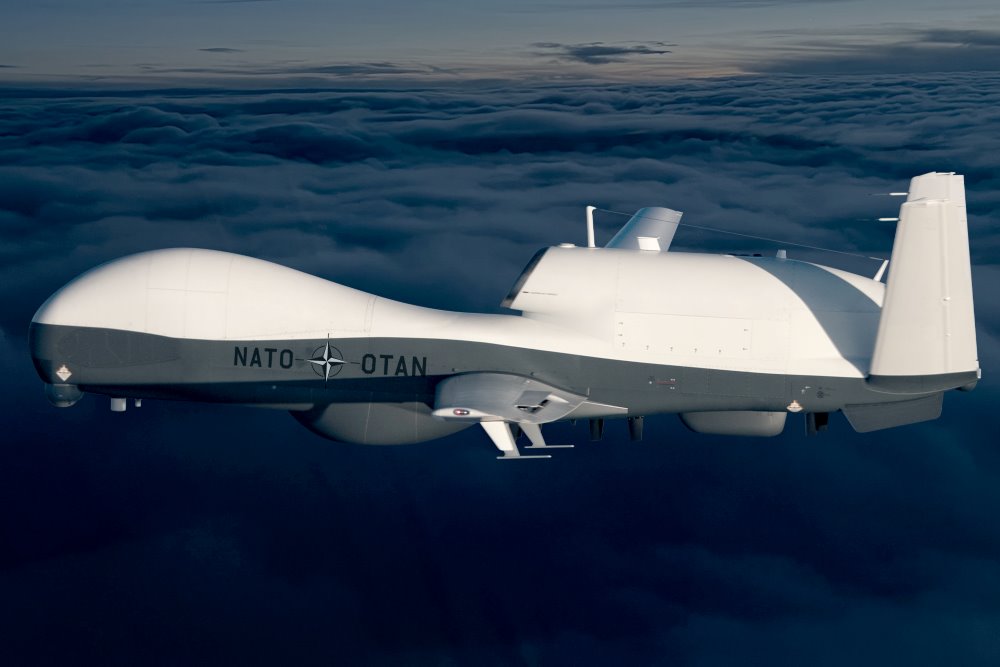
NATO has signed a Letter of Intent (LOI) to expand its Intelligence, Surveillance, and Reconnaissance (ISR) Force by pursuing acquisition of Northrop Grumman’s MQ-4C Triton aircraft. This action signals NATO’s commitment to enhance allied maritime security and situational awareness. Four nations signed the LOI at the NATO Summit Defense Industry Forum. Working closely with NATO, the U.S. Navy and trans-Atlantic industrial partners, Northrop Grumman would build and deliver the aircraft. Key European industry partners would deliver components of the ground station and supporting data processing infrastructure. NATO has operated Northrop Grumman’s RQ-4D Phoenix (Global Hawk variant) from Sigonella, Italy, providing commanders with vital ISR data that informs joint decision making. MQ-4C Triton adds unmatched maritime surveillance capabilities and operates collaboratively with crewed platforms across domains through the intelligent, timely exchange of data. It complements the Phoenix fleet by expanding NATO’s organic ISR assets, enhancing surveillance coverage across the alliance’s northern, eastern, and southern flanks. Given its lineage to the Global Hawk family of aircraft, Triton offers opportunities to leverage cost-saving synergies in operations, maintenance and training withthe existing Phoenix fleet. Jane Bishop, vice president and general manager, global surveillance division, Northrop Grumman: “Our collaboration with NATO and the U.S. Navy strengthens the Alliance’s ground and maritime surveillance capabilities. Like Phoenix, Triton conducts ISR at higher altitude and with longer endurance than medium-altitude systems, and is poised to provide NATO new levels of capability and operational flexibility to monitor and protect maritime interests from the Mediterranean to the High North.” Built for the U.S. Navy and the Royal Australian Air Force, the multi-intelligence MQ-4C Triton supports missions including maritime patrol, signals intelligence and search and rescue. It delivers unmatched persistent surveillance that anticipates adversary behavior, enabling better planning and joint military responses. Triton builds upon Northrop Grumman’s autonomy and high-altitude, long-endurance (HALE) leadership to provide unmatched maritime surveillance capabilities. Boeing’s MQ-28 flies with US Air Force in Indo Pacific (PHOTO: Boeing) Boeing’s MQ-28 Ghost Bat has participated in Exercise Valiant Shield alongside F-35A, F-35B, F-15EX, HC-130, E-3, E-2D, EA-18G, RC-135, and various other joint and coalition aircraft becoming the first and only collaborative combat aircraft (CCA) deployed to a multinational, joint operational exercise. During Valiant Shield 2026 in June, the Australian-developed MQ-28 Ghost Bat integrated with forces from the U.S. Pacific Command to support the USAF’s Experimental Operations Unit’s CCA integration objectives. The aircraft participated alongside crewed platforms as they refined tactics, techniques and procedures around the Marianas Island Range Complex in the Western Pacific region. Such exercises are critical in ensuring the interoperability and interchangeability elements of MQ-28 and proving the ability to deploy and integrate into a joint force. “Having MQ-28 participate in such a significant military training exercise is a great opportunity to expand the partnership between Boeing and the USAF. This is just the start of demonstrating how advanced human-machine teaming extends the reach and awareness of crewed platforms and enhances joint and combined force operations,” said Steve Parker, president and chief executive officer of Boeing Defense, Space & Security. “We’ve proven that it’s combat capable and now U.S. military, along with allied and partner forces, are able to test it first-hand and experience the value and advantage that CCA bring to the force mix.” As part of Boeing’s broader family of systems, MQ-28 has been developed using open mission systems and government reference architectures which allow defence forces to rapidly integrate sovereign payloads for their specific mission requirements. It is designed to team with 4th, 5th, and 6th-generation aircraft to enhance the capabilities of the entire fleet. “MQ-28 Ghost Bat is the one of the most proven, mature CCA in allied nations and this latest demonstration highlights our readiness to bring this Australian-developed capability to global air forces,” said Amy List, vice president and managing director, Boeing Defence Australia. Valiant Shield is a biennial exercise focused on integrating the joint force, fostering real-world proficiency in detecting, locating, tracking, and engaging units at sea, in the air, on land, and in cyberspace in response to a range of mission areas. For Editorial Inquiries Contact: Editor Kym Bergmann at [email protected] For Advertising Inquiries Contact: Group Sales Director Simon Hadfield at [email protected]
Comments
Loading comments...