
UPDATED: AIR 6500 Phase 1 decision and the winner is….
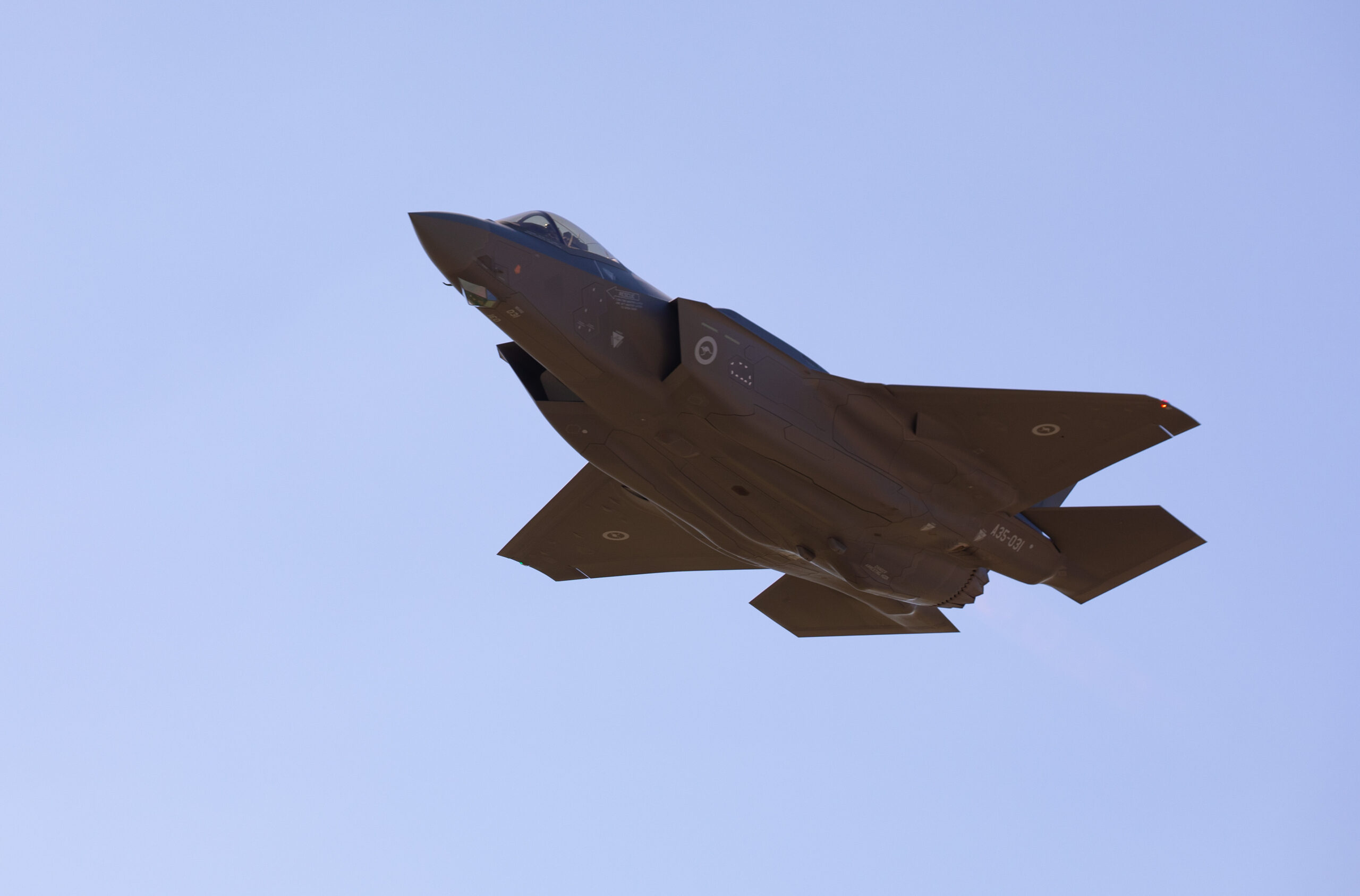
Lockheed Martin. The announcement was made in the early hours of today, but a variety of sources indicate that the decision was taken by Defence several weeks ago. The choice goes against the explicit recommendation of the recent Defence Strategic Review that time and money be saved by purchasing an off-the-shelf product, which more closely matches the rival bid from Northrop Grumman. Defence Minister Richard Marles disagrees, saying: “The Review makes clear that an enhanced, all-domain integrated air and missile defence capability is critical in the face of Australia’s evolving strategic circumstances.” The purpose of AIR 6500 Phase 1 is to deliver a Joint Air Battle Management System that will form the basis of a larger missile and air defence network that is being purchased in stages. The Lockheed Martin approach is to develop a product in conjunction with Australian industry, the RAAF and be based on their track record with extremely complex system integration contracts – for example the F-35 and the naval Aegis combat system. In contrast, the offer from Northrop Grumman is a version of their existing Integrated Battle Command System (IBCS) that is in service with the US Army, and which has been sold to Poland. The company also has a hefty chunk of Australian content in the proposal, but presumably somewhat less than the far more developmental approach of Lockheed Martin. However, a possible reason for a delay in making the announcement is that this solution runs directly counter to the DSR. Under the heading Integrated Air and Missile Defence, after disparaging the current approach saying it was pursuing a long-term solution at an unaffordable cost, it says bluntly: 8.80 In-service, off-the-shelf options must be explored. But the government has already agreed to accepting all the DSR recommendations, so what to do? This might have led to a back-and-forth between the Ministers and the Department because there seems little point in accepting the DSR – described with an abundance of hyperbole as the most important national security policy document since the Second World War – if after just a few months its findings are ditched. The project is very ambitious in scope and seeks to network assets such as F-35s; Aegis-equipped ships; Wedgetail AEW&C aircraft; JORN; CEA ground-based radars and Army’s short range air defence system being acquired under LAND 19 Phase 7. This will be a complex task because of the large number of legacy systems to be incorporated and will need to be done with open architecture software so that future weapons such as long-range land-based defensive missiles can be added. As part of their offer, Lockheed Martin are in the process of investing $74 million of their own funds developing an Australian Air & Missile Defence Ecosystem. This is far from an act of charity as the company sees huge opportunities selling these sorts of systems internationally – and in this region both Japan and South Korea are watching Australia closely. This story will be updated. For Editorial Inquiries Contact: Editor Kym Bergmann at [email protected] For Advertising Inquiries Contact: Director of Sales Graham Joss at [email protected]
Previous article
UPDATED: Lockheed Martin Australia selected as Australian Defence Force’s strategic partner for AIR6500
Kym Bergmann has more than 35 years of experience in journalism and Australian and international defence industry. After graduating with Honors from the Australian National University, he joined Capital 7 television, holding several positions including foreign news editor and chief political correspondent.
After 2 years on the staff of a Federal Minister, he moved to the defence sector and held senior positions in several companies, including Blohm+Voss, Thales, Celsius and Saab. In 1997 he was one of 2 Australians selected for the Thomson CSF 'Preparation for Senior Management' MBA course, the other being Chris Jenkins - formerly the CEO of Thales Australia.
He has also worked as a consultant for a number of companies, including Raytheon, Tenix (now part of BAES) and Martin Marrietta (now part of Lockheed Martin). He had several board appointments, including Thomson Sintra Pacific (1994 - 96) and Saab Pacific (1998 - 2003).
He retains good personal links with senior figures in Government, as well as in industry and the media. He decided to return to journalism in May 2008, and holds the position of editor for Asia Pacific Defence Reporter (APDR) and Defence Review Asia (DRA). He is also a podcaster and commentator on defence and national security issues.
Comments
Loading comments...