
Home › Land
American Rheinmetall delivers Lynx XM30 combat vehicle prototype to US Army
Provisional type-approval obtained for Rheinmetall’s LUNA NG
By APDR
•Sep 3, 2026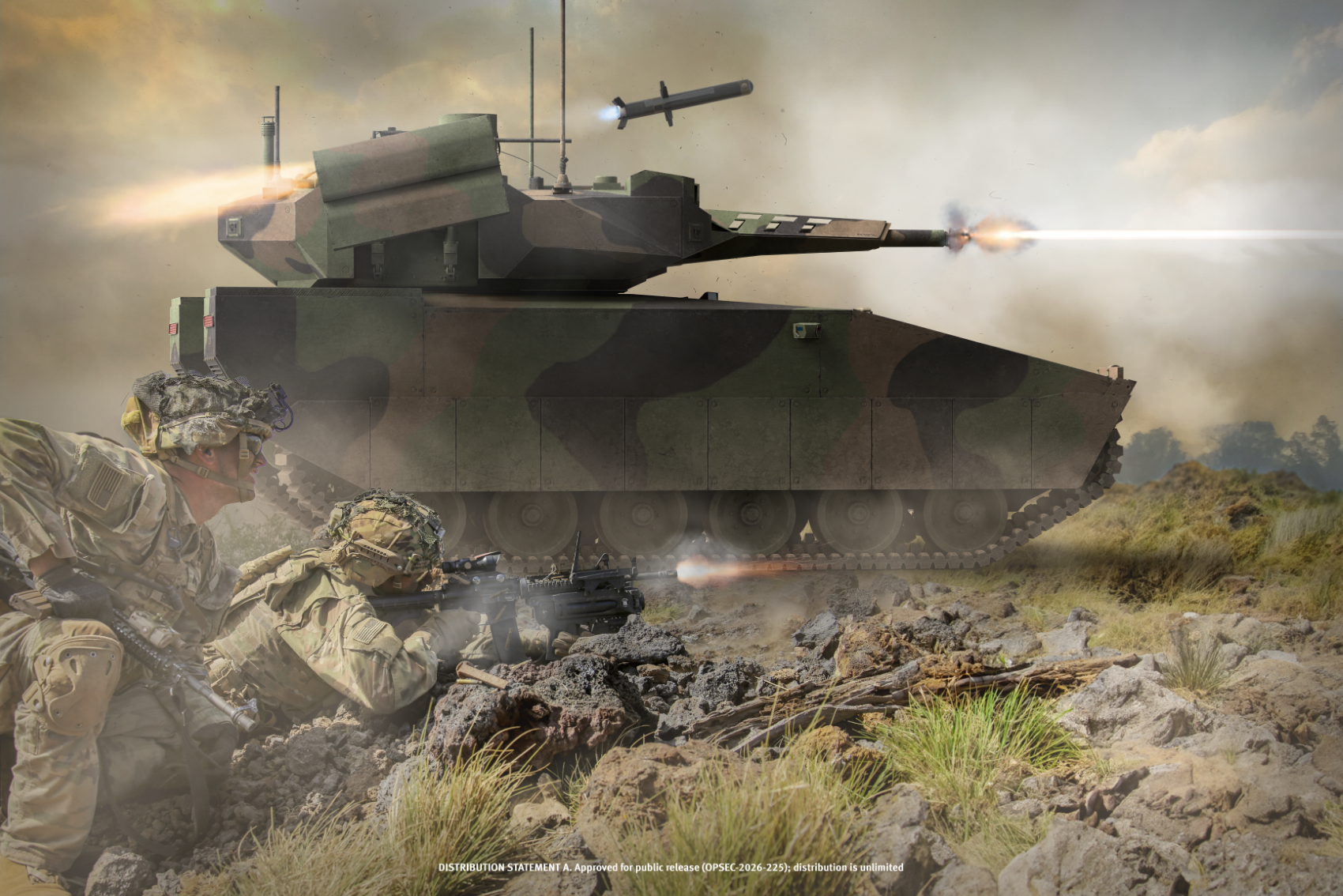
American Rheinmetall has successfully delivered the first of eight Lynx XM30 combat vehicle prototypes to the U.S. Army, marking a pivotal step in the competitive program to replace the legacy M2 Bradley Fighting Vehicle. Following its delivery, the initial prototype immediately enters government-led developmental and performance testing. This critical evaluation is a key component of the program’s broader Phase 3/4 Engineering and Manufacturing Development (EMD) contract valued at approximately $764 million, which encompasses digital design, physical prototyping, and full-system validation. “Delivering our first prototype to the Army is an important step as the XM30 Combat Vehicle program enters a more visible phase,” said Matt Warnick, CEO of American Rheinmetall. “Team Lynx now has the opportunity to show the Army that we can deliver on the promise of a modern replacement for the Bradley.” Later this year, American Rheinmetall will deliver the remaining seven prototypes, which will be used for operational unit training. This rollout runs parallel to the technical evaluations as part of the Army’s Transformation in Contact (TiC) 2.0 initiative, a modernization effort aimed at rapidly prototyping, testing, and fielding cutting-edge technology directly to deployed and training units. Once the vehicles clear initial military safety checks, Soldiers will immediately launch into active field maneuvers, an intensive training phase that culminates in large-scale combat simulations. “Executing a parallel evaluation timeline requires a level of industrial agility that Team Lynx was built for,” Warnick noted. “We are proving that the U.S. Defense Industrial Base can move at the speed of operational relevance, stripping years off traditional development timelines to get the right capability to the Warfighter.” The advanced prototype deliveries rely on a tightly orchestrated, multi-state production pipeline that underscores the agility and resilience of the U.S. Defense Industrial Base. Work begins with precision turret fabrication in Plymouth, Michigan, before sub-systems transition to Slidell, Louisiana, for final hull and chassis integration. Completed vehicles then enter comprehensive automotive shakeout trials to guarantee mechanical readiness, before returning to Louisiana for final paint and detailing. Integrating these separate facilities into a singular pipeline ensures strict quality control, with the process culminating in a joint inspection alongside the Defense Contract Management Agency (DCMA) prior to official government acceptance. The Lynx XM30 is engineered to excel in complex operating environments that increasingly feature drones, precision weapons, and electronic warfare. In support of rapid technology integration over its service life, the platform incorporates a modular design and an adaptive open architecture. Most notably, the vehicle introduces a first-ever hybrid-electric powertrain to optimize power generation and battlefield mobility. As a digitally integrated fighting system with secure, real-time connectivity, the Lynx XM30 embeds the advanced intelligence required to ensure the crew and infantry squad maintain absolute battlefield survivability. Provisional type-approval obtained for Rheinmetall’s LUNA NG (PHOTO: Rheinmetall) A significant milestone has been reached in the process of achieving full aeronautical certification for the LUNA NG unmanned reconnaissance system: the Bundeswehr Aviation Authority (LufABw) has granted provisional airworthiness certification for the system developed by Rheinmetall. This marks the completion of a key step towards the intended type certification. The provisional airworthiness certificate for the LUNA NG allows a European military drone to be seamlessly integrated into regular, restricted airspace. Unlike comparable systems, LUNA NG meets civil safety standards, overcoming the restriction to purely military areas. Compliance with the aviation sector’s stringent test procedures paves the way for regular flights over densely populated European territory. The system therefore overcomes a regulatory barrier and sets new standards for the operational capabilities of military reconnaissance in Europe. Mike Schmidt, CEO of the Air Unmanned Space business unit at Rheinmetall, said: “Certification is carried out according to the same standards as for large aircraft, such as an A320. A particular challenge in this case was that critical components, such as the autopilot or safety-critical navigation systems, had to be developed and certified in-house. There are simply no certified systems for tactical unmanned aerial vehicles on the market.” The LUNA NG’s technical maturity has already been demonstrated in extensive flight trials conducted under civil operating licences. In total, the system completed around 150 flights, totalling approximately 200 flight hours. At the same time, the first ‘pilots and verifiers’ from the Bundeswehr were successfully trained on the LUNA NG. This means that qualified personnel are already available for independent operation for training and testing purposes. The Bundeswehr is introducing the LUNA NG system under the designation ‘HUSAR’ (Highly Efficient Unmanned System for Medium-Range Reconnaissance). The system is designed for sustained airborne reconnaissance, classification, and real-time detection of objects. With a flight time of over12 hours, LUNA NG boasts long-range capabilities. Rheinmetall has reached another important milestone in the realisation of the HUSAR system with the provisional type certificate. Work on obtaining full type certification is ongoing. For Editorial Inquiries Contact: Editor Kym Bergmann at [email protected] For Advertising Inquiries Contact: Group Sales Director Simon Hadfield at [email protected]
TAGSAmerican RheinmetallLUNA NGLynx