
Canada orders JORN
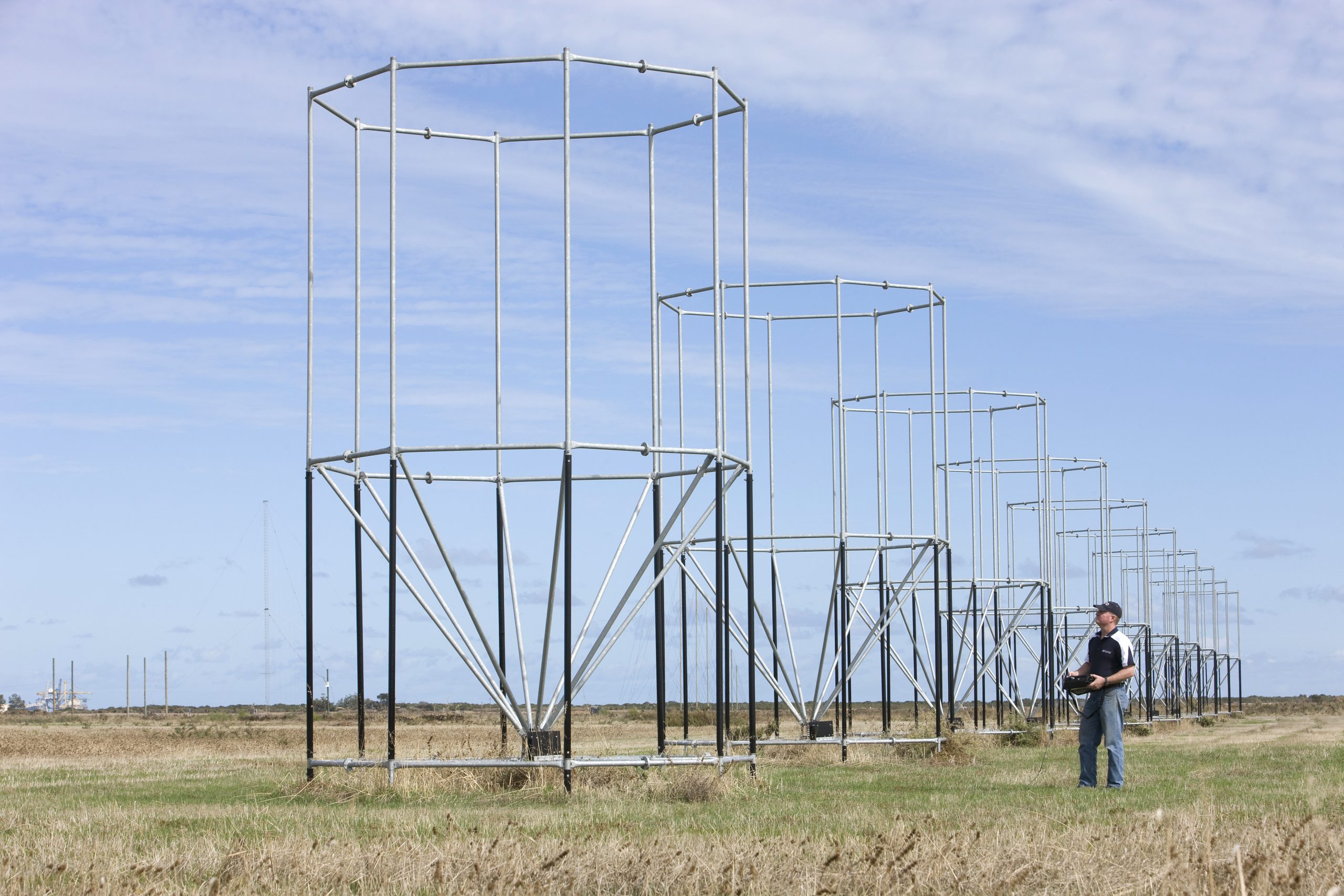
In a sudden move, new Canadian Prime Minister Mark Carney has announced that his country will purchase a version of the Jindalee Operational Radar Network (JORN). A number of countries have been interested in the technology for decades, but this is the first known sale of the Australian system. It uses High Frequency radio signals refracted by the ionosphere and can detect and track targets thousands of kilometres away. The Australian system became fully operational early this century, though tests with the Defence Science and Technology Organisation (DSTO) date back to the late 1970s and took place in the Northern Territory. Earlier than that, the Post Master General (the precursor to Telecom, now Telstra) and private operates in the Outback had developed world-leading skills in the design and use of HF radio for long distance communications as far back as 1920. The UK fielded an early HF radar system in the late 1930s code named Chain Home, and these played a vital role in providing early warming of Luftwaffe aircraft during the Battle of Britain in 1940. There are many unknowns about the Canadian deal because it has been negotiated government-to-government and prime contractor BAE Systems Australia is not authorised to speak with the media. Consequently, it is unclear why the news came out during a speech given by the Canadian PM rather than being announced locally at the same time. Australian PM Anthony Albanese made no mention of the deal when posting a summary on X (formerly Twitter) following a conversation with his Canadian counterpart. According to the Canadians, the order is worth $6 billion (AU $6.6 billion) and that represents a huge export opportunity not only for BAE Systems Australia but also Lockheed Martin Australia and their network of domestic suppliers. The sensitivity might be explained by the fact that US companies have been interested in supplying HF radar technology for some time because such systems can monitor large swaths of Russian and Chinese territory by looking north across the polar regions. If Canada has chosen the Australia solution to poke a finger in the eye of US companies it is possible that the Trump administration will show some irritation. President Donald Trump has managed to enrage almost all Canadians with demands that their country should be the 51st US State. Given that Canada is also considering cancelling or scaling back their order of 88 F-35 Joint Strike Fighters, this might be kicking Trump where it really hurts. For Editorial Inquiries Contact: Editor Kym Bergmann at [email protected] For Advertising Inquiries Contact: Group Sales Director Simon Hadfield at [email protected]
Previous article
Hanwha Group buys stake in Austal
Kym Bergmann has more than 35 years of experience in journalism and Australian and international defence industry. After graduating with Honors from the Australian National University, he joined Capital 7 television, holding several positions including foreign news editor and chief political correspondent.
After 2 years on the staff of a Federal Minister, he moved to the defence sector and held senior positions in several companies, including Blohm+Voss, Thales, Celsius and Saab. In 1997 he was one of 2 Australians selected for the Thomson CSF 'Preparation for Senior Management' MBA course, the other being Chris Jenkins - formerly the CEO of Thales Australia.
He has also worked as a consultant for a number of companies, including Raytheon, Tenix (now part of BAES) and Martin Marrietta (now part of Lockheed Martin). He had several board appointments, including Thomson Sintra Pacific (1994 - 96) and Saab Pacific (1998 - 2003).
He retains good personal links with senior figures in Government, as well as in industry and the media. He decided to return to journalism in May 2008, and holds the position of editor for Asia Pacific Defence Reporter (APDR) and Defence Review Asia (DRA). He is also a podcaster and commentator on defence and national security issues.
Comments
Loading comments...