
Home › Govt Policy & News
DSR kicks the can down the road on RAN force structure
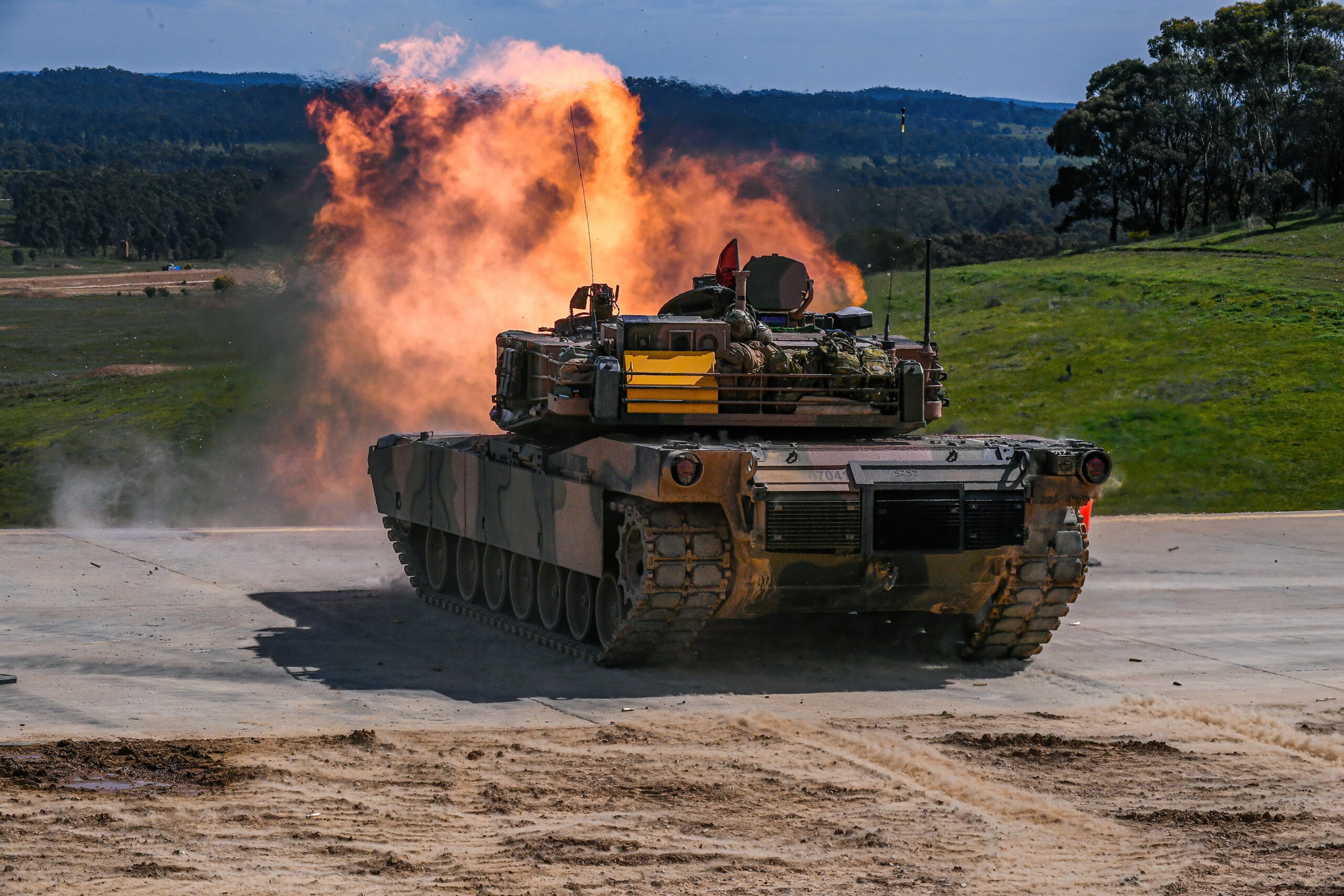
First the good news: the long-awaited Defence strategic Review has recommended that spending be increased – but not by how much, or over what timeframe. It has also come out in favour of a radical overhaul of the acquisition process to reflect a more rapid, top down approach to purchases. More long-range missiles will also be acquired – for example the 500km PrSM that can be fired from HIMARS launchers. However, it should be noted that many of these things – such as HIMARS themselves – will be acquired through the U.S. FMS system, so Australia can make requests regarding numbers and timing but the ultimate decisions on those will be made in Washington. The document also confirms the importance of the cyber and space domains. It stresses a sense of urgency, but no clarity seems to exist between the relative importance of defending Australia or supporting U.S. operations. The government says it is a major restructure of Australia’s priorities but it actually looks a lot like previous White Papers, which are a mixture of the defence of Australia, regional engagement and coalition operations. Strangely, the future structure of the RAN surface fleet addressing questions such as should the Arafura OPVs be more heavily armed; do we really need nine Hunter class frigates; and should we buy a new class of corvettes is now going to be the subject of a separate review, reporting back by the end of the year. This delay is a worry for local industry, which had been hoping for rapid decisions on the types and numbers of ships to be acquired. This additional review is connected with the acquisition of nuclear-powered submarines because – for example –they are effective ASW platforms and that might influence the overall balance of the fleet. As Defence Minister Richard Marles explained, there is also a global trend to navies moving to larger numbers of small platforms and that should be taken into account. The big loser is the Army, which is now in real danger of being totally unbalanced. The decision to reduce the number of Infantry Fighting Vehicles under Land 400 Phase 3 to a mere 129 out of an earlier total of 450 has been confirmed. Extraordinarily, the purchase of additional 155mm Self Propelled Howitzers has been ruled out, supposedly because they are too short range. This flies in the face of the reality that current ammunition allows ranges in excess of 60 kilometres and in future this will go out to 100 kilometres. It is also the opposite of what current experience is demonstrating following the Russian invasion of Ukraine. The ground based air defence systems of both countries – including small shoulder-launched MANPADS – have proven very effective against both aircraft and helicopters, meaning they have been largely absent from the battlefield. This has meant that the armies of both sides have become almost completely reliant on indirect artillery fire – in the case of Ukraine increasingly on western-supplied 155mm self propelled systems. It is precisely this sort of equipment that the review has cancelled and that an additional 30 Hanwha 155mm self-propelled howitzers and associated resupply vehicles will not be procured. This will be for an insignificant saving of around $400 million later this decade. The reduction in IFVs also destroys – or drastically minimises – the Army’s ability to carry out combined arms operations. This doctrine has been in place for around 30 years and argues that for high intensity land combat, forces need to be a balanced blend of main battle tanks, self-propelled artillery, IFVs, plus armoured reconnaissance and support vehicles. At the same time, Army is going ahead with the purchase of 72 refurbished M1A2 MBTs and more than 50 heavily armoured support vehicles based on the same chassis. The Abrams in particular at 62 tonnes is awkward to deploy because of its mass – though comes with huge direct firepower. The cost of this acquisition is about $4 billion. Its effectiveness is however greatly curtailed until Army manages to acquire a Battle Management System that allows data to be transmitted between platforms. A contract with Israeli supplier Elbit was suspended two years ago and hasn’t been replaced. It is also worth emphasising that the IFVs are to be built in Australia – either near Ipswich or Geelong, depending on who is selected – but now in drastically reduced numbers and with a further delay as Hanwha and Rheinmetall reprice their offers. Similarly, the first 30 SPHs and 15 resupply vehicles will be constructed by Hanwha at their Avalon airport precinct – but not the second batch, since they have just been scrapped. All the 72 Abrams tanks and their 50 support vehicles will be refurbished in the U.S. with zero Australian content. They can be supported, to an extent, locally – for example overhauling their gas turbine engines – but we will still be massively dependant on American supply chains. Combined arms operations are a science with a certain ratios of platforms, depending on the mission. Typically, a troop of four MBTs would be supported by a full company of infantry carried in 12 IFVs. This group would be able to call on a battery of six SPHs – possibly more – and additional air and naval support, when available. This is because, in theory, if tanks are not screened by infantry, enemy soldiers equipped with anti-tank guided weapons could destroy all of them. The soldiers of Ukraine have repeatedly demonstrated the effectiveness of ambushing unscreened Russian MBTs and other armoured vehicles, destroying thousands of them. In summary: Defence will scrap more than 300 Australian-built IFVs; 45 Australian-built SPHs and resupply vehicles – a loss of about $15 billion to local industry – but will go ahead and spend $4 billion on 30 year old U.S. main battle tanks with zero Australian content. There isn’t much news on the RAAF capability side of things, which is an indication that the current force mix is about right. There is some sensible news that the F-35s will be upgraded to the new Block 4 configuration with major improvements such as a new radar and improved distributed appeture system, but not on the timing. According to information previously supplied by prime contractor Lockheed Martin, this work can be performed in Australia. Slightly surprisingly, given Australia’s gloomy strategic outlook, there seems to be no interest in an extra squadron or two of F-35s. With their advanced sensors and networking ability, they are huge force multipliers and a squadron of the F-35B STOVL variant deployed on an LHD would have been a significant increase in capability – but the RAN has always resisted that idea. Another disappointment was nothing about reinstating AIR 7003, the cancelled armed Predator B drone that Labor said would be reexamined if they won government. These aircraft have endurance in excess of 24 hours and can not only be used for dropping weapons such as laser guided bombs but they can also provide persistent targeting for systems such as HIMARS. This was always a very cost effective purchase – and an initial capability could have been delivered to Australia within months rather than having to wait for years. Finally, a pet theme of APDR’s: release of information. Under the section ‘Resilence’ the DSR places “An informed public” at the top of the list. The public will not be informed if Defence and the Government persist in denying the release of even the most mundane information in response to questions from the media. For Editorial Inquiries Contact: Editor Kym Bergmann at [email protected] For Advertising Inquiries Contact: Director of Sales Graham Joss at [email protected]
TAGSAustraliaDefence Strategic Review

Kym Bergmannhttps://asiapacificdefencereporter.com/
Kym Bergmann has more than 35 years of experience in journalism and Australian and international defence industry. After graduating with Honors from the Australian National University, he joined Capital 7 television, holding several positions including foreign news editor and chief political correspondent.
After 2 years on the staff of a Federal Minister, he moved to the defence sector and held senior positions in several companies, including Blohm+Voss, Thales, Celsius and Saab. In 1997 he was one of 2 Australians selected for the Thomson CSF 'Preparation for Senior Management' MBA course, the other being Chris Jenkins - formerly the CEO of Thales Australia.
He has also worked as a consultant for a number of companies, including Raytheon, Tenix (now part of BAES) and Martin Marrietta (now part of Lockheed Martin). He had several board appointments, including Thomson Sintra Pacific (1994 - 96) and Saab Pacific (1998 - 2003).
He retains good personal links with senior figures in Government, as well as in industry and the media. He decided to return to journalism in May 2008, and holds the position of editor for Asia Pacific Defence Reporter (APDR) and Defence Review Asia (DRA). He is also a podcaster and commentator on defence and national security issues.