
Home › Sea
End the insanity and order interim submarines – now
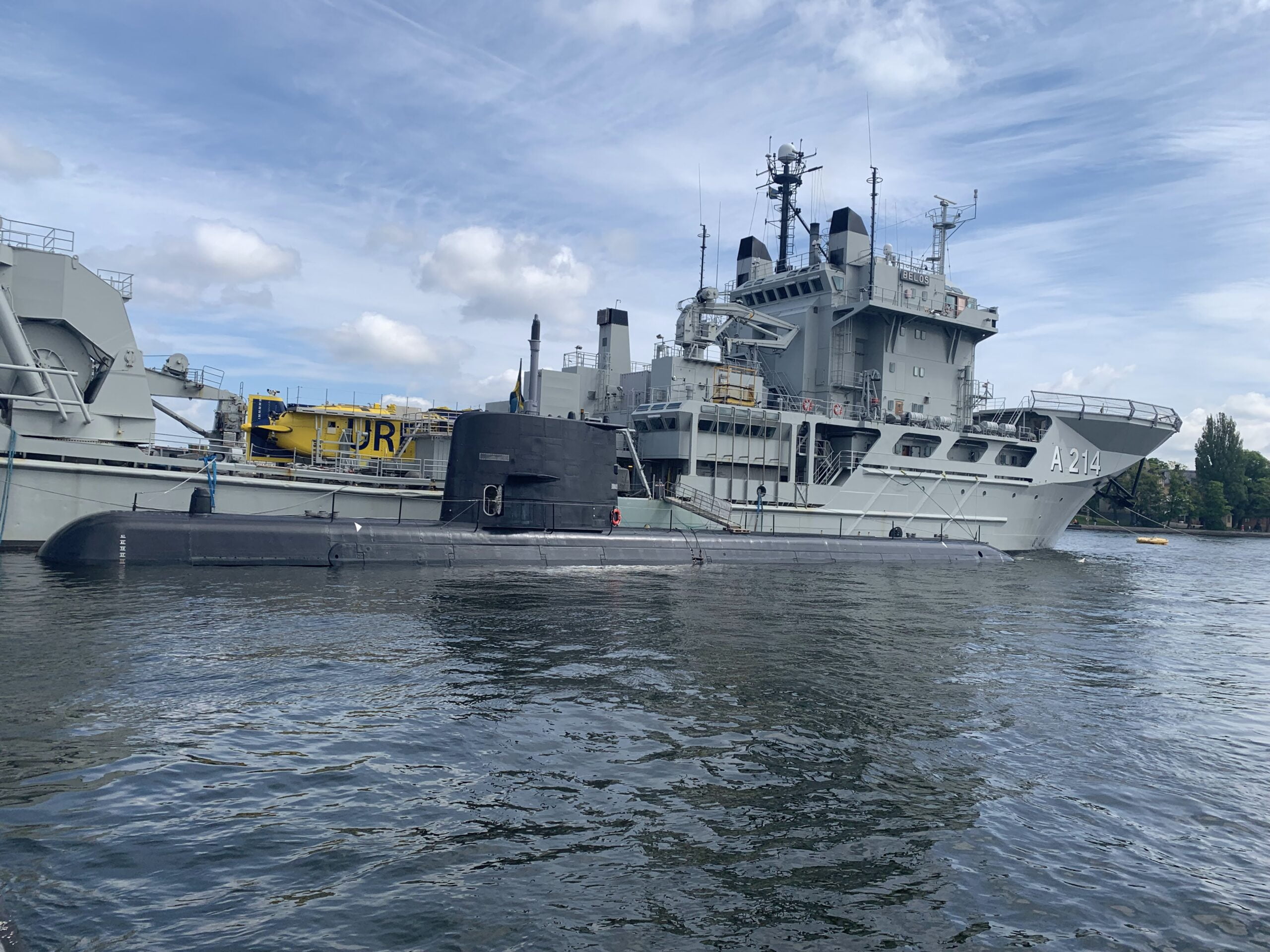
When the new A26 class become available later this decade, the Royal Swedish Navy (RSwN) will be operating three generations of submarines simultaneously. These classes will be the Gotland, Soerdermanland, and the technologically revolutionary A26 itself, with the first two currently being constructed by Saab Kockums. At the same time Gotlands are undergoing a major upgrade and technology refresh that will keep them current until 2040. These simple facts alone make a complete nonsense of the argument put forward by the leadership of the RAN and various Defence bureaucrats that it is impossible for Australia to order interim submarines because that is complex and requires effort. You know, doing something for which you are being paid. This reflects the deeply entrenched do-nothing, know-nothing culture of a service that has grown complacent and is happy to deprive itself of a capability that will potentially leave Australia helpless in the 2030s. Swedish submarines are much smaller than Australia’s and do not require particularly long range or endurance because their focus is on operations in the Baltic Sea. This is an extremely challenging environment, being mainly shallow and with waters that vary greatly in temperature and salinity, making detection and counter-detection difficult. It is also a dangerous environment with an estimated 60,000 uncleared potentially lethal sea mines left over from the First and Second World Wars – any one of which could sink an unwary submarine. There have been other times in recent history when the RSwN has operated three classes. A similar confluence of circumstances existed in the 1990s when the Nacken, Vastergotland and Gotland classes were all simultaneously in service. The RSwN has a full-time complement of 4,000 and each year has started to receive an addition 600 conscripts with no previous training. Currently the RAN has a complement 15,285 – and that number is set to rise steadily in the coming years. If Sweden not only manages to operate three classes – and welcomes the additional capability and training opportunities that structure brings – there is absolutely no reason why the RAN with four times as many people cannot gear up to do precisely the same thing. Writing in The Australian newspaper, one of Australia’s most respected analysts Greg Sheridan published a powerful open letter to the government calling on it to take charge of the RAN and just get it done. Navy submarine veterans have started doing the same thing. The clock is ticking and new Defence Minister Richard Marles has repeatedly identified addressing the potential capability gap between the Collins class and a future nuclear powered submarine as his most urgent issue. Indeed, it is – and pressure is growing. Saab-Kockums is the designer and builder of the Collins class. It has also designed and built every submarine for the RSwN for the past century. The company should never have been excluded from the competition to supply an Australian built new generation submarine – and it is a complete mystery why Defence and the government of Tony Abbott did exactly that. They should be re-engaged as soon as possible to scope the build of a much larger version of the A26 – which is basically a New Generation Collins – that could be constructed at Osbourne in Adelaide without further delay. Having toured the company’s very modern construction facilities at Karlskrona in Sweden, we can report that there is nothing there that could not be speedily replicated in Australia. The company would not be drawn on a possible timeline for an Australian build, presumably because they did not want to offend the sensitive souls in the RAN whose feelings would be hurt by discussing something implicitly critical of their planning. However, with some knowledge of these things, with sufficient willpower, dynamic management – and, yes, money – there could be new submarines in the water later this decade or in the early 2030s. The situation facing Australia is perilous. The Collins class start to receive their Life Of Type Extensions (LOTE) from 2026 onwards. This means that each submarine will be taken out of service, have the hull cut in two and most of the major machinery items removed and replaced. As previous upgrades – such as to the RAN’s Adelaide class FFG fleet – tell us, these things always take more time than planned because once work starts new things that need to be fixed are always discovered. Each Collins is scheduled to be out of service for two years – meaning until 2038 Australia will only have five functioning submarines. Using the accepted 3-to-1 rule for the availability of naval platforms – some will be in maintenance, some crews will be receiving training, some might have experienced a malfunction – it is entirely possible that there will be times when the RAN will only have one or two Collins class able to go to sea. This is clearly an unacceptable strategic risk with nuclear submarines only likely to become available in the 2040s – if then. It’s also worth keeping in mind that the FFG program was a disaster, running four years late and with the number being upgraded reduced from six to four. If the Collins LOTE experiences similar problems, then the RAN – and Australia – really will be stuck up the proverbial creek without a paddle. As governments keep reminding us, their fundamental duty is to protect the nation from external threats. It is time for Prime Minister Anthony Albanese and Defence Minister Marles to end the insanity and direct Defence to make an interim submarine their number one priority and to focus enough resources to get it done. The nuclear power task force can keep happily beavering away with their long-term studies and plans while others actually get on with the job of keeping Australia safe. Three or more classes of submarines are operated by: the USN; France; India; Japan; Russia; China; and South Korea. Further articles will explore this topic, especially from the Swedish perspective in greater detail. (Editor’s Note: Kym Bergmann travelled to Sweden as a guest of Saab-Kockums on the occasion of the 500th anniversary of the RSwN. He would particularly like to thank Conal Walker and Charlotte Nilsson for their professionalism and hard work.) For Editorial Inquiries Contact: Editor Kym Bergmann at [email protected] For Advertising Inquiries Contact: Director of Sales Graham Joss at [email protected]
TAGSCollins ClassRANSaab-KockumssubmarinesSweden
Previous article
Lockheed Martin Australia appoints Ken Kota to lead GWEO program
Kym Bergmannhttps://asiapacificdefencereporter.com/
Kym Bergmann has more than 35 years of experience in journalism and Australian and international defence industry. After graduating with Honors from the Australian National University, he joined Capital 7 television, holding several positions including foreign news editor and chief political correspondent.
After 2 years on the staff of a Federal Minister, he moved to the defence sector and held senior positions in several companies, including Blohm+Voss, Thales, Celsius and Saab. In 1997 he was one of 2 Australians selected for the Thomson CSF 'Preparation for Senior Management' MBA course, the other being Chris Jenkins - formerly the CEO of Thales Australia.
He has also worked as a consultant for a number of companies, including Raytheon, Tenix (now part of BAES) and Martin Marrietta (now part of Lockheed Martin). He had several board appointments, including Thomson Sintra Pacific (1994 - 96) and Saab Pacific (1998 - 2003).
He retains good personal links with senior figures in Government, as well as in industry and the media. He decided to return to journalism in May 2008, and holds the position of editor for Asia Pacific Defence Reporter (APDR) and Defence Review Asia (DRA). He is also a podcaster and commentator on defence and national security issues.