
Forget Collins LOTE – buy new submarines from Korea instead
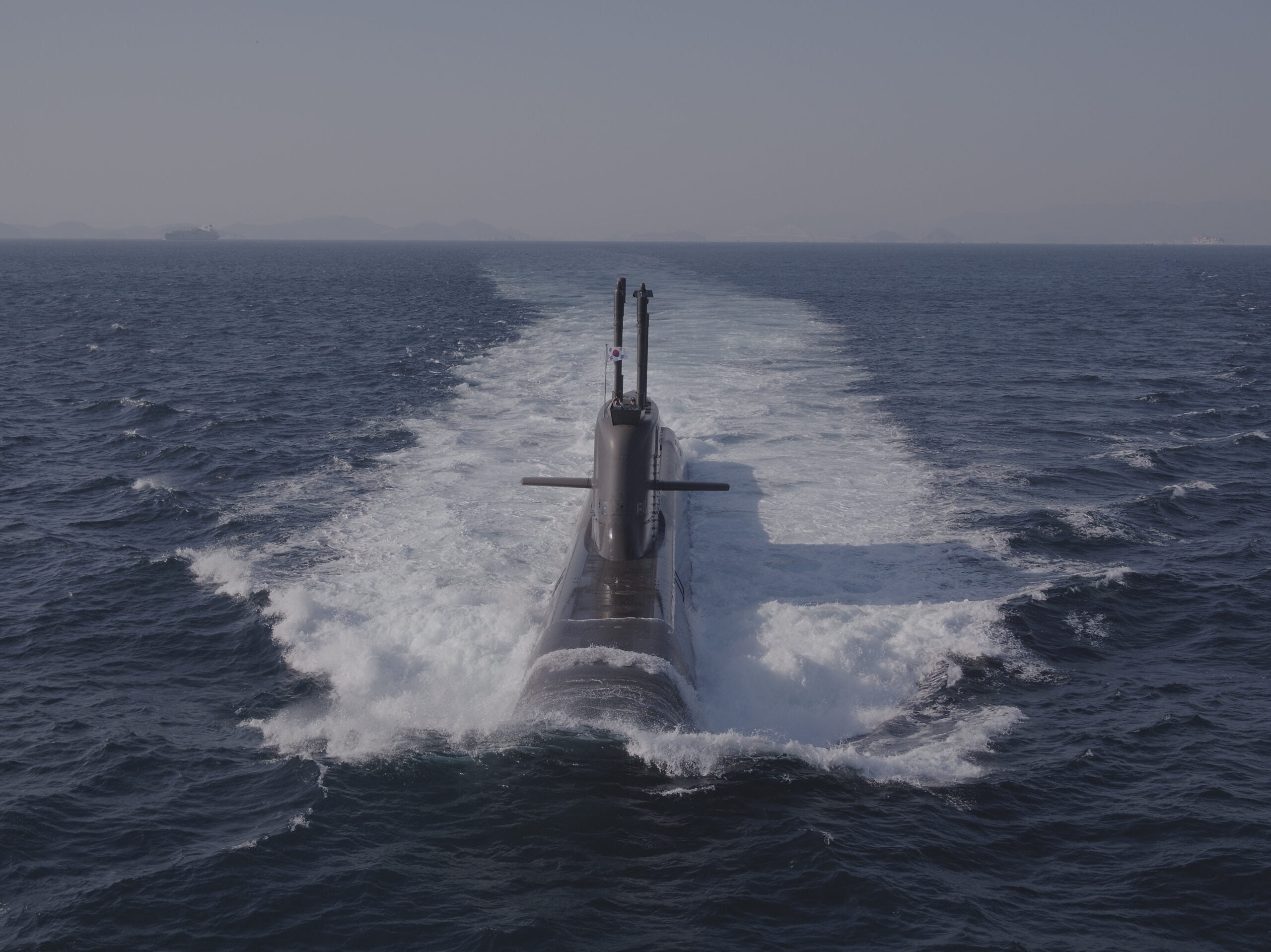
One could never accuse South Korean companies of lacking in vision. DSME – one of the world’s premier ship and submarine construction companies – has developed a strategy that could see brand new, long-range, highly capable submarines starting to be delivered to Australia by 2033. This date could be brought forward because they have based their schedule on that for the Collins Life Of Type Extension, which is due to start in 2026. If an order were placed with DSME before then, then delivery of capability would be even earlier. The company takes seven years from contract signature to delivery of their latest 3,750 tonne ocean-going submarines, so if Australia gave the go-ahead next year, the first one would reach us in 2030. This strategy would eliminate the risk of a capability gap before the arrival of nuclear-powered submarines and take schedule pressure off that program. It would also allow continuity of ASC’s workforce and avoid a “valley of death” in submarine construction expertise. However, there are several important assumptions in this calculation. The most important is that the first one, two or three submarines would be built at the company’s gigantic yard at Okpo in Korea and during this process construction would be transitioning to Osborn in Adelaide. The second is that many of the subsystems would also be Korean – though, according to their experts the U.S. AN/BYG-1 combat system could be included without schedule delay and from the first of class onwards. The further a customer moves from the current DSME Military Off The Shelf (MOTS) design, the greater the impact on schedule and risk – but that can be managed by constructing in batches. Two important disclaimers: DSME have made their calculations entirely on public domain information and have been extremely cautious about any data relating to operational matters. Secondly, all of the intellectual property for submarines is owned by the Republic of Korea (RoK) government in the form of the Defense Acquisition Program Agency (DAPA) and that detailed discussions about exports to Australia can only take place with their knowledge and agreement. However, as APDR has reported, the head of DAPA, Minister Donghwan Eom, visited Australia in July on a fact-finding mission to identify areas of cooperation beyond the purchase of 155mm self-propelled howitzers for the Army from Hanwha – another South Korean manufacturing giant. At that time, he indicated a very positive view of increased defence technology cooperation between the RoK and Australia. He was accompanied by several senior officials including RADM Youngkyu Jun, the head of the South Korean submarine force. That was followed by a visit of Defense Minister Lee Jong-sup in early August. The logic is compelling: the Collins Life Of Type Extension (LOTE) is technically risky, expensive – and will only add 10 more operational years to each submarine. A new submarine will have a life of 30 years. The schedule for the LOTE is that each submarine will be out of service for two years for the hull to be cut open and for a number of major machinery items to be removed and replaced with new equipment. These include the huge main diesel engines and the electric motors. Every expert believes that this process will actually take much longer than planned – especially for the first of class, which might be out of the water for three or more years. Major refits of submarines are always complex and fraught with risk. Near universal experience is that it is only when the submarine is pulled apart that the true scope of what needs to be fixed is discovered. New equipment has to be installed in such a way that does not compromise the noise signature of the submarine, which means new resilient mountings have to be designed, installed and tested. Similarly, a great deal of old piping and cabling has to be torn out and replaced, which is exceptionally time consuming because submarines have limited margins regarding space and weight, unlike surface ships. Government-owned ASC has done a good job of supporting Collins – after a very rocky beginning – but it has no experience in conducting an overhaul of this magnitude and complexity. The Swedish designer, Saab Kockums, has the necessary experience but for the moment is being held at arm’s length from the process for reasons that are opaque. The cost of the LOTE is still being calculated but is likely to be several billion dollars, hence the question: does it represent value for money? DSME have crunched the numbers and argue that a far better approach is to retire the Collins as scheduled and instead fast track a new class that would give Australia cutting edge conventional submarine capability in the early 2030s. The design that they propose is their latest generation KSS-III Batch II Dosan Ahn Changho class that contains cutting edge technologies – and which is one of the world’s most modern and quiet conventional submarines. This is a proven design, with the first Batch 1 commissioned by the RoKN in August 2021 and another four under construction, with a sixth about to be contracted. These are three each of KSS-III Batch I and KSS-III Batch II. Some basic characteristics of Batch II, construction of which started in August last year, are: Displacement 3,750 tonnes Length 89 meters Crew: 50 personnel (additional crew can be added) Endurance: classified Range: classified but believed to be in the vicinity of 20,000km Six 533mm bow mounted torpedo tubes Vertical Launch Missile System (capacity is classified but could be 6-10 cells) Propulsion: MTU-4000 diesel engines; MTU generator; AC Permanent Magnet Motor (possibly using High Temperature Superconductor technology); Air Independent Propulsion (AIP) using fuel cells manufactured by DSME; Li-ion batteries (produced by Hanwha) N.B. This is the only known western conventional submarine with AIP able to fire ballistic missiles. If Australia did not require the VLS it could be omitted and replaced with additional fuel, or extra accommodation – or both. The RAN has had a strange aversion to both Li-ion batteries and AIP. It is high time to revisit both issues. These types of batteries are now in service with the navies of the RoK and Japan, so they can be considered reasonably mature. The commercial use Li-ion technology is growing exponentially and they are now in everything from mobile phones, cars and even instruments on the international space station. They outperform traditional submarine lead acid batteries on almost every metric – and using them also removes the need for cooling and acid circulation systems. Replacing conventional lead acid batteries with Li-ion and making no other changes doubles underwater endurance and halves recharging time. Going the next step and adding AIP is a further major increase in the number of days needed before the submarine must come close to the surface to run the diesels. One of the RAN hang ups about AIP appears to be the trade-off between the space occupied by the system and the amount of use it will receive during a mission. To put it another way, given long transits from Freemantle to operational areas, for most of the time it would just be sitting there doing nothing. Using the same logic, one could argue that torpedo tubes are also largely unnecessary, but let’s move on. This is another classified field, but the DSME solution appears to take up a relatively small space – perhaps less than a hull section – and is able to produce 600kW of power, putting it well ahead of rival systems. It is completely silent and is not limited by operating depth or water temperature. Korea developed this solution as an improvement over German technology that came with previous generation KSS-II submarines and is based on a methanol steam reforming approach. If anyone is in any remaining doubt and wants to see for themselves, DSME has Land Based Test Sites (LBTS) for both the propulsion train at the Okpo shipyard and a separate one for the AIP system. There is also a full KSS-Batch 2 combat system LBTS owned and operated by the ROKN. The submarines have six masts: Attack optronic mast (non-penetrating) Search optronic mast (non-penetrating) Radar Electronic support measures Communications Snorkel The optronic masts are from French company Safran and had been selected for the Attack class program before it was cancelled. Speaking of which, a decision to purchase the KSS-III Batch 2 would allow Australia to recoup the almost $3 billion spent on the future submarine project, which otherwise will be totally wasted – to the anger of Australian taxpayers. In 2018, KBR won a contract to design a new construction site at Osborn; presumably this work is still valid. The huge effort put into developing an Australian industry supply chain for the Attack program is still valid and could save DSME time and effort in transitioning to a local build. Perhaps the biggest benefit would be to use the work done by Lockheed Martin Australia developing the combat system for the Attack class. At the time of contract cancellation, the combat system was well advanced – far more so than the Naval Group platform design – and hopefully that expertise could be applied to migrating the first Korean-built submarines to a configuration much closer to the RAN’s requirements. Some compromises might be necessary, but far better to have a highly capable new submarine in the water around 2030 rather than continue down the current path, which is a slow-motion train wreck. While the KSS-III is about 80% Korean – itself a remarkable achievement given that 30 years ago a submarine industry didn’t exist – there are overlaps with suppliers for Collins and Attack. These include but are not limited to: MTU (diesel engines); Babcock (torpedo discharge systems); and Safran (non-penetrating masts). Another factor is the skill and experience of the DSME itself, which not only manufactures and consolidates the hulls of the KSS-III Batch 2 and integrates all the equipment, but it also manufactures the VLS, torpedo tubes and AIP system. Since the RoK started its domestic submarine program in the 1980s – at about the same time as Australia commenced Collins – DSME has delivered all nine first generation KSS-I submarines based on the German TKMS Type 209. These were followed by three of the KSS-II class – a Korean adaptation of the far newer TKMS Type 214 – leading to five of six KSS-III platforms, including all Batch II production. The other Korean supplier is industrial giant Hyundai Heavy Industries (HHI). The company has exported three submarines to Indonesia and has completed a Transfer of Technology (ToT) package that will see a further three constructed by PT PAL Surabaya. DSME has also modified, overhauled and modernised 25 submarines – including two Indonesian Type 209s. This is a volume of work on a scale greater than that of European naval shipyards – and has all been achieved in just the last 25 years. At first glimpse, the idea of South Korea building a new generation of submarines might seem improbable. However, even a cursory objective examination of the facts shows that the idea needs to be studied – and fast. The strategy only works if the government ditches the idea that everything needs to be built locally and accepts that in the interests of time and risk reduction, starting in the RoK and migrating the project to Australia makes sense – particularly since the nation has frittered away the previous decade in a series of flip-flop decisions. There will be at least a 20-year wait until nuclear submarines can be delivered to us via AUKUS. Deteriorating strategic circumstances make it foolish for the nation to be completely dependent on the Collins LOTE being carried out on schedule – and even if it were to succeed it would only give Australia an inadequate fleet of six platforms until at least the early 2040s. What DSME is suggesting solves several major problems simultaneously. This financial year Australia will spend $48.6 billion on Defence – and for that huge amount receive a poor return in terms of hardware. The nuclear submarine task force has a staff of more than 200 – and growing – with some of them presumably ricocheting between Canberra, London and Washington on a semi-permanent basis. Surely some of these resources could be far better applied by sending a dozen experts to the RoK right now for a week to see what can be achieved in this decade. There is no more time to waste. Maybe it is time to ditch old paradigms and assumptions and look instead at how one of the world’s most dynamic economies achieves such stunning results. For Editorial Inquiries Contact: Editor Kym Bergmann at [email protected] For Advertising Inquiries Contact: Director of Sales Graham Joss at [email protected]
Previous article
Exercise Pitch Black takes off
Kym Bergmann has more than 35 years of experience in journalism and Australian and international defence industry. After graduating with Honors from the Australian National University, he joined Capital 7 television, holding several positions including foreign news editor and chief political correspondent.
After 2 years on the staff of a Federal Minister, he moved to the defence sector and held senior positions in several companies, including Blohm+Voss, Thales, Celsius and Saab. In 1997 he was one of 2 Australians selected for the Thomson CSF 'Preparation for Senior Management' MBA course, the other being Chris Jenkins - formerly the CEO of Thales Australia.
He has also worked as a consultant for a number of companies, including Raytheon, Tenix (now part of BAES) and Martin Marrietta (now part of Lockheed Martin). He had several board appointments, including Thomson Sintra Pacific (1994 - 96) and Saab Pacific (1998 - 2003).
He retains good personal links with senior figures in Government, as well as in industry and the media. He decided to return to journalism in May 2008, and holds the position of editor for Asia Pacific Defence Reporter (APDR) and Defence Review Asia (DRA). He is also a podcaster and commentator on defence and national security issues.
Comments
Loading comments...