
From the Magazine: ARE WE SPENDING $368 BILLION TO SOLVE A PROBLEM OF SEA ROUTES?
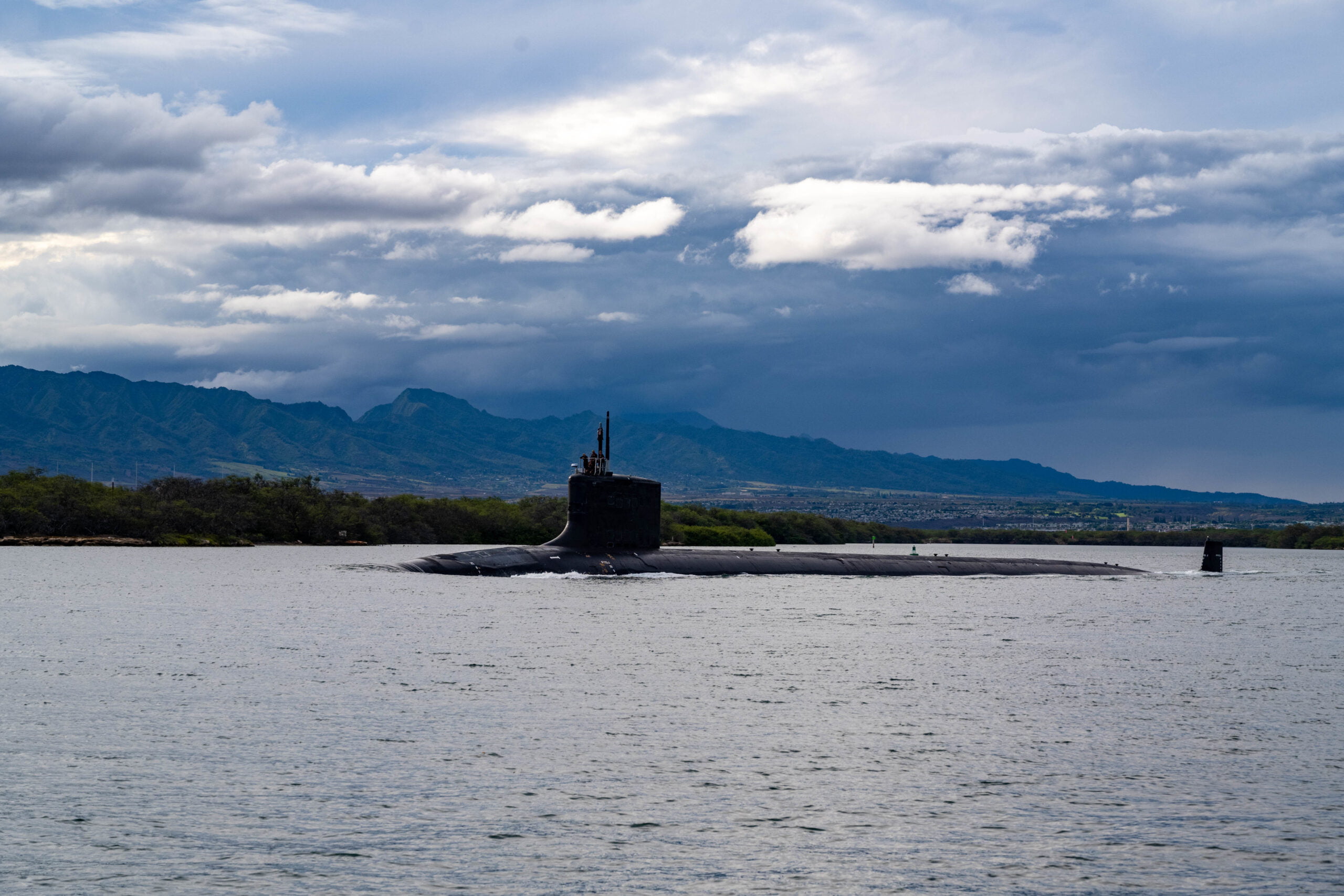
Following the announcement of the “optimal pathway” to a nuclear-powered submarine via AUKUS on March 14, many more questions have arisen – and answers to date have not been especially revealing. High on the list is what will Australia receive for the $3 billion committed to already – which will come at the expense of other Defence capabilities – an advanced payment that will go to the U.S. and the U.K. THE PATHWAY For an announcement of this magnitude after a study phase of 18 months involving 350 Australians and an unknown number of their counterparts in the U.S. and U.K., in essence we received four dot points: • Beginning in 2023, Australian military and civilian personnel will embed with the U.S. Navy, the Royal Navy, and in the United States and United Kingdom submarine industrial bases to accelerate the training of Australian personnel. The United States plans to increase SSN port visits to Australia beginning in 2023, with Australian sailors joining U.S. crews for training and development; the United Kingdom will increase visits to Australia beginning in 2026. • As early as 2027, the United States and United Kingdom plan to begin forward rotations of SSNs to Australia to accelerate the development of the Australian naval personnel, workforce, infrastructure and regulatory system necessary to establish a sovereign SSN capability. • Starting in the early 2030s, pending Congressional approval, the United States intends to sell Australia three Virginia class submarines, with the potential to sell up to two more if needed. This step will systematically grow Australia’s sovereign SSN capability and support capacity. • In the late 2030s, the United Kingdom will deliver its first SSN-AUKUS to the Royal Navy. Australia will deliver the first SSN-AUKUS built in Australia to the Royal Australian Navy in the early 2040s. The first two should be relatively easy to achieve without a huge amount of expenditure. The U.S. in particular will be pleased because if submarine “rotations” to Australia are taking place continuously that would seem no different from a capability being permanently based here. This is an excerpt from APDR. To read the full story, click here. For Editorial Inquiries Contact: Editor Kym Bergmann at [email protected] For Advertising Inquiries Contact: Director of Sales Graham Joss at [email protected]
Previous article
Greece purchases SPIKE missiles in 370 million euro deal
Kym Bergmann has more than 35 years of experience in journalism and Australian and international defence industry. After graduating with Honors from the Australian National University, he joined Capital 7 television, holding several positions including foreign news editor and chief political correspondent.
After 2 years on the staff of a Federal Minister, he moved to the defence sector and held senior positions in several companies, including Blohm+Voss, Thales, Celsius and Saab. In 1997 he was one of 2 Australians selected for the Thomson CSF 'Preparation for Senior Management' MBA course, the other being Chris Jenkins - formerly the CEO of Thales Australia.
He has also worked as a consultant for a number of companies, including Raytheon, Tenix (now part of BAES) and Martin Marrietta (now part of Lockheed Martin). He had several board appointments, including Thomson Sintra Pacific (1994 - 96) and Saab Pacific (1998 - 2003).
He retains good personal links with senior figures in Government, as well as in industry and the media. He decided to return to journalism in May 2008, and holds the position of editor for Asia Pacific Defence Reporter (APDR) and Defence Review Asia (DRA). He is also a podcaster and commentator on defence and national security issues.
Comments
Loading comments...