
From the Magazine: HIMARS PRODUCTION BEING INCREASED TO MEET DEMAND
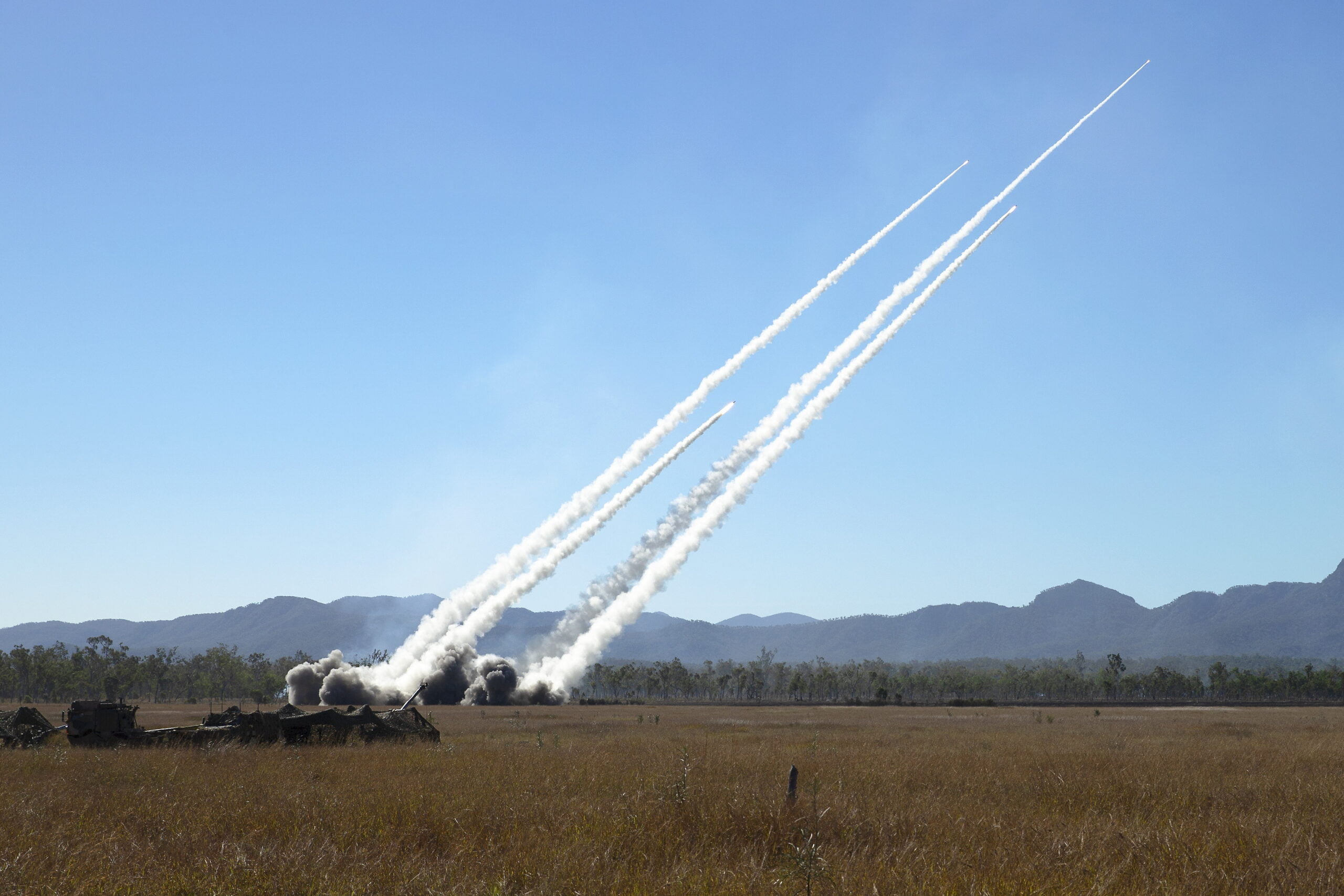
Lockheed Martin’s High Mobility Artillery Rocket System (HIMARS) has been in the news for months because of its prominent role helping Ukraine inflict serious damage on invading Russian forces. For fear of further destabilising the situation, the U.S. is only supplying the version that can fire missiles over a distance of 80km rather than longer range variants that have the potential to strike deep into Russian territory. The Australian Army intends purchasing HIMARS, with a notification to Congress of a possible sale published on May 26 this year. This is for 20 systems and a number of associated items of equipment, including Guided Multiple Launch Rocket System (GMLRS) missiles – regular and extended range – and also 10 large Army Tactical Missiles (ATACMS) that have a mass of 1,670kg and a range of 300km. The cost of the package is around $500 million and – slightly surprisingly – Australia does not yet appear to have placed the order. HIMARS is in such demand that on 1 December, Lockheed Martin received another US $430 million contract to continue full rate production of the system. This will see the company continue to deliver 96 truck mounted launch systems and 10,000 GMLRS missiles per year. This is to meet the demands of the U.S. Army and international customers. The order backlog at the moment is about four years, although since all sales are via the Foreign Military Sales system it is the U.S. government rather than Lockheed Martin that will decide the priorities for deliveries. The production home of HIMARS is at the town of Cambden in very rural southern Arkansas. The huge site used to be a major historic munitions manufacturing facility for the USN before being rented to Lockheed Martin, which also manufacturers other missiles such as Patriot on site. The company assembles the 6 wheel, 5 tonne FMTV trucks from basic components, installs the launch system; attaches the armoured cabin from another supplier and fits the electronic fire control system in it – and in a separate building also manufactures the missiles it fires, the most prolific being the GMLRS. This is an excerpt from APDR. To read the full story, click here. For Editorial Inquiries Contact: Editor Kym Bergmann at [email protected] For Advertising Inquiries Contact: Director of Sales Graham Joss at [email protected]

Kym Bergmann has more than 35 years of experience in journalism and Australian and international defence industry. After graduating with Honors from the Australian National University, he joined Capital 7 television, holding several positions including foreign news editor and chief political correspondent.
After 2 years on the staff of a Federal Minister, he moved to the defence sector and held senior positions in several companies, including Blohm+Voss, Thales, Celsius and Saab. In 1997 he was one of 2 Australians selected for the Thomson CSF 'Preparation for Senior Management' MBA course, the other being Chris Jenkins - formerly the CEO of Thales Australia.
He has also worked as a consultant for a number of companies, including Raytheon, Tenix (now part of BAES) and Martin Marrietta (now part of Lockheed Martin). He had several board appointments, including Thomson Sintra Pacific (1994 - 96) and Saab Pacific (1998 - 2003).
He retains good personal links with senior figures in Government, as well as in industry and the media. He decided to return to journalism in May 2008, and holds the position of editor for Asia Pacific Defence Reporter (APDR) and Defence Review Asia (DRA). He is also a podcaster and commentator on defence and national security issues.
Comments
Loading comments...