
FROM THE MAGAZINE: In Conversation with EOS CEO Andreas Schwer
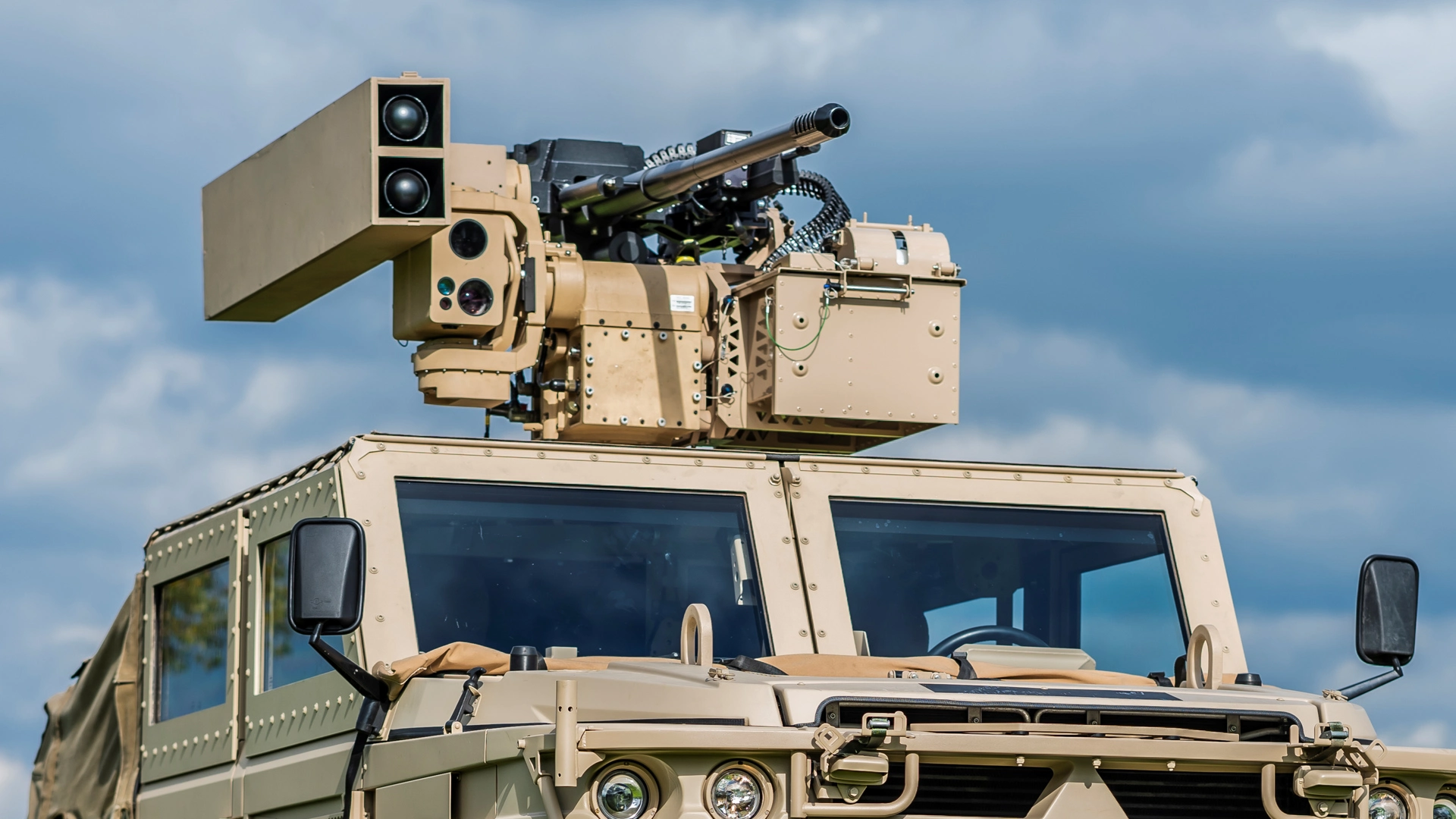
APDR Editor Kym Bergmann is in conversation with CEO of EOS, Andreas Schwer. Kym: It’s been a while since we chatted, so could you please start with an overall summary of EOS? Andreas Schwer Andreas: After a successful restructuring, we have started our new strategy built on three pillars. One pillar is our classical remote weapon station business, which has experienced significant growth. We continue to see opportunities in the counter-UAS business – the counter-drone field – where our system has been baselined by many NATO countries as the effector of choice against Class One and Class Two drones. Pillar Two is our high-energy laser business that is now coming to fruition. It is payback time after many years of inhouse investment – and we have just signed our first contract for a 100 kilowatt laser. This is a gamechanger for EOS and also for the entire laser weapon industry. This is the first of its kind for the international laser weapon market. The Third Pillar is space control and space warfare. This is the transformation of our traditional space awareness and space intelligence business that is experiencing a dramatic acceleration, thanks to the US. Many countries are looking to expand their Space activities, and in the US there is the Golden Dome program started by President Donald Trump. The concept goes back to the 1980s and a concept back then known as SDI – the Strategic Defense Initiative. This stopped with the end of the Cold War and now has been reinvented by the new US administration. The concept is to put into space a protective layer against ballistic missile attacks. That is pushing forward our space control activities in quite a substantial manner. This is giving us a significant expectation that business growth and revenue in this domain will happen much earlier than we had expected. Kym: For non-specialists like me, could you explain the significance of developing a 100kw laser? Andreas: Over the last five years the customer requirements in terms of high energy laser weapons have changed in a quite dramatic manner. Previously, everyone was asking for systems in the 20-30 kilowatt range, but this has evolved and 100 kilowatt is the new baseline for mission requirements from global customers. This is determined by the wish to enable a drone kill within a few seconds out to a range of 2-3 kilometres. These missions need to be executed in a reliable way and still retain some reserve power. This requires power in the 50-100 kilowatt range and is the reason why we have decided some time ago to lift our baseline to the 50-150 kilowatt output. We can provide customers with these sorts of solutions. This is an excerpt from APDR. To view the article, click here. For Editorial Inquiries Contact: Editor Kym Bergmann at [email protected] For Advertising Inquiries Contact: Group Sales Director Simon Hadfield at [email protected]
Previous article
Orbital robotics testbed completed
Kym Bergmann has more than 35 years of experience in journalism and Australian and international defence industry. After graduating with Honors from the Australian National University, he joined Capital 7 television, holding several positions including foreign news editor and chief political correspondent.
After 2 years on the staff of a Federal Minister, he moved to the defence sector and held senior positions in several companies, including Blohm+Voss, Thales, Celsius and Saab. In 1997 he was one of 2 Australians selected for the Thomson CSF 'Preparation for Senior Management' MBA course, the other being Chris Jenkins - formerly the CEO of Thales Australia.
He has also worked as a consultant for a number of companies, including Raytheon, Tenix (now part of BAES) and Martin Marrietta (now part of Lockheed Martin). He had several board appointments, including Thomson Sintra Pacific (1994 - 96) and Saab Pacific (1998 - 2003).
He retains good personal links with senior figures in Government, as well as in industry and the media. He decided to return to journalism in May 2008, and holds the position of editor for Asia Pacific Defence Reporter (APDR) and Defence Review Asia (DRA). He is also a podcaster and commentator on defence and national security issues.
Comments
Loading comments...