
Australian government bungles future frigate choices
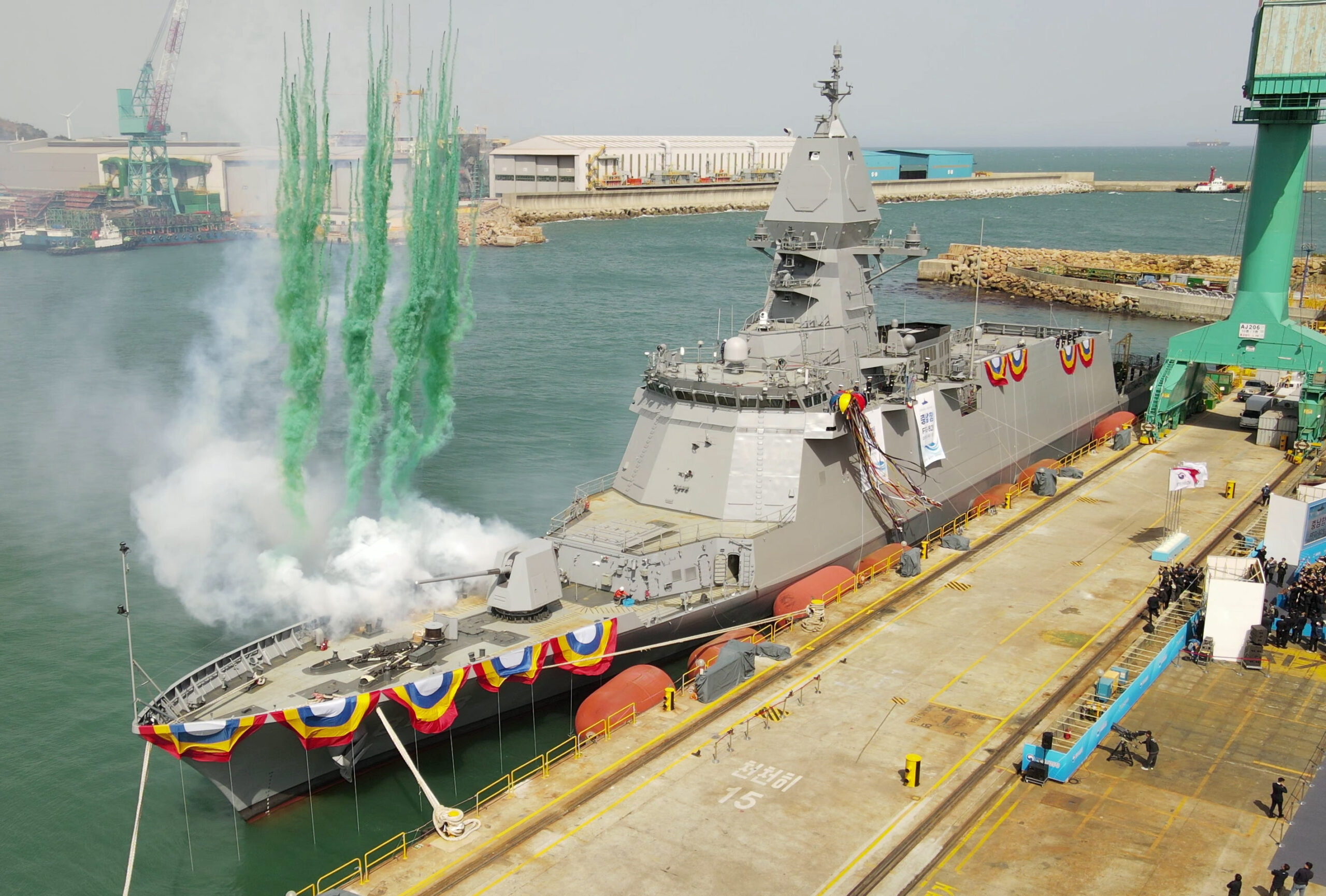
On February 20 the government finally released its blueprint for the non-submarine part of the RAN, entitled Enhanced Lethality Surface Fleet. The document claimed that the number of surface combatants will be substantially increased to 26 platforms – eventually. Currently the RAN operates three Air Warfare Destroyers and eight Anzac frigates, with two of the latter soon to retire. The number of Hunter class frigates – due to be delivered from 2032 – has been reduced from nine to six and central to the growth of the future fleet is the rapid acquisition of up to 11 General Purpose Frigates. To get them as fast as practicable, the first three will be built overseas in the yard of the designer with construction of the remaining eight transitioning to the Henderson precinct in West Australia. As far as anyone can tell, the government’s announced increase in Defence funding for the next decade of $11 billion will go mainly on these new frigates. The Integrated Investment Plan released on April 17 gives the unapproved funding for the project as between $7 billion and $10 billion – but doesn’t say whether that is for 7 ships (the minimum number) or 11 (the ideal number) The Surface Fleet report says: The Government has directed these ships be acquired rapidly with an established international shipbuilding partner through a hybrid offshore then onshore build strategy, transitioning to the consolidated Henderson shipyard in Western Australia. Four platforms have been identified by the independent analysis as exemplars to form the basis of a selection process for this new general purpose frigate: Meko A-200 (Germany) Mogami 30FFM (Japan) Daegu class FFX Batch II and III (South Korea) Navantia ALFA3000 (Spain) The problem is that there is no such thing as a Daegu class FFX Batch III. The third batch of Korean FFX is the new Chungnam class, the first of which is undergoing sea trials and will be delivered to the ROKN in December. To add to the confusion, elsewhere Hyundai Heavy Industries (HHI) is listed as the supplier of Daegu frigates. This is also incorrect. The designer and lead yard for Daegu class frigates – FFX Batch II – is Hanwha Ocean, formerly DSME. Construction of all eight of these ships is finished with the final one commissioned in October last year. The Chungnam ships are larger at more than 4,000 tonnes, have a more robust construction and – most importantly – have an integrated radar mast with four fixed electronically scanned arrays. This makes them very suitable to be equipped with similar Australian naval radars from Canberra-based CEA, which have been mandated for all surface combatants. The 3,500 tonne Daegu class have a conventional rotating radar and would have difficulty being modified for an Anzac frigate style radar mast because of the necessary increase in top weight. Modifying the Chungnam class would be simple since the mast – developed by Korea’s Agency for Defence Development (ADD) – looks to be of the same overall dimensions, height, and presumably weight as the Anzac frigate configuration. Korea has an innovative approach to naval shipbuilding that is more complex than a lead-yard, follow-yard system – though that is still an important ingredient. Everything is run by the powerful Defense Acquisition Program Agency (DAPA) – APDR has featured interviews with its former head – and it reserves the right to put the construction of some ships in a series out to tender. For the Chungnam class, even though HHI is the designer and lead yard, ships two to four will be built by a new player, SK Oceanplant, and the final two by Hanwha Ocean. This is because SK Oceanplant underbid both HHI and Hanwha with what may prove to be a costly commercial strategy. Both the Daegu and Chungnam class share several features such as a 16 cell VLS, 5” main gun, torpedoes and an embarked MH-60R helicopter. Either could be equipped with the Australian Saab 9LV combat management system because this would be achieved by swapping out operator consoles and racks of processors with little impact on the ship. Put simply, the Daegu is good – but the Chungnam is better, and of the two designs is much closer to what the RAN needs. Hopefully it will swallow its collective pride and confirm that it meant Chungnam from HHI and not Daegu from Hanwha Ocean – though the way might be open for both companies to submit bids. In parallel, Hanwha Ocean has offered to buy Austal, which is the presumed future builder of the General Purpose Frigates at its Henderson yard in West Australia. If successful, this would not seem to be an impediment to the company building the Chungnams there after HHI has constructed the first three in their massive Ulsan parent shipyard. The initial Hanwha offer has been rejected, but there is no reason why it could not be resubmitted with different terms. At the very least, it signals the willingness of the company to invest in Australia, which the other bidders are unlikely to do for purely commercial reasons. By the way, it took the author about one hour to figure this out the situation in Korea looking at the ROKS Chungnam tied up at Ulsan and speaking with its commanding officer. Even this level of analysis looks to be beyond the team who wrote the independent review into the RAN surface fleet, or the team who drafted the government’s response to it. The entire process surrounding the General Purpose Frigate acquisition seems characterised by a high level of disfunction within Defence, so the confusion about which Korean design is being sought is understandable, if not excusable. Apparently, the builders of the listed designs have been blocked from having any contact with Australian entities critical to the success of the project. This means, for example, that no discussions can take place with: CEA (radar suite); Saab Australia (9LV combat management system); or Austal (prospective builder at the Henderson Precinct). This, in turn, has given rise to speculation that if the government insists on a “Minimum viable capability” approach this will mean taking ships directly from the parent shipyard with no Australian-specific modifications. If this happens it would be a regulatory nightmare because Australia has all sorts of domestic and international rules to adhere to – including things like Occupational Health and Safety legislation. To get the speed delivery of ships from Europe or North Asia, presumably these would all have to be waived. Another consequence of a “Minimum viable capability” approach would be to knock out the Koreans and the Japanese because all of those designs come with completely unfamiliar combat and communications systems – amongst other things. The combat systems tend to come from suppliers such as Hanwha and Hitachi – and while based on principles developed by the USN are likely to be different from the Saab 9LV / Aegis combination that is now on all of the surface fleet. The two European bidders – Navantia and tkMS – arguably have more flexibility with regard to combat systems because, strictly speaking, they could argue that there is no such thing as a parent yard baseline system. This is because the Navantia ALFA3000 has not yet been constructed – but is a family of multifunction warships that can incorporate whatever the customer wishes. However, it should be noted that this design features a mechanically scanned radar array, rather than the CEA fixed face AESA that the RAN presumably would like to acquire. A parallel situation exists with tkMS and the MEKO 200. The company has delivered a lot of MEKO frigates – about 70 and still counting – including the 10 Anzac class for Australia and New Zealand that are now getting long in the tooth. Some use mechanically scanned radar arrays and others – such as those of the RAN – have fixed faces, including a suite from CEA. If the RAN were to dogmatically hold tkMS to the latest reference MEKO 200 for Egypt, that comes with a Thales combat system and a rotating AESA radar, which again is different from what one assumes to be the ideal Australian configuration. To this mix can be added an obvious desire on the part of the RAN to get their hands on General Purpose Frigates as soon as possible to plug a looming capability gap entirely of their own making. Even a child can calculate that a ship that has a life of thirty years built before the year 2000 is approaching obsolescence quite soon. Even combat systems and hull & machinery upgrades can only go so far. The original plan to replace eight Anzacs with nine Hunter class frigates went off the rails years ago when it was apparent that the slow delivery schedule of the latter was not compatible with the age and capability of the former. In other words, work on acquiring the General Purpose Frigates should have started at least five years ago. But we are where we are, and the question becomes: of the five designers, who can build them the fastest? This is highly speculative, but the Koreans – both Hyundai HHI and Hanwha Ocean – would be very difficult to beat. The author has visited both yards in Ulsan and Okpo, respectively, and the scale and speed of production is extraordinary. For example, in Ulsan the latest KDX destroyer – the Jeongju the Great – is undergoing sea trials. This 11,000 tonne Aegis-equipped destroyer has 128 VLS cells making it arguable the world’s most powerful warship other than an aircraft carrier – and given its size could be more properly classified as a cruiser rather than a destroyer. It has many additional features familiar to the RAN, such as a 5” main gun and an embarked MH-60R helicopter. It also has a large, variable depth towed array. Keel laying was in October 2021 and launch in July 2022 – a completely astonishing nine months. The overall program is also unbelievably brisk from an Australian viewpoint. Contract signature was in October 2019 and the ship will be delivered – after very extensive sea trials – in November this year. That’s five years from go to whoa – and compares very favourably with the 14 years for the first Hunter class. But there’s more – because HHI have 10 huge dry docks, they can build identical ships in parallel. This means that if Australia placed an order for three Chungnam class in the very near future they could have two of them – and possibly all three – by 2028. HHI are cautious about the build time for the class because the first was not entirely under their control because they had to wait for the delivery of the radar mast from the Korean Agency for Defence Development (ADD). What can be said is if they can build an 11,000 tonne KDX in nine months, then a 4,000 tonne Chungnam will certainly be quicker than that. It is highly likely that Hanwha Ocean could offer to do the same thing for three of the smaller Daegu class built at Okpo. Calibrating the other designers is not easy, but of the two European yards tkMS have a reputation for speed. This is partly because of the modular nature of the MEKO design combined with typical German industrial efficiency and can design and build a frigate in just under four years, if pushed. However, it is unclear whether they would be able to produce more than one ship at a time. Navantia and Mitsubishi Heavy Industries are for the moment less well known when it comes to speed of construction and this will come down to issues of available workforce, order book and facilities. An imponderable is that while Navantia definitely want the contract for the General Purpose Frigate, the position of MHI is unknown – and might remain that way given the Australian government’s attempt to totally suppress any information about the project. The main worry in all of this is if the RAN is compelled to take ships that do not feature a CEA radar suite and a Saab 9LV combat management system they will be substantially different from the rest of the surface fleet. This will impose a large additional sustainment cost and might in some circumstances lead to a new frigate having less capability than the 30-year-old Anzacs that are being urgently replaced. (Disclaimer: The author travelled to Ulsan as a guest of HHI specifically for the contract signing for the delivery of the submarine the ROKS Shin Chae-ho. The company has been banned by the Australian government from discussing any aspect of the General Purpose Frigate program, as have all other bidders.) For Editorial Inquiries Contact: Editor Kym Bergmann at [email protected] For Advertising Inquiries Contact: Director of Sales Graham Joss at [email protected]
Previous article
Boeing MQ-28 Ghost Bat facility a major milestone for Australia
Kym Bergmann has more than 35 years of experience in journalism and Australian and international defence industry. After graduating with Honors from the Australian National University, he joined Capital 7 television, holding several positions including foreign news editor and chief political correspondent.
After 2 years on the staff of a Federal Minister, he moved to the defence sector and held senior positions in several companies, including Blohm+Voss, Thales, Celsius and Saab. In 1997 he was one of 2 Australians selected for the Thomson CSF 'Preparation for Senior Management' MBA course, the other being Chris Jenkins - formerly the CEO of Thales Australia.
He has also worked as a consultant for a number of companies, including Raytheon, Tenix (now part of BAES) and Martin Marrietta (now part of Lockheed Martin). He had several board appointments, including Thomson Sintra Pacific (1994 - 96) and Saab Pacific (1998 - 2003).
He retains good personal links with senior figures in Government, as well as in industry and the media. He decided to return to journalism in May 2008, and holds the position of editor for Asia Pacific Defence Reporter (APDR) and Defence Review Asia (DRA). He is also a podcaster and commentator on defence and national security issues.
Comments
Loading comments...