
HIMARS price increase doesn’t add up
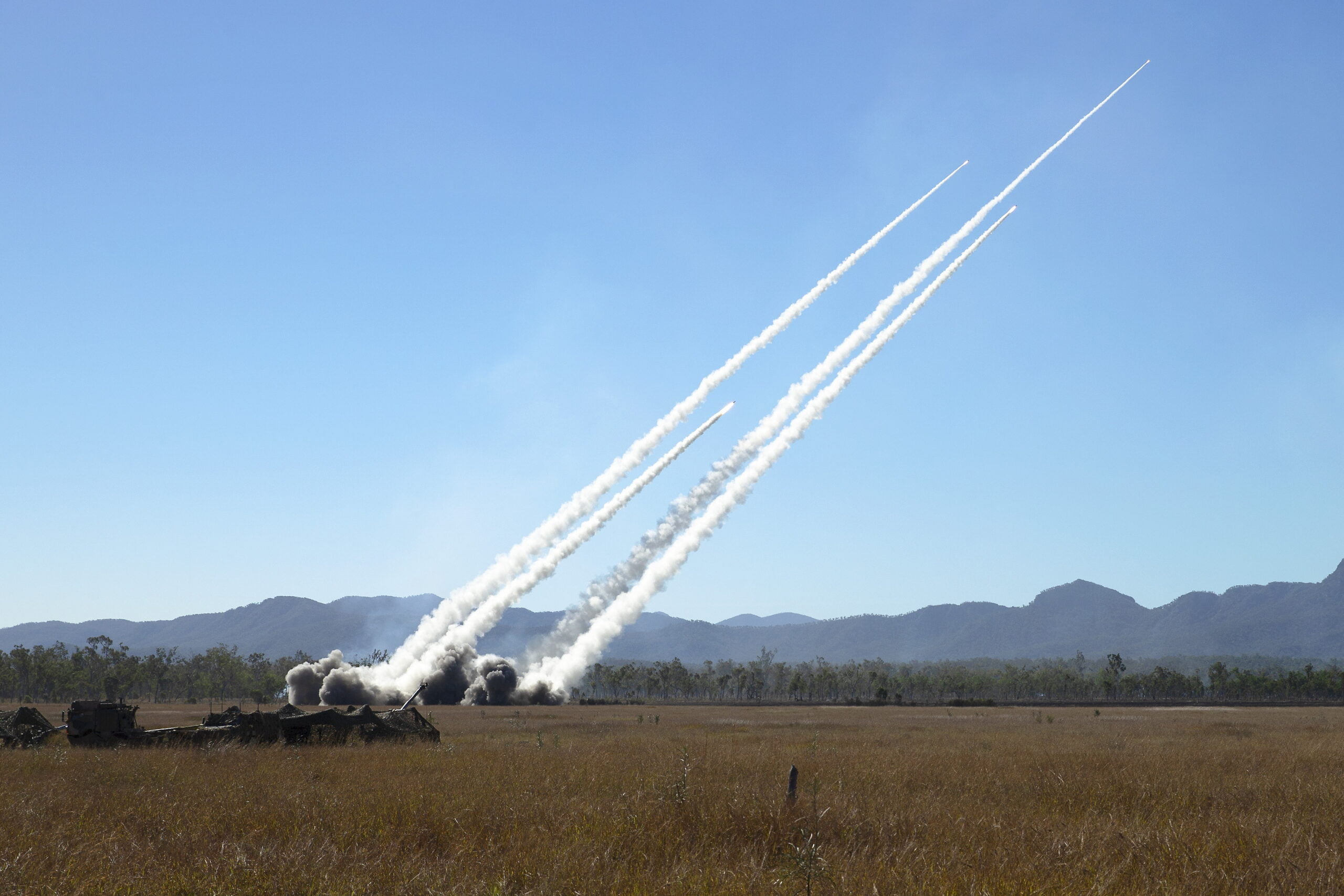
On August 18 the State Department notified Congress of a HIMARS sale to Australia valued at US $975 million ($1.529 billion) for 22 launchers and associated rockets. The price of a similar package in May 2022 for 20 launchers was US $385 million ($604 million). Defence Industry Minister Pat Conroy has defended the new figure, saying it is because of the cost of additional additional rockets. We have done the maths and it’s still not adding up. Working out the price of individual weapons is not easy because the US tends to bundle everything in together – vehicles, launching pods and rockets. However, in February 2022, Finland bought 35 extended range GMLRS units with different warhead configurations for US $91.2 million, which is $2.6 million for a pod of 6, or around $4 million Australian. In our package we have 90 M31A2 ER pods for a price one would assume of $360 million, if we use the same formula as for Finland, or a unit figure of $666,000 per rocket. As several readers have pointed out from the first version of the article, the number of rockets is greater than the first glimpse of the figures suggests because they come pre-packed in a disposable fibreglass container in bundles of six. As an astute person has pointed out – thank you – this equates to an order for 1,140 rockets. The order for 60, 40, 66 and 24 units of various variants respectively are orders for pods of 6 rockets, not individual rockets. This brings the total to 190 pods, equalling 1,140 individual rockets for 22 HIMARS systems. However, the mystery remains because on April 27, Lockheed Martin were awarded a not to exceed US $4.79 billion contract for 2 years of full rate GMLRS production. Full rate production is 10,000 per year, which works out at an average of US $240,000 per rocket. If you multiply that by 1,140 it’s still only US $273.6 million, or AU $425 million. This still leaves around $800 million to explain because the trucks and launchers are cheap. The former are standard Army issue 6 x 6 vehicles that have some cabin protection added and the launchers are cheap throwaway containers, of which the US still has many thousands remaining from the Cold War. At the very least it would suggest that rockets are being sold to Australia and other customers at grossly inflated prices – which might explain why some countries are ditching HIMARS in favour of systems from Israel and South Korea. In the commercial world this would look like outrageous price gouging. If a European supplier tried to get away with even a 10% cost increase they would be threatened by the Defence Minister with contract termination, coupled with a vow that they would be banned from future bids. But because this is from the US, it looks like Defence has already gone along with what appears to be exceptionally poor value for money deal. Readers can make up their own minds. The May 2022 announcement read: “The Government of Australia has requested to buy twenty (20) M142 High Mobility Artillery Rocket Systems (HIMARS); thirty (30) M30A2 Guided Multiple Launch Rocket Systems (GMLRS); thirty (30) Alternative Warhead (AW) Pods with Insensitive Munitions Propulsion Systems (IMPS); thirty (30) M31A2 GMLRS Unitary (GMLRS-U) High Explosive Pods with IMPS; thirty (30) XM403 Extended Range (ER)-GMLRS AW Pods; thirty (30) EM404 ER GMLRS Unitary Pods; and ten (10) M57 Army Tactical Missile System (ATACMS). Also included are Reduced Range Practice Rocket Pods (RRPRP); Vehicular Intercom System (AN/VIC-3) 3-Station; radio communication mounts; machine gun mounts; battle management system vehicle integration kits; wheel guards; ruggedized laptops; training equipment publications; spare and repair parts; support equipment; tools; test equipment; technical data; U.S. Government and Contractor support; technical and logistical support services; and other related elements of program and logistic support. The total estimated program cost is $385 million.” On the surface this looks like a not unreasonable package. However, the new notification to Congress states: “The Government of Australia has requested to buy up to twenty-two (22) M142 High Mobility Artillery Rocket Systems (HIMARS); sixty (60) M30A1 Guided Multiple Launch Rocket System (GMLRS) Alternative Warhead (AW) Pods with Insensitive Munitions Propulsion System (IMPS); forty (40) M31A1 GMLRS Unitary (GMLRS-U) High Explosive (HE) Pods with IMPS; sixty-six (66) M30A2 Extended Range (ER)-GMLRS AW Pods; and twenty-four (24) M31A2 ER GMLRS Unitary (HE) Pods. Also included are Reduced Range Practice Rocket (RRPR) Pods; intercom systems to support the HIMARS Launcher; M1084A2 HIMARS Re-Supply Vehicles (RSV); trailers; 9300-SL60TN Forklift, Side Loader; radio/communication mounts; machine gun mounts; wheel guards; ruggedized laptops; training; training equipment; publications for HIMARS and its munitions, and spares; services; other support equipment; and other related elements of program and logistic support. The estimated total program cost is $975 million.” To describe the $1.5 billion value of this second tranche as excessive is an understatement. We are forking out a large additional amount of cash for what appears to be a grossly inflated package, mainly because of the cost of the rockets. It also looks like we are being charged twice for logistic support. We have contacted the Department of Defence for an explanation of the cost increase and the chances of receiving any information are approximately zero. The taxpayers of Australia will once again be kept in the dark as to where all the extra money is going. For its part, the government says: “The Albanese Government is accelerating Australia’s long-range precision strike capability, and will more than double the number of High Mobility Artillery Rocket System (HIMARS) launchers being acquired for the Australian Defence Force (ADF). “To implement a key priority of the Defence Strategic Review the Government will invest $1.6 billion to expand and accelerate this acquisition, bringing the total number of HIMARS to 42. “The land-based, long-range, surface-to-surface HIMARS and associated munitions and support systems will ensure the ADF is equipped to deter potential threats and keep Australians safe. “The project is also scoped to procure the Precision Strike Missile (PrSM), which is expected to have a maximum range beyond 500km.” The Netherlands recently purchased a Multiple Launch Rocket System (MLRS) from Israeli company Elbit that was said to be 10% of the cost of HIMARS. Initially that was a difficult figure to believe until this new quote for Australia appeared, which seems to show that someone, somewhere is doing very well from the sale. Spain and Norway are also buying the Israeli system, which includes local missile production. As we have previously reported, the South Korean company Hanwha also makes an exceptionally advanced MLRS known as the K239 Chunmoo, not only in service domestically but it has been sold to the UAE and Saudi Arabia. It has also been ordered by Poland – a future HIMARS user – because it has an urgent operational need that can only be met by Korea. Hanwha is well established in Australia having recently won the huge LAND 400 Phase 3 order for 129 Infantry Fighting Vehicles for the Army. This is in addition to an earlier contract for 155mm self-propelled howitzers (SPH) and resupply vehicles. It is well withing their capacity to also build K239s at their Geelong facility – with full IP transfer of everything, including the guided rockets, to Australia. Rather than continuously forking out vast amounts of money to the US, the Department of Defence should immediately halt the purchase of the second batch of HIMARS – it’s presumably too late to do anything about the May 2022 order, unless a contract has not yet been signed – and instead ask Hanwha for an urgent quote. The likelihood is that Australia would receive a more advanced MLRS built locally for about one third the cost. For Editorial Inquiries Contact: Editor Kym Bergmann at [email protected] For Advertising Inquiries Contact: Director of Sales Graham Joss at [email protected]
Previous article
EM Solutions completes successful in-orbit test of Telesat LEO 3 satellite transponder
Kym Bergmann has more than 35 years of experience in journalism and Australian and international defence industry. After graduating with Honors from the Australian National University, he joined Capital 7 television, holding several positions including foreign news editor and chief political correspondent.
After 2 years on the staff of a Federal Minister, he moved to the defence sector and held senior positions in several companies, including Blohm+Voss, Thales, Celsius and Saab. In 1997 he was one of 2 Australians selected for the Thomson CSF 'Preparation for Senior Management' MBA course, the other being Chris Jenkins - formerly the CEO of Thales Australia.
He has also worked as a consultant for a number of companies, including Raytheon, Tenix (now part of BAES) and Martin Marrietta (now part of Lockheed Martin). He had several board appointments, including Thomson Sintra Pacific (1994 - 96) and Saab Pacific (1998 - 2003).
He retains good personal links with senior figures in Government, as well as in industry and the media. He decided to return to journalism in May 2008, and holds the position of editor for Asia Pacific Defence Reporter (APDR) and Defence Review Asia (DRA). He is also a podcaster and commentator on defence and national security issues.
Comments
Loading comments...