
Hunter class frigate program could be accelerated
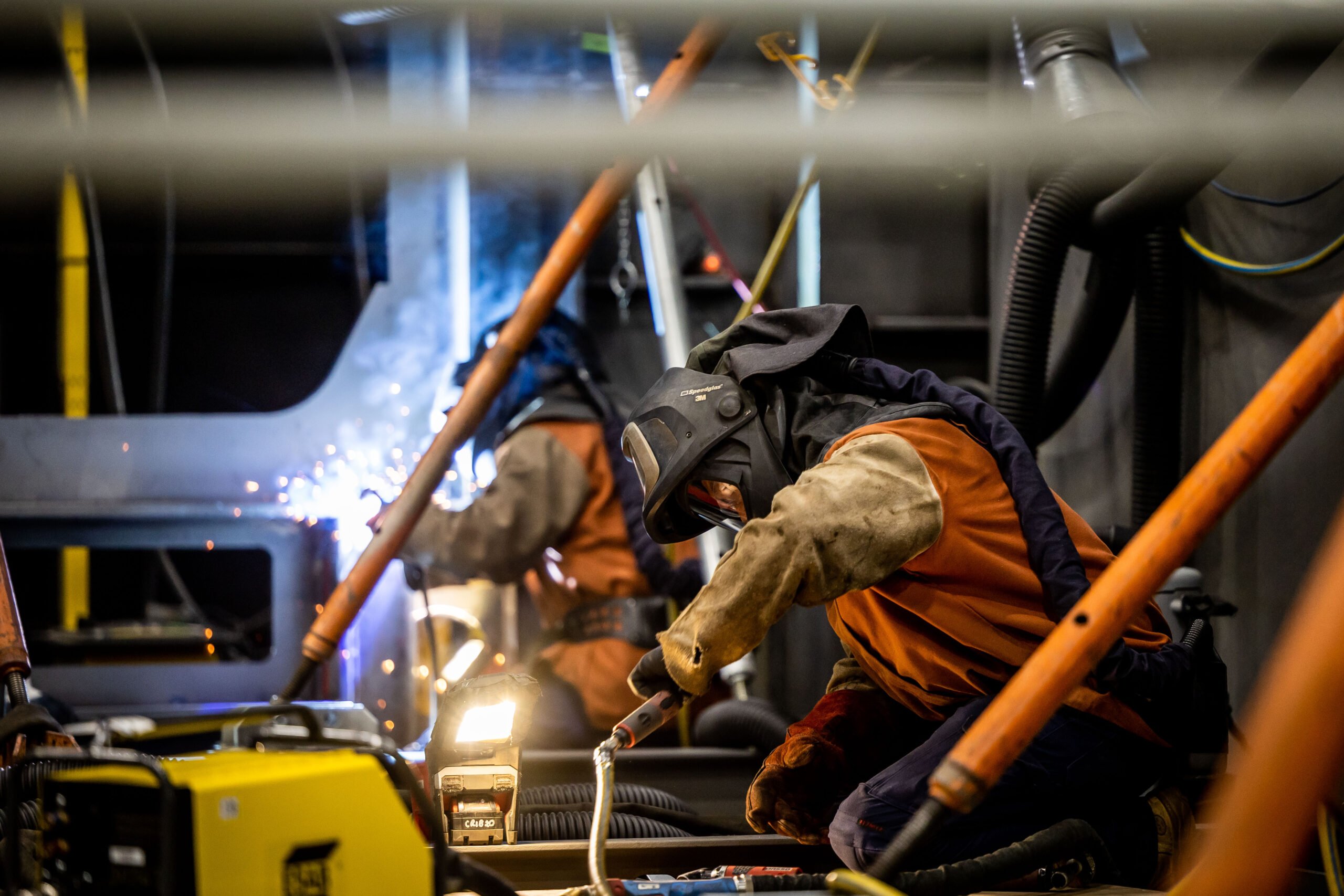
Given that we are surrounded by water, one of the big headaches for Australian strategic planners is the number of naval combat platforms that will be in service during the critical period of the 2030s. This is the decade when it is assessed China will be at its most capable and most aggressive, after which profound demographic issues and leadership changes may see Beijing more internally focussed. With the cancellation of the Attack submarine program, there is understandable nervousness about what is happening with surface ships. On August 26 there was good news during a media briefing in Adelaide by BAE Systems Australia – Maritime CEO Craig Lockhart. This is that the Hunter class frigate program has been making better than expected progress and there is now a strong possibility that the build schedule can be accelerated. However, this increase in pace has not yet been confirmed officially – at this stage it is the assessment of the prime contractor. Given unexpected events such as Covid and Russia’s invasion of Ukraine, everyone is wary about making promises that will subsequently need to be broken. Unusually, the briefing also included representatives from the Defence customer, including RADM Tony Dalton who is responsible for National Naval Shipbuilding within the Capability Acquisition and Sustainment Group, and Sheryl Lutz, First Assistant Secretary Ships from the same organisation. Another noteworthy participant was Vice Admiral Tim Barrett (retired), who is now an advisor to BAE Systems. Without for a moment wishing to sound ungrateful for the positive news, it is still short of what the government of the day stated on November 18, 2018, when announcing the selection of BAE Systems as the combat system integrator for the project. In the final sentence of his media release, Defence Minister Christopher Pyne stated without ambiguity or qualification: “Construction will begin at Adelaide’s Osborne Shipyard in 2020 and the program will employ around 4000 workers.” Earlier when BAE Systems and the UK Type 26 design were selected on 29 June, 2018, Prime Minister Malcolm Turnbull, Finance Minister Matthias Cormann and Minister Pyne said in a joint statement: “The Hunter class will begin entering service in the late 2020s replacing the eight Anzac Frigates, which have been in service since 1996.” We will return to this history shortly, but nothing should detract from the efforts of BAE Systems and their Osborn workforce to recently accelerate the program, which will deliver a complex, exceptionally powerful platform to the RAN. Nine of the 10,000 tonne anti-submarine warfare (ASW) ships will be acquired, with the first batch of three under contract. They are being built to the highest possible standards and with a level of Australian Industry content that is tracking above expectations, and which is likely to increase further. To understand how the schedule might now be brought forward it is necessary to canter through why it was initially pushed out. The start of construction in 2020 was always going to be difficult and as the date drew closer the story from the government changed slightly and the public were then informed that “prototyping” rather than actual shipbuilding would begin in that year. What that meant was that representative pieces of the ship would be cut, trimmed and welded for training and planning purposes, but they would be discarded when work on the real thing started. In August last year an additional 18-month delay was agreed by all parties. This was caused by several events, most noticeably the global disruption of Covid. The factors directly related to the platform included the complexity of the Australian-specific changes – especially the radar and combat system that necessitated a slightly fatter hull of 0.6 of a metre – delays to the parent Type 26 program and a shipyard being developed. Nevertheless, work had already started as promised on the prototype sections. This has been moving along very well in the enormous new facility at Osborn that features several gigantic, interconnected construction, outfitting and assembly buildings with overhead cranes, welding machines as well as cutting and painting equipment. The final hall is large enough to accommodate an entire 150 metre long, 21-metre-wide Hunter frigate under full cover. In fact, it could include two Hunter frigates side-by-side, but that will never occur in practise because of the need to have enough working space available to complete the job efficiently. The protype blocks are huge – basically sections of the designed ship weighing up to 141 tonnes. The original plan was to discard all of the prototype blocks after they had served their training purpose. The first two would not be suitable in any case because they are built to the Type 26 design (the only design available when work started), which has different cabling and piping cut outs in the steel sheets. Because of the quality and speed of the work now being performed at Osborn, the later ones designed for the Hunters will be good enough to be incorporated in them. Work on these enhanced prototype blocks is now scheduled to begin in May next year, which means that if everything goes to plan that will mark the date of the construction of the first of class. If none of the test sections had been suitable for inclusion, the build of the platform would have commenced at the end of 2024. Further to this, on August 29, BAE Systems announced that: “Equal to the size of two houses and taking 45,000 hours, the first steel ‘block’ has been constructed by shipbuilders working on the Hunter class frigate program. The largest surface shipbuilding program in Australian defence history continues to make strong progress at the Osborne Naval Shipyard in South Australia. “Shipbuilders are initially manufacturing five prototype ship blocks to test and refine the processes, systems, tools, facilities and workforce skills ahead of construction of the first Hunter class frigate. There are 22 blocks in each Hunter class frigate. The first prototype block, known as Block 16, weighs more than 140 tonnes and its construction involved the expertise of 35 different trades, including engineers, boiler makers, welders, fabricators and project managers.” BAE Systems Australia Managing Director – Maritime, Craig Lockhart, said: “Throughout construction of the first prototype ship block, our highly-skilled workforce has been able to incorporate new, more efficient and effective ship-build methods and innovations into our processes. Already, the quality and productivity we are achieving is well above where we thought it would be at this stage of prototyping. This quality demonstrates the potential of a strong future for continuous naval shipbuilding in Australia. “We are working towards achieving new benchmarks in manufacturing efficiency and quality and the new processes we are developing allow much greater engagement with Australian suppliers.” Work has also been taking place in parallel on the combat system, with radar hardware from Australian supplier CEA at Moorestown in the US for integration testing at a shore-based Aegis facility, which Defence says is going very well. At the same time, a prototype of the complex and distinctive aluminium mast is taking place at the BAE Systems facility in Henderson, WA, which successfully completed similar but smaller scale work as part of the ANZAC frigate ASMD upgrade. It is probably coincidence, but the media visit took place against the backdrop of not only a lot of public criticism of the project – including by APDR – but more recently Navantia, the Spanish builder of the RANs three Air Warfare Destroyers, has made an unsolicited offer to supply more of this class to Australia. The argument goes: “Why wait for the Hunters when we can have additional Hobart class in the water before the end of the decade.” While it has no chance of success, the fact that the offer has been made might have ruffled a few feathers – especially as it was made directly to government, bypassing Defence and the RAN. At first glimpse, the idea might have some appeal – and it has powerful backing. The two ships are approximately the same size and the Hobart class are in service with the RAN and they have 48 critically important VLS cells compared with 32 for the future Hunters. The list of specific Australian changes that BAE Systems need to make to the Type 26 parent design are: the Aegis combat management system with the Saab Australia developed Australian Interface; the Australian designed and built CEAFAR2 phased array radar; integration of systems to support Australian weapons; integration of the Seahawk Romeo Maritime Combat Helicopter; Australian communications systems; and Australian legislative requirements. The Hobart class already incorporates the final four points on that list – and a lot of work had already been done by Navantia on the first two since a modified version of the ship was one of three contenders that was part of the Competitive Evaluation Process for SEA 5000. Despite this, the task of installing and integrating the new CEAFAR mast and the Aegis Baseline 9 combat system would have been considerable. In addition, the Type 26 will incorporate the large Thales variable depth, active, towed array sonar that is an essential tool for ASW operations, while the Hobart class have a much smaller system. Replacing it would have required a redesign of the aft of the ship. Anyway, it is all academic because Defence has as usual circled the wagons and will protect the Hunter program from competition, no matter what. Life tells us that sometimes we get things wrong – that’s why divorces occur and why appeals courts exist and why journalists write corrections – but apparently that’s never the view from Russell Hill. Perhaps a lesson from this is not to create unreachable expectations for a program, though to be fair that is often the speciality of Ministers responsible for the portfolio. (Kym Bergmann travelled to Adelaide as a guest of BAE Systems. He would particularly like to thank Kaye Noske for her help) For Editorial Inquiries Contact: Editor Kym Bergmann at [email protected] For Advertising Inquiries Contact: Director of Sales Graham Joss at [email protected]
Previous article
XTEK names new director to board
Kym Bergmann has more than 35 years of experience in journalism and Australian and international defence industry. After graduating with Honors from the Australian National University, he joined Capital 7 television, holding several positions including foreign news editor and chief political correspondent.
After 2 years on the staff of a Federal Minister, he moved to the defence sector and held senior positions in several companies, including Blohm+Voss, Thales, Celsius and Saab. In 1997 he was one of 2 Australians selected for the Thomson CSF 'Preparation for Senior Management' MBA course, the other being Chris Jenkins - formerly the CEO of Thales Australia.
He has also worked as a consultant for a number of companies, including Raytheon, Tenix (now part of BAES) and Martin Marrietta (now part of Lockheed Martin). He had several board appointments, including Thomson Sintra Pacific (1994 - 96) and Saab Pacific (1998 - 2003).
He retains good personal links with senior figures in Government, as well as in industry and the media. He decided to return to journalism in May 2008, and holds the position of editor for Asia Pacific Defence Reporter (APDR) and Defence Review Asia (DRA). He is also a podcaster and commentator on defence and national security issues.
Comments
Loading comments...