
UPDATE: Mogami frigate selected for SEA 3000
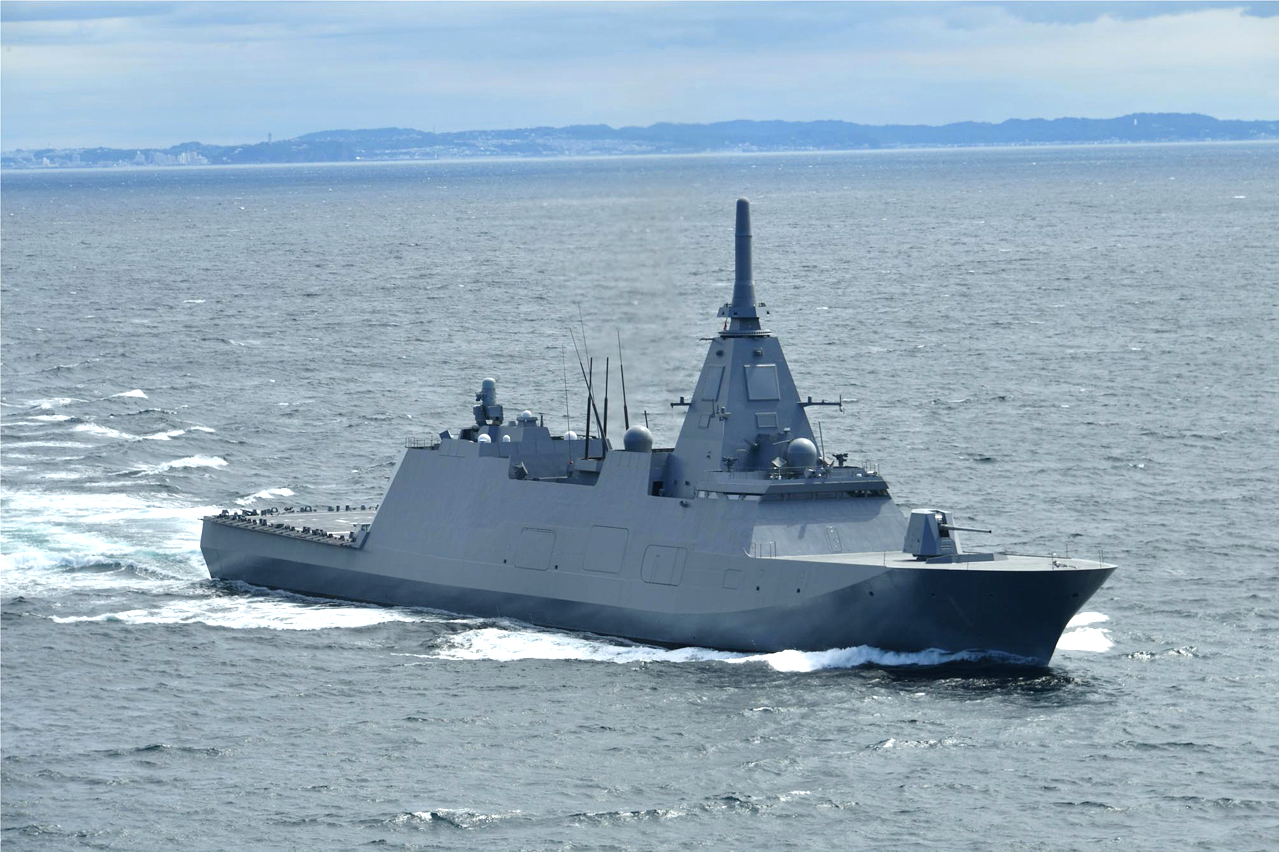
(Updates with comments from Thales Australia) The Mogami frigate has been selected for SEA 3000 – despite being more expensive – because of a combination of technical excellence and strong support from the Japanese government. The ship is more heavily armed than the rival MEKO 200 having 32 Vertical Launch System (VLS) cells compared with 16 for the German ship. Other attractive features included a low number of crew due to automation, and a design life of 40 years compared with 30 for a conventional warship. However, probably the most persuasive factor was the commitment of the Japanese government to the project and promises that the three Australian frigates will be delivered on time by Mitsubishi Heavy Industries (MHI). Tokyo has also been lobbying very hard, using the project as a mechanism for increased strategic cooperation with Australia. In a joint media statement, Defence Minister Richard Marles and Defence Industry Minister Pat Conroy said: “Following a rigorous and competitive tender process, Mitsubishi Heavy Industries’ Mogami-class frigate was assessed as best able to quickly meet the capability requirements and strategic needs of the Australian Defence Force (ADF). “The upgraded Mogami-class frigate boasts a range of up to 10,000 nautical miles, a 32 Cell Vertical Launch System, and is fitted with surface-to-air missiles and anti-ship missiles. “The decision comes months ahead of schedule – reflecting the Albanese Government’s commitment to transforming the ADF into a more integrated, focussed force. “The Government acknowledges the competitive, high-quality proposal submitted by Thyssenkrupp Marine Systems, and thank them for their commitment and professionalism throughout this procurement process.” The next step is for the Australian DoD to negotiate a contract with MHI, which might also involve Japan’s procurement agency ATLA. Typically, Australian contract negotiations are painful because the DoD is wedded to the Anglo-Saxon approach of insisting on a huge amount of detail with penalties for non-performance and an attitude of suspicion towards the contractor. It will be an interesting clash of cultures to see how negotiations play out. The Australians hope that the contract can be signed after only two months of negotiations, which seems optimistic. The biggest loser in all of this is Australian combat management system (CMS) supplier Saab because the Japanese ship comes with its own hardware and software. This will make the first three Japanese ships technical orphans, though they are said to be fully interoperable with the RAN surface fleet. Senior officers have been indifferent to the issue of introducing a new CMS into the inventory, saying its adoption is simply a matter of retraining operators to push some different buttons. There is already speculation that MHI will build more than three ships in Japan. The redevelopment of the Henderson shipbuilding precinct in WA – a necessary first step for local construction – has stalled and given the urgency of the project it might make more sense to keep buying the frigates from overseas. This might also have consequences for the Hunter frigate project, with Japan able to build ships much faster and cheaper than Australia. UPDATE Thales Australia has welcomed the news that the General Purpose Frigate program has been awarded to Thales Australia’s strategic partner Mitsubishi Heavy Industries (MHI) for the Mogami-class frigate. As part of the Royal Australian Navy’s next-generation surface combatant fleet, 11 of the frigates will be built in total – three overseas and the remaining in Australia. Thales has a longstanding strategic partnership with MHI, working together to deliver unique and innovative solutions, particularly in the development of advanced mine-countermeasure sonar systems. This decision represents strengthened cooperation between Japan and Australia and is a step forward in delivering a modern and flexible maritime force for regional deterrence. Jeff Connolly, CEO, Thales Australia and New Zealand: “Thales Australia congratulates the Government and MHI on this significant announcement. The Mogami-class frigate is a formidable addition to Australia’s naval capability. With a long-standing, sustainable partnership with MHI, Thales Australia reaffirms our commitment to deepening bilateral ties between our two countries. Our innovation through partnership approach has delivered a potent mix of cutting-edge capabilities that deliver advanced maritime security, while leveraging and building manufacturing capabilities and supply chains.” For Editorial Inquiries Contact: Editor Kym Bergmann at [email protected] For Advertising Inquiries Contact: Group Sales Director Simon Hadfield at [email protected]
Previous article
APDR Podcast Episode 104 with host Kym Bergmann
Kym Bergmann has more than 35 years of experience in journalism and Australian and international defence industry. After graduating with Honors from the Australian National University, he joined Capital 7 television, holding several positions including foreign news editor and chief political correspondent.
After 2 years on the staff of a Federal Minister, he moved to the defence sector and held senior positions in several companies, including Blohm+Voss, Thales, Celsius and Saab. In 1997 he was one of 2 Australians selected for the Thomson CSF 'Preparation for Senior Management' MBA course, the other being Chris Jenkins - formerly the CEO of Thales Australia.
He has also worked as a consultant for a number of companies, including Raytheon, Tenix (now part of BAES) and Martin Marrietta (now part of Lockheed Martin). He had several board appointments, including Thomson Sintra Pacific (1994 - 96) and Saab Pacific (1998 - 2003).
He retains good personal links with senior figures in Government, as well as in industry and the media. He decided to return to journalism in May 2008, and holds the position of editor for Asia Pacific Defence Reporter (APDR) and Defence Review Asia (DRA). He is also a podcaster and commentator on defence and national security issues.
Comments
Loading comments...