
No Minister, Australia doesn’t normally subsidise US defence industry
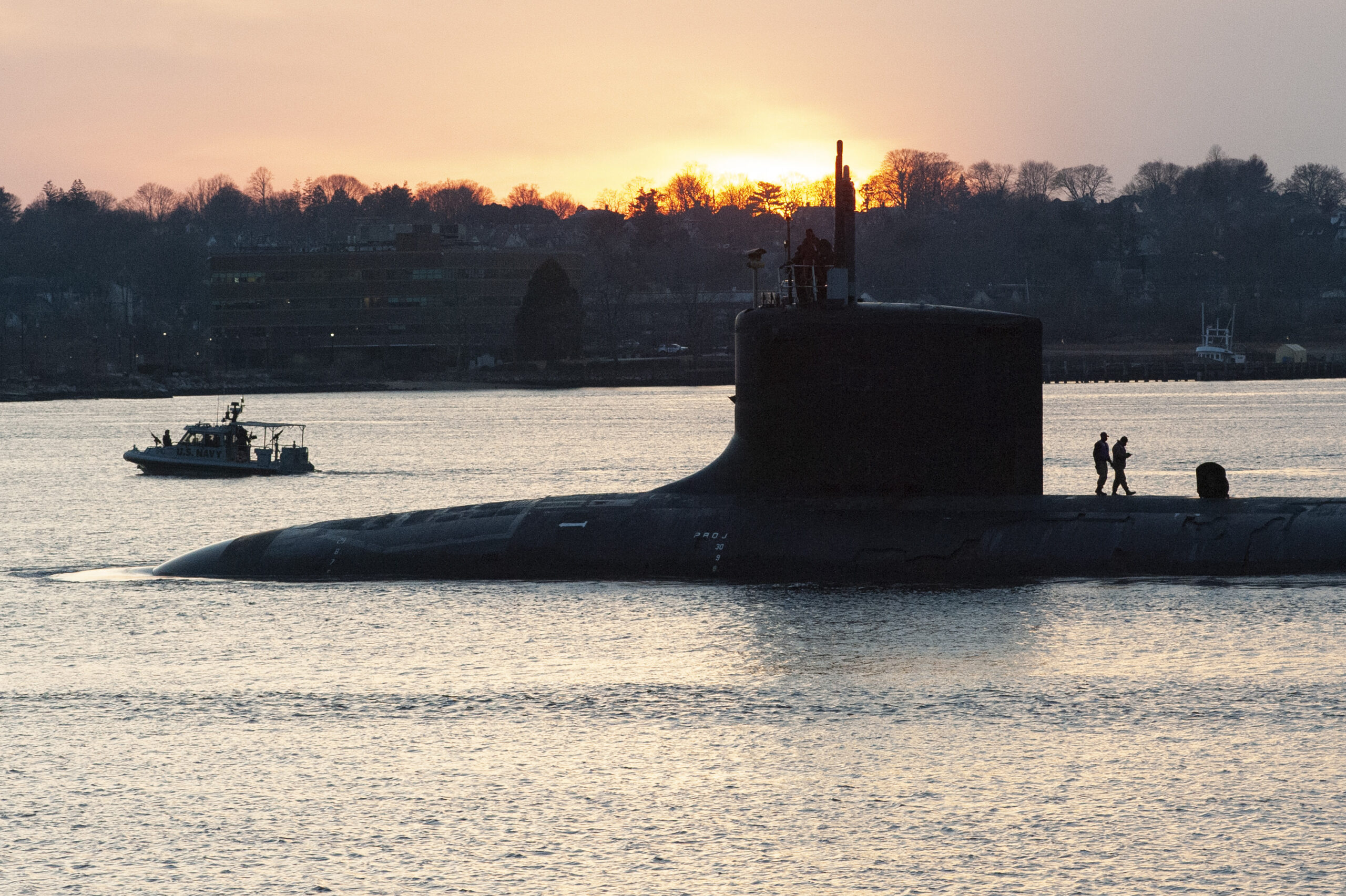
On December 14 the US Congress passed the 2023 National Defense Authorization Act (NDAA) that includes further detail about the AUKUS agreement. The entire document is a massive 4,409 pages, covering everything from the acquisition of B-21 bombers through to protocols about the use of guard dogs. The AUKUS-specific legislation had been stuck in the Senate for the last six months, so Democrat and Republican power brokers wrapped it up inside the much larger spending bill to finally guarantee its passage. It is designed to put in place a number of procedures leading up to a possible sale of two second hand Virginia class submarines to Australia about a decade from now, with a third new vessel also part of the mix. The bill also clears the way for a special account to be set up, administered by the US Secretary of the Navy, for Australia to transfer US $3 billion (AU $4.47 billion) that has the objective of increasing the output of American submarines. In an Op-Ed published in ‘The Australian’ on December 19, Defence Industry Minister Pat Conroy said of this payment, omitting to mention how much it is: “The act also clears the way for Australia to invest in the US submarine industrial base to help realise the transfer of Virginia-class submarines to Australia as soon as possible. That’s fair enough. Australia always pays its own way. It is fair and proportionate.” It is difficult to know what the Minister means about Australia paying its own way – and APDR is unaware of any similar advanced payment to subsidise the industry of another country. Normally, you pay for the equipment you are buying – and if it’s an FMS purchase (which admittedly this is not), the price for Australia is meant to be very similar to the one the US military pays for the same thing. However, the $4.47 billion is not a deposit or a down payment – it is a unique financial contribution to US defense industry – and in particular contractors such as General Dynamics Electric Boat, designer and builder of the Virginia class. With more than 100,000 employees and annual revenue of about $59 billion – more than the entire Australian Defence budget – they will undoubtedly be pleased by the prospect of some extra cash. The arrangement is self-evidently unique because of the need for legislation to make it happen. No other country has gone down this path of handing billions for the Secretary of the Navy, currently Carlos Del Torro, to spend as they see fit. It also seems a bit cute to refer to this as an investment in the US industrial base. It appears to be a no strings attached gift. To date, Defence has failed to provide any information about how this huge amount was calculated, or even if the Americans asked for it in the first place. Certainly, the US is not going to turn down such generosity even though their economy is fifteen times larger than our own. In his article, Minister Conroy also writes: “In an unprecedented step, Australia will be included in the US Defence Production Act’s definition of domestic source. This means Australian-based businesses will be eligible to receive loans, grants and purchasing contracts direct from the US government to support priority sectors, such as critical minerals supply chains, guided weapons, and advanced capabilities.” If it happens that will be good news because to date the US has been woeful at buying any military hardware from Australia, with the partial exception of the Nulka hovering rocket decoy, in service with the USN. Even in that case, the complex – and expensive – electronic payload comes from American suppliers. In comparison, Australia is the world’s 4th largest purchaser of US hardware, regularly importing around $5 billion worth of stuff every year. The track record of the UK – the other AUKUS partner – when it comes to buying Australian military equipment is even worse. The problem is that the actual wording in the NDAA is far less direct than Minister Conroy suggests and there are still several administrative steps to go through until Australian companies have direct, unfettered, access to the US market. When and if that happens, it will be interesting to see to what extent Australia can overcome American parochialism and a natural tendency to continue dealing with the company down the road rather than a new player from the other side of the Pacific. As for the possible sale of second-hand Virginias, this will be decided by a US President at an unspecified time, presumably around 2028. The Act says that the deal can go ahead if the President decides it: i) will not degrade the United States undersea capabilities; ii) is consistent with United States foreign policy and national security interests; That seems to give the US quite a lot of wriggle room – and the $4.47 billion doesn’t include a refund clause. The way that AUKUS has been structured, the only thing that Australia can currently contribute is cash. For Editorial Inquiries Contact: Editor Kym Bergmann at [email protected] For Advertising Inquiries Contact: Director of Sales Graham Joss at [email protected]
Previous article
C-27J Spartan hits 250,000 flight hours
Kym Bergmann has more than 35 years of experience in journalism and Australian and international defence industry. After graduating with Honors from the Australian National University, he joined Capital 7 television, holding several positions including foreign news editor and chief political correspondent.
After 2 years on the staff of a Federal Minister, he moved to the defence sector and held senior positions in several companies, including Blohm+Voss, Thales, Celsius and Saab. In 1997 he was one of 2 Australians selected for the Thomson CSF 'Preparation for Senior Management' MBA course, the other being Chris Jenkins - formerly the CEO of Thales Australia.
He has also worked as a consultant for a number of companies, including Raytheon, Tenix (now part of BAES) and Martin Marrietta (now part of Lockheed Martin). He had several board appointments, including Thomson Sintra Pacific (1994 - 96) and Saab Pacific (1998 - 2003).
He retains good personal links with senior figures in Government, as well as in industry and the media. He decided to return to journalism in May 2008, and holds the position of editor for Asia Pacific Defence Reporter (APDR) and Defence Review Asia (DRA). He is also a podcaster and commentator on defence and national security issues.
Comments
Loading comments...