
Home › Sea
Timor Sea trial advances Australian gyroscope technology
By APDR
•Nov 8, 2026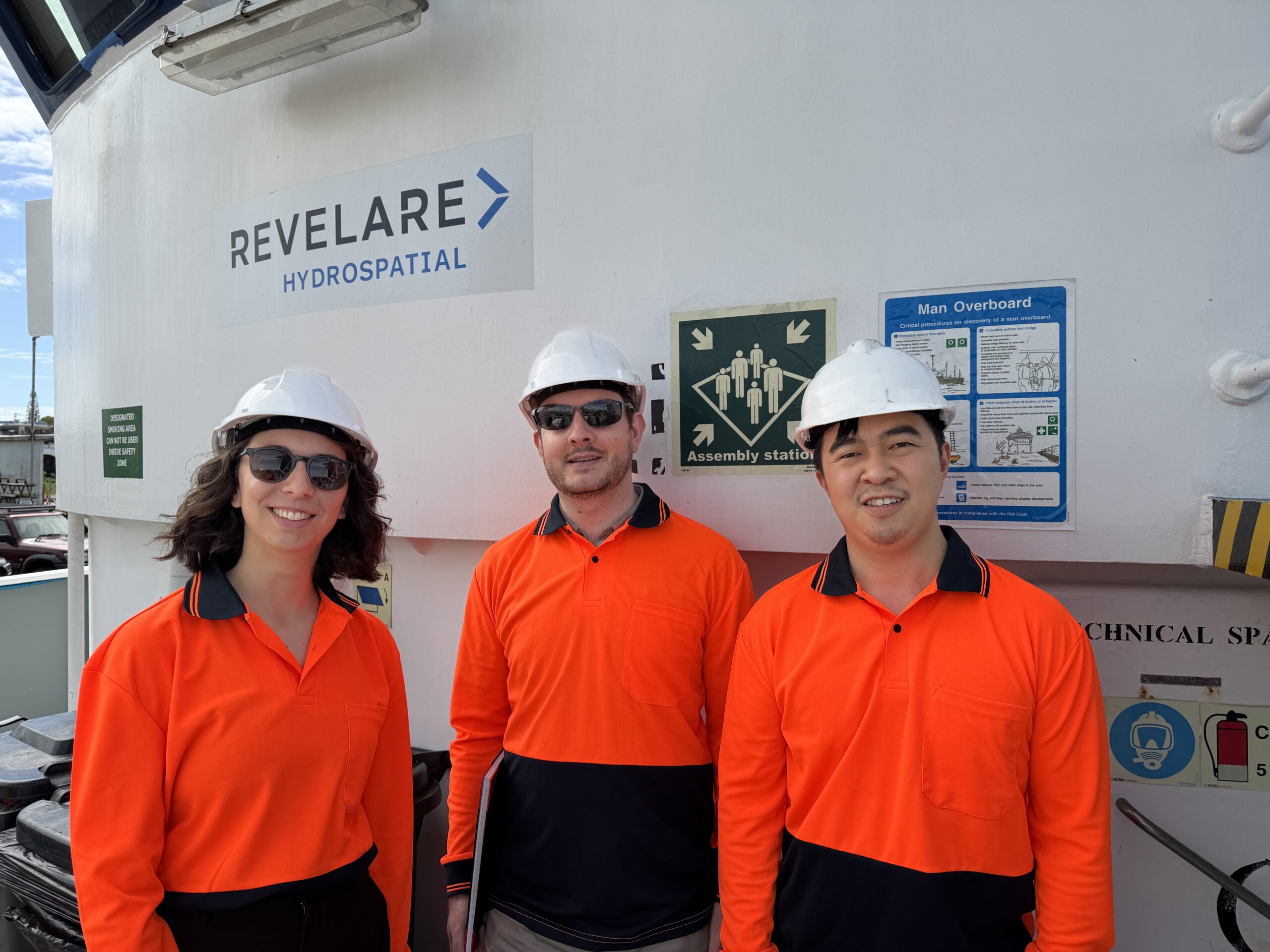
An important stretch of a key shipping lane, midway between Australia and Timor, is the proving ground for Australian-developed fibre optic gyroscope technology. Canberra-based Forge Photonics develops inertial systems to help ships, land vehicles and uncrewed systems to track their movement and estimate their position with reduced dependence on satellite-navigation signals. The start-up has the backing of HostPlus and IP Group Australia and is working to deliver a new type of navigation technology. The company has partnered with Revelare, an Australian-owned, full-service spatial intelligence company, to test the new technology during an ongoing project to map around 5700 square nautical miles between The Boxers and Lynedoch Bank in the Timor Sea, northwest of Darwin. “The area is an important waterway, parts of which have not yet been surveyed to current standards and where there is potential for hazardous seabed,” said Revelare Group CTO Geoff Lawes. “Accurate seabed mapping depends on more than sonar alone. We need very accurate trajectory data to position the sonar measurements, and we are evaluating Forge’s new fibre optic technology alongside current overseas sourced, but state-of-the-art navigation systems. We are always looking for opportunities to use high-performance, locally manufactured solutions in our capability delivery.” Revelare Group subsidiary Revelare Hydrospatial has been providing high-quality hydrospatial and geophysical expertise and solutions to the defence, mining, energy, ports and harbours and offshore wind sectors since 2008. It is currently completing Timor Sea survey activities under the Australian Government’s HydroScheme Industry Partnership Program (HIPP). Forge Photonics CEO Dr Justin Wong said the area experiences a wide range of oceanographic and meteorological conditions. “It is an ideal testbed for evaluating how well next-generation inertial navigation systems perform alongside established systems,” Mr Wong said. “Revelare Hydrospatial’s contribution, integration effort, and operational expertise enables us to evaluate our Australian-developed fibre optic gyroscope in real world conditions. This is an encouraging first step prior to our upcoming overseas trials and engagement with local integration partners.” Lawes said Forge Photonics’ technology is based on an innovative architecture, and its use of locally mass-produced telecommunications components is a plus. “It’s reassuring to see a technology solution that enables critical components to be readily sourced in the local market, adding to Australian supply-chain resilience,” he said. Dr Wong said the Forge Photonics team has spent years at the Australian National University measuring some of the smallest signals in physics as part of the global effort to detect gravitational waves. “We’re applying that precision-measurement heritage to a harder-edged problem: keeping platforms on mission when satellite-navigation is degraded, unavailable or unreliable. We’re delivering a solution that’s not only supply-chain resilient but more cost-effective compared with other types of navigation system.” Dr Wong said Forge’s biggest market opportunities are uncrewed defence platforms including ships, submersibles, and vehicles. “Civil applications include shipping, precision drilling and autonomous haul trucks for underground mining – almost any driverless vehicle needing affordable, precise, GPS-free navigation.” For Editorial Inquiries Contact: Editor Kym Bergmann at [email protected] For Advertising Inquiries Contact: Group Sales Director Simon Hadfield at [email protected]
TAGSForge Photonics
Previous article
Babcock launches Pelorus digital platform