US nuclear sub arrives at HMAS Stirling for month-long maintenance visit
By APDR
•Oct 29, 2026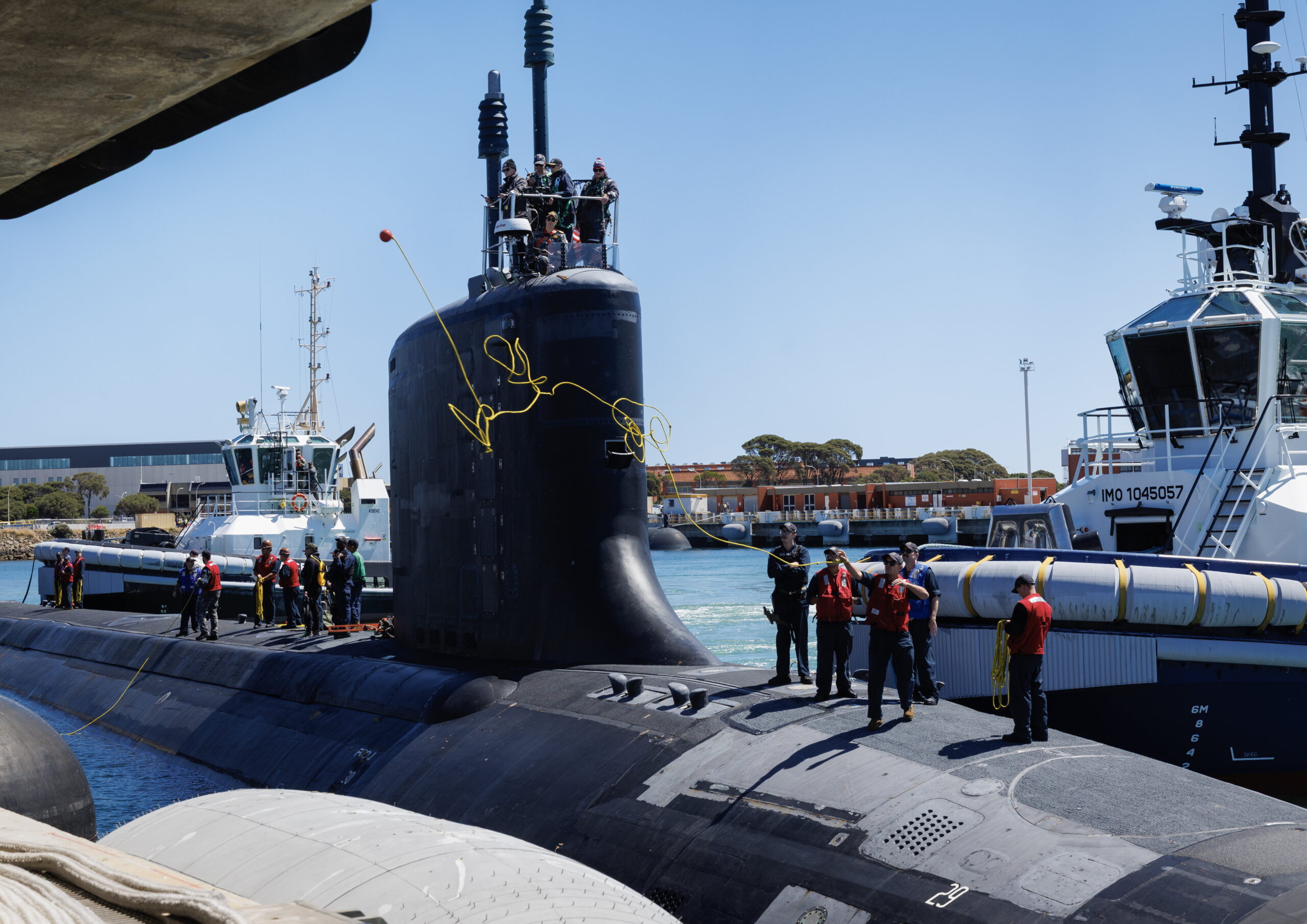
The Virginia-class fast-attack submarine USS Colorado (SSN 788) arrived at HMAS Stirling this week to begin a scheduled, month-long maintenance period. The visit marks the fourth submarine maintenance period in Western Australia since the establishment of the AUKUS security partnership and highlights ongoing progress under AUKUS Pillar I. USS Colorado (SSN 788) is the sixth nuclear-powered attack submarine to visit HMAS Stirling following the announcement of the Optimal Pathway and the third to undergo maintenance in Australia in the last 12 months under AUKUS Pillar I. The port visits and maintenance periods are part of the AUKUS Pillar I plan to help Australia acquire, operate, and maintain its own conventionally armed, nuclear-powered submarine fleet. Over the coming weeks, more than 30 trained and certified Australian civilian maintenance technicians from ASC Pty Ltd. will perform routine maintenance on a Virginia-class submarine in Western Australia for the first time, working alongside specialists from Pearl Harbor Naval Shipyard and Intermediate Maintenance Facility (PHNSY&IMF). Under SRF-West, up to four U.S. and one U.K. submarines will rotationally operate out of HMAS Stirling. For Australia, SRF-West accelerates its readiness to maintain, operate and sustain conventionally armed, nuclear-powered, submarines while affording greater access to the Indo-Pacific region, the Indian Ocean and adjacent areas which enhances regional deterrence and operational flexibility for allied submarines. “This maintenance period brings us closer to establishing SRF-West,” said U.S. Navy Rear Adm. Doug Adams, director of AUKUS, International & Systems. “Our Lead Maintenance Activity, Pearl Harbor Naval Shipyard and Intermediate Maintenance Facility, is doing a great job ensuring the Australian personnel trained in Hawaii are ready and able to support our submarines.” The maintenance period will demonstrate several new pieces of Australian-built infrastructure. Technicians will use a custom-made metal safety walkway, known as a sail “racetrack.” The team will also leverage recent nuclear-powered submarine-specific upgrades made to HMAS Stirling’s Diamantina Pier and other local solutions, such as a pure water plant, high-pressure air compressor and dehumidifier. “With each visit, Australia demonstrates new organic capabilities,” said U.S. Navy Capt. Jason Pittman, commander of Submarine Squadron 3. “During last year’s maintenance period, we successfully delivered pure water from an Australian-designed and built plant and validated the sail racetrack was fit for purpose. During the U.K.’s maintenance period in February, we validated the high-pressure air compressor and dehumidifier systems. Now, with the racetrack, we’re using it to conduct maintenance, utilizing the pier upgrades, and leveraging a workforce of about three dozen fully qualified and certified Australian civilian nuclear-powered submarine maintenance workers.” “Through these historic port visits Australia has continued to progress our ability to not just host SSNs for longer periods but also deliver maintenance to schedule and get the boats back to sea,” said Royal Australian Navy Rear Adm. David Mann CSC, the Australian Submarine Agency’s head of Virginia Division. For the crew of Colorado, the success of this port visit relies heavily on the close partnership between the boat, the ASC team and personnel from PHNSY & IMF. This joint workforce ensures the submarine remains fully mission-ready for its forward-deployed operations. “The success of any maintenance period comes down to the people on the deckplates, and the Australian personnel stepping aboard our ship are true professionals,” said U.S. Navy Capt. Justin Reeves, commanding officer of USS Colorado. “Their technical skill and dedication are exactly what we need to keep this ship in the fight, and it gives us absolute confidence in Australia’s ability to support the fleet.” Western Australian businesses are supporting the maintenance of the submarine, demonstrating the growing role Australians are playing in supporting one of the world’s most advanced naval platforms while building the skills and supply chains needed for AUKUS. Fifteen WA businesses, including WA-owned and operated Australian Safety Engineers (ASE), are providing everything from scaffolding, crane and rigging support to specialist welding equipment, testing and certification, and environmental protection solutions for the Submarine Maintenance Period (SMP) for USS Colorado at HMAS Stirling, south of Perth. The wharf-side services and shoreside support for the SMP is worth more than $1.0 million to local industry – and is a sign of things to come for future submarine sustainment in WA. Sustainment is the ongoing work that ensures submarines remain safe, reliable and ready for operations throughout decades of service, from routine maintenance and repairs to major upgrades and specialist engineering support. The SMP is providing Australian industry and ASC employees with hands-on experience supporting a Virginia Class submarine ahead of the commencement of Submarine Rotational Force-West (SRF-West) next year, when US Virginia Class and UK Astute Class nuclear-powered submarines begin a rotational presence at HMAS Stirling. SRF-West will provide a critical bridge to Australia’s future nuclear-powered submarine capability, building the skills, experience and infrastructure needed to support the nation’s own fleet. The SMP will also draw on 60 ASC employees who have trained alongside the US Navy in the United States, building specialist skills and experience working on Virginia Class submarines. ASC Chief Executive Officer Alex Walsh said the maintenance activity was creating valuable opportunities for Australian industry while strengthening the nation’s future submarine enterprise. “Australia’s nuclear-powered submarine capability will be built through practical experience, and that is exactly what is happening at HMAS Stirling,” Walsh said. “Western Australian businesses and ASC workers are gaining real experience supporting a Virginia Class submarine, strengthening the industrial capability Australia will need for SRF-West and the decades of submarine sustainment ahead.” Meanwhile, Australian businesses continue to progress through a rigorous national qualification program that supports the construction of Virginia Class submarines in the United States. Established by the Australian Submarine Agency (ASA) in partnership with the US Government and delivered by ASC, the Defence Industry Vendor Qualification (DIVQ) Program helps Australian businesses strengthen their systems, processes and technical capability to meet US submarine requirements. For Editorial Inquiries Contact: Editor Kym Bergmann at [email protected] For Advertising Inquiries Contact: Group Sales Director Simon Hadfield at [email protected]
Comments
Loading comments...