
USN Virginia submarine production shortfall worsens
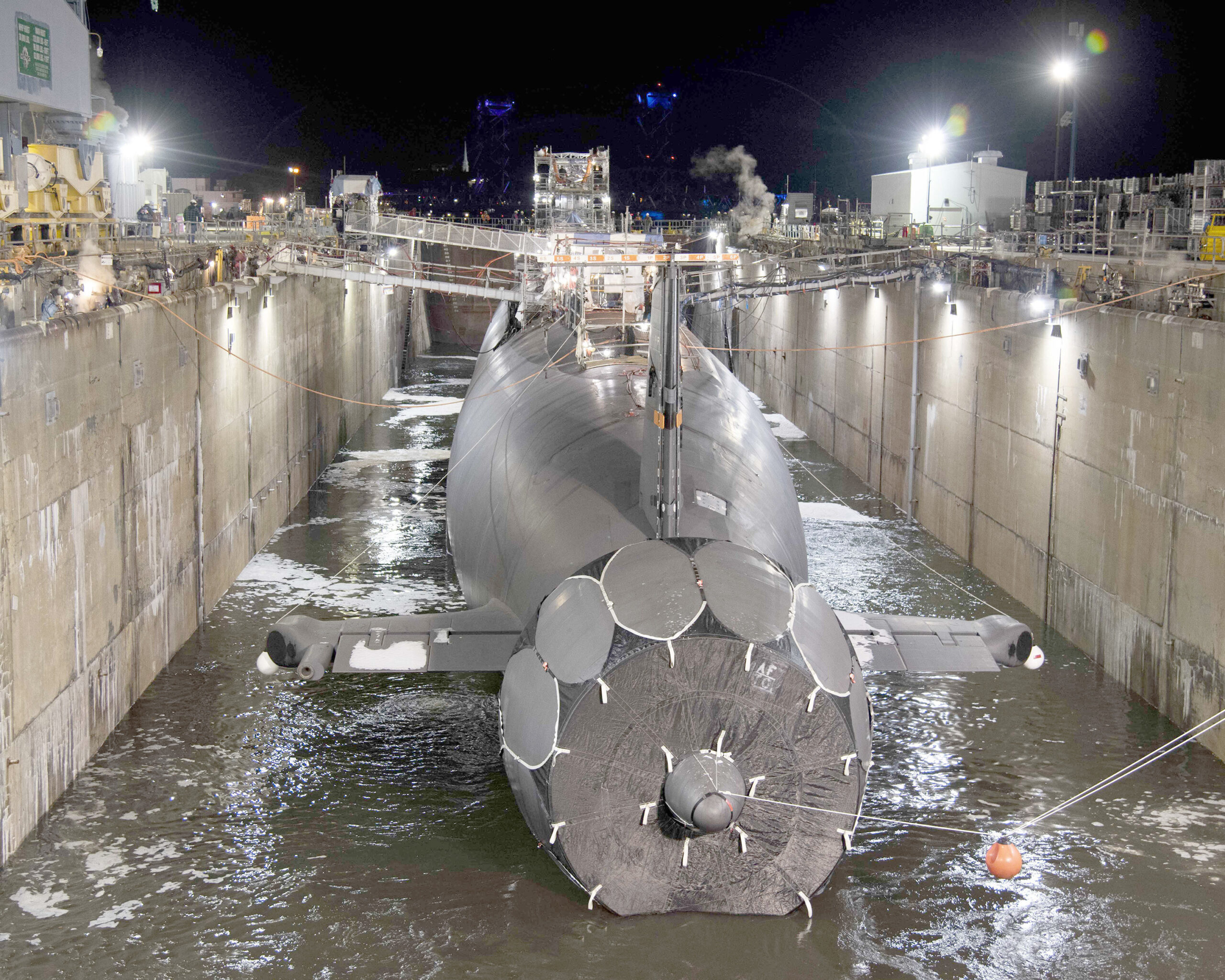
Despite the best attempts of the Australian government to hide the details of moves to acquire second-hand nuclear-powered submarines from the US, some basic facts are clear. Probably the most important is that to meet their own needs for attack class submarines until the 2040s, the US needs to lift the production rate to two per year by 2028 – but is nowhere near reaching that target. To churn them out at a speed allowing the sale of between one and three to Australia, the production line must reach a rate of 2:33 per year, also by 2028, if we are to receive our first one in 2032. Even at this accelerated rate, it would only be producing one entire spare or surplus Virginia class every three years. The average over the last decade is 1.3 per year, though it is increasing – but not by very much. It also must be remembered that even at this ambitious accelerated rate, Australia will receive submarines that were built somewhere between 2005 and 2020 in an “old-for-new” deal that has never been scrutinised. In other words, we are about to be paying to subsidise new Virginias for the US but in return will get boats already between one third and one half of the way through their service lives. As we have previously reported, Australia is about to transfer $4.6 billion to Washington – not for the submarines themselves, they will be a lot more on top of that – but for a vague contribution to expanding the US shipbuilding base. In other words, it will be a payment – administered by the US Secretary of the Navy – to submarine manufacturers such as Electric Boat and Huntington Ingalls Industries to make parts for US submarines. The problem for Australia is that the US is failing to meet its own targets for growth – and the 2025 Presidential Defense budget request is no exception, which has funding for only a single Virginia class submarine. Rather than increasing production, the US appears to be reducing it. In Congress, one of the main advocates for the AUKUS submarine deal is Rep Joe Courtney (Dem – Connecticut) who says of this alarming situation: “At a time when the pace of all of Navy shipbuilding—manned and unmanned, including carriers, submarines, destroyers, and frigates—is recovering from the impact of the COVID pandemic and supply chain disruptions, the Navy’s plan to cut a submarine that is already been partially paid for and built, makes little or no sense. “If such a cut is actually enacted, it will remove one more attack submarine from a fleet that is already 17 submarines below the Navy’s long stated requirement of 66. Given the new commitment the Department of Defense and Congress made last year to sell three submarines to our ally Australia, which I enthusiastically support, the ramifications of the Navy’s proposal will have a profound impact on both countries’ navies. “This deviation from last year’s projected Future Years Defense Program (FYDP) contradicts the Department’s own National Defense Industries Strategy issued on January 11, 2024, which identified ‘procurement stability’ as critical to achieve resilient supply chains. For all these reasons and more, this hard rudder turn by the Navy demands the highest scrutiny by the Congress which, at the end of the day, has the sole authority ‘to provide and maintain a Navy’ vested in Article One, Section Eight of the Constitution.” As APDR has been reporting, an earlier legislative attempt to provide supplemental funding of the submarine base by US $3.3 billion – also championed by Joe Courtney – has been blocked by Congress because of hard-line Republican opposition to other aspects of the bill. Mr Courtney comes from the Second Congressional district of Connecticut and in the heart of his electorate if the massive Electric Boat shipyard in Groton, which is currently building both Columbia class nuclear missile firing SSBNs and Virginia SSNs. He has been passionate about the need to increase the rate of production of both classes and on January 17 he and several of his colleagues wrote to President Joe Biden saying: “The AUKUS partnership relies on our nation to sustain a consistent build rate for attack submarines required to fulfill our obligation to successfully transfer, via sale, Virginia-class submarines to Australia while meeting our own force structure requirements. “It is imperative to maintain a steady two-per-year procurement rate to assure our partners in our ability to meet commitments and address concerns about our nation’s undersea capabilities. “Simply put, now is not the time to insert instability in the supply chain with uncertainty in procurement rates. The FY2025 budget will come at a pivotal time for the Virginia-class submarine program and sustaining our unmatched edge in the undersea domain. “Any deviation from the planned cadence of the construction and procurement of two submarines per year will reverberate both at home and abroad, with allies and competitors alike.” It seems that the plea has fallen on deaf ears – though to be fair, Congress has the power to overrule the President’s request and could reinstate funding for a second Virginia class in the 2025 financial year. Given the overall Congressional cap on defense spending, to do so would involve cutting elsewhere in the budget, which is never an easy task. Meanwhile in Australia, the reality of the situation in the US continues to be ignored. On February 29, the following exchange between the writer and Defence Industry Minister Pat Conroy occurred: Kym Bergmann: My question is about the US industrial base. In January the US Secretary of Navy Carlos Del Toro criticised US shipbuilders for excessive greed, with buybacks boosting their stock price. So why is Australia going to transfer $4.6 billion to the same US industrial base? MINISTER CONROY: What I can say to you is that we’re incredibly committed to getting the most advanced capability – most advanced submarine capability in the world. And part of that is uplifting the US industrial base. At the same time, we’re investing $30 billion in uplifting our own industrial base. That will create 20,000 Australian jobs. So that’s the answer to the question. Yes, Minister. For Editorial Inquiries Contact: Editor Kym Bergmann at [email protected] For Advertising Inquiries Contact: Director of Sales Graham Joss at [email protected]
Previous article
PTT tech tested on Fleet Space’s Centauri-4 satellite
Kym Bergmann has more than 35 years of experience in journalism and Australian and international defence industry. After graduating with Honors from the Australian National University, he joined Capital 7 television, holding several positions including foreign news editor and chief political correspondent.
After 2 years on the staff of a Federal Minister, he moved to the defence sector and held senior positions in several companies, including Blohm+Voss, Thales, Celsius and Saab. In 1997 he was one of 2 Australians selected for the Thomson CSF 'Preparation for Senior Management' MBA course, the other being Chris Jenkins - formerly the CEO of Thales Australia.
He has also worked as a consultant for a number of companies, including Raytheon, Tenix (now part of BAES) and Martin Marrietta (now part of Lockheed Martin). He had several board appointments, including Thomson Sintra Pacific (1994 - 96) and Saab Pacific (1998 - 2003).
He retains good personal links with senior figures in Government, as well as in industry and the media. He decided to return to journalism in May 2008, and holds the position of editor for Asia Pacific Defence Reporter (APDR) and Defence Review Asia (DRA). He is also a podcaster and commentator on defence and national security issues.
Comments
Loading comments...