
Viewpoint: No Australian content as AUKUS tilts toward a U.K. purchase
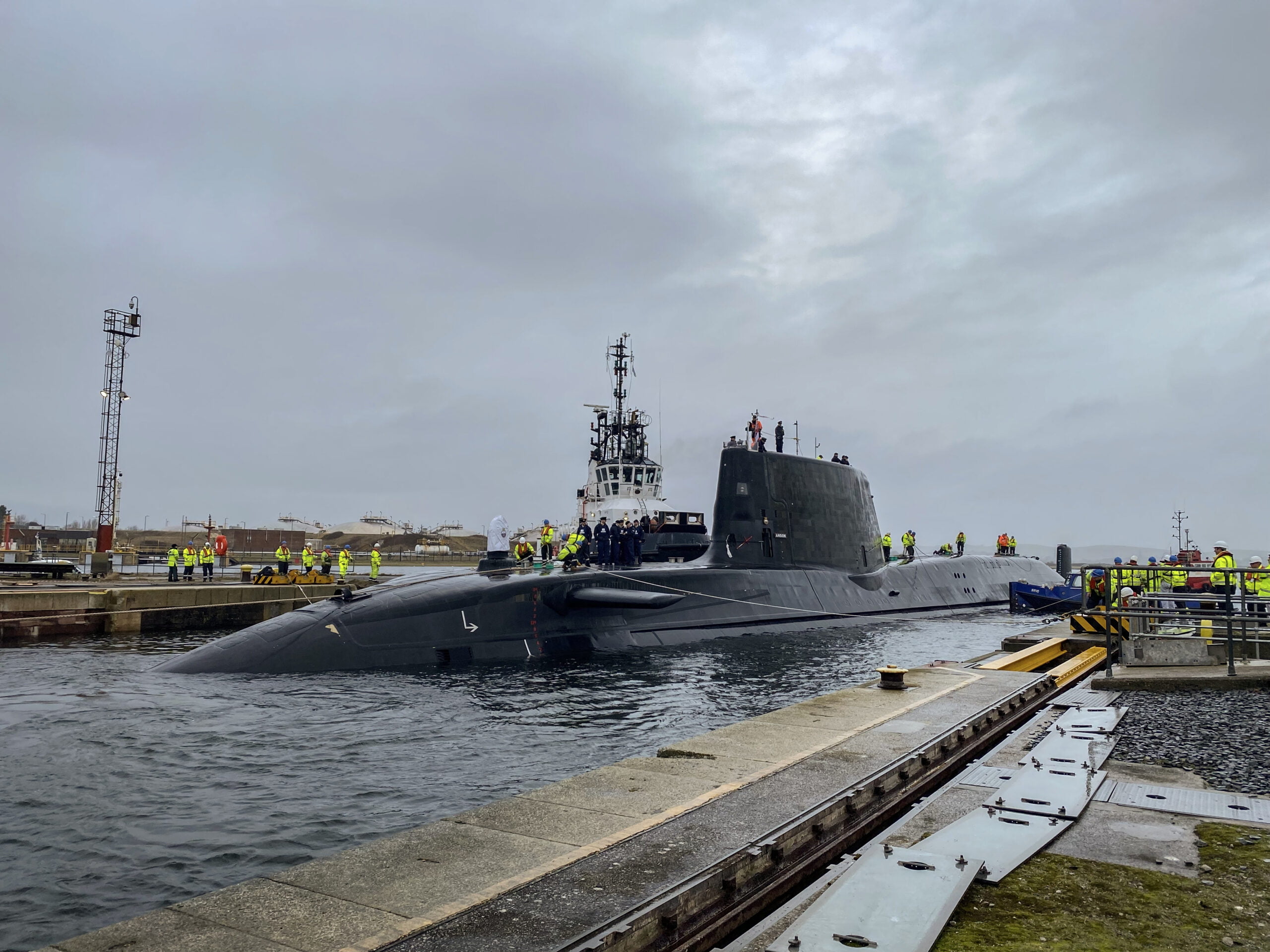
We will all be put out of our misery – metaphorically speaking – on Tuesday, Australian time, when the “optimal pathway” for acquiring nuclear powered submarines will be revealed. This will be in the U.S. west coast city of San Diego by President Joe Biden, U.K. Prime Minister Rishi Sunak and our own Anthony Albanese, flying in after a visit to India. The latest rumours have an air of consistency to them, namely that the pathway will somehow involve Australian participation in the next generation U.K. attack class submarine program, currently known as the SSN(R). Given that this activity might produce a new nuclear-powered submarine by 2050, there are hints that the Royal Navy could sell the last two Astute submarines – yet to be completed – to Australia as gap fillers. There are several things to be said about this, none of them especially positive. The first is that the U.S. seems to have effectively pulled out of all of this, perhaps having studied the idea, concluding that there are far too many practical and political obstacles in the way of helping Australia develop its own submarine production capability – which was one of the foundational aims of AUKUS. The U.S. industrial base is stretched to capacity – and the wisdom of transferring exceptionally sensitive military technology to a small nation with uncertain cyber security credentials is not universally accepted in the Pentagon. By turning the practicalities over to the U.K. and Australia to work through is actually a win-win. Washington relieves itself of a technically difficult, time-consuming undertaking – but at the same time President Biden can hold up the deal as evidence of Westminster and Canberra fully committing to the U.S. led anti-China alliance. At some future point – a very distant one – Australia’s submarines might indeed have a lot of U.S. content in the form of weapons, combat system and sensors. However, if Australia ends up with two Astutes, they will come with British weapons and electronics, unless they were to be retrofitted – a time consuming and very costly process – which would seem to negate the purpose of the deal. They will also come with reactors no longer in production because of safety concerns about their design. Nuclear-powered submarines – just like all other complex systems – require a lot of maintenance for safety and performance reasons. If Australia has only two of them, it is likely that for some periods of time neither will be available, with the most likely scenario being that a single Astute will be able to put to sea at any given time. Billions of dollars will need to be spent on a new east coast facility and crews will need to be trained. If this scenario is correct, the huge winner will be the U.K. Once again, the colonials – that’s us – will be spending a fortune on British technology, which former Defence Minister Peter Dutton has pointed out is not the best. The media has reported Sunak jumping for joy and being dizzy with excitement about the announcement – which is hardly surprising given that Australia will be subsidising his deeply troubled budget and will provide some desperately needed retrospective justification for Brexit. Other reporting has the U.S. also supplying Australia with Virginia class submarines in the 2030s. However, why Washington would divert submarines intended for the USN is unclear, though if there is a massive ramping up of production capacity it might be possible. The idea that we would operate two classes of SSNs from two different countries seems strange, to put it mildly. Let’s hope that the rumours are incorrect because otherwise this is looking like a thoroughly bad deal for Australia. As well as costing a vast amount of money – tens of billions of dollars – the effect on national security for the next 30 years will be minimal. There might well be thousands of new jobs created in the U.K., but there will be none here, unless you count pouring concrete for the new base. For Editorial Inquiries Contact: Editor Kym Bergmann at [email protected] For Advertising Inquiries Contact: Director of Sales Graham Joss at [email protected]
Previous article
From the Magazine: AIR MARSHAL ROBERT CHIPMAN IN CONVERSATION WITH APDR’S KYM BERGMANN
Kym Bergmann has more than 35 years of experience in journalism and Australian and international defence industry. After graduating with Honors from the Australian National University, he joined Capital 7 television, holding several positions including foreign news editor and chief political correspondent.
After 2 years on the staff of a Federal Minister, he moved to the defence sector and held senior positions in several companies, including Blohm+Voss, Thales, Celsius and Saab. In 1997 he was one of 2 Australians selected for the Thomson CSF 'Preparation for Senior Management' MBA course, the other being Chris Jenkins - formerly the CEO of Thales Australia.
He has also worked as a consultant for a number of companies, including Raytheon, Tenix (now part of BAES) and Martin Marrietta (now part of Lockheed Martin). He had several board appointments, including Thomson Sintra Pacific (1994 - 96) and Saab Pacific (1998 - 2003).
He retains good personal links with senior figures in Government, as well as in industry and the media. He decided to return to journalism in May 2008, and holds the position of editor for Asia Pacific Defence Reporter (APDR) and Defence Review Asia (DRA). He is also a podcaster and commentator on defence and national security issues.
Comments
Loading comments...