
Defence innovator releases plan to reinvigorate Australian economy
By APDR
•Mar 4, 2025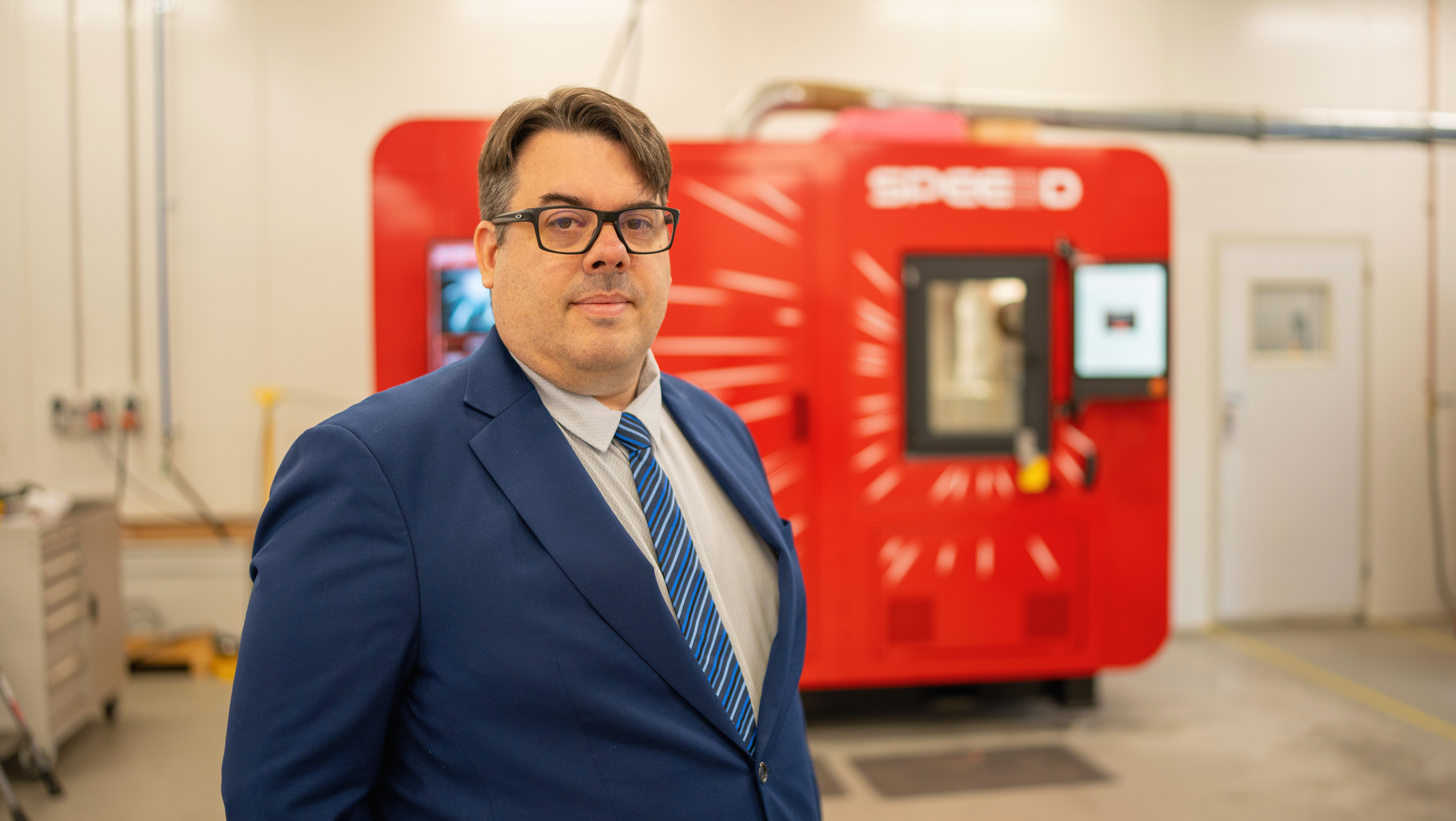
Leading Australian entrepreneur and scientist Steven Camilleri has released a blueprint for reinvigorating the Australian economy through innovation. Australia is the land of plenty. But building home-grown, green and gold prosperity depends on a growing domestic industry that adds real value to our resource wealth. This means backing Australian businesses to not just deliver the raw materials – like iron ore and cotton – but to growing the value chain from sophisticated metals processing to weaving, data centres, and beyond. Doing so requires leadership, a willingness to put money, time, and support behind innovators. As the co-founder of the Darwin-based high-speed metal 3D printing a start-up, SPEE3D, Camilleri has been at the forefront of commercialising Australian inventions for decades. But with their 3D metal printing technology in daily use on the battlefields of Ukraine and supporting the logistical planning of militaries from the United States to Japan – Camilleri and his colleagues know that having real support at home is essential for any local business with the next big idea. As Australia’s next Federal Election races towards us, Camilleri’s blueprint is a call to arms for all those hoping to lead Australia in the coming years. Australian industry is in crisis and plans to rebuild a future-proofed Australia must be founded in our domestic industry. Australia spends just 1.8% of GDP on R&D – well below the OECD average of 2.7% and far behind leaders like Israel and South Korea, who are investing over 4%. As a consequence, Australia exported just $7.77 billion worth of high-tech goods in 2023, that’s equivalent to $294 per capita. Compare this to Singapore at $33,339 per capita, South Korea at $4,055, or Germany at $3,018. Australia’s decision-makers know that this is a crisis. It was heartening to see that the first publication from the Government’s R&D review, released by the Minister for Industry, did not shy away from the consequences or proportions of our collapse in innovation. But we need real action. If innovators are to prosper in Australia, Government needs to find innovative solutions to the problem. This cannot wait for the conclusions of a year-long review; in an environment where technology makes quantum-leaps by the week, change cannot be postponed. Camilleri said that “meeting this challenge needs the commitment of every policymaker, every investor, every entrepreneur, and every Australian. We’re a country of disruptors, and we need to support that culture in industry. Decisive actions taken today will allow small Australian manufacturers to climb the value chain and unite Australia’s world-leading foundations in energy, materials, and expertise to generate enormous economic returns. The global 21st Century economy can be built here in Australia. But that means making stuff here, and its Australia’s innovators who will deliver it. For innovative industry to prosper, we must look beyond exporting raw materials and instead manufacture the high-tech goods of the future – from aerospace components to underwater vehicles.” For Editorial Inquiries Contact: Editor Kym Bergmann at [email protected] For Advertising Inquiries Contact: Group Sales Director Simon Hadfield at [email protected]
Previous article
Thyssenkrupp Marine Systems extends CFO’s remit
Comments
Loading comments...