
Third KDX-III Batch-II destroyer gives South Korea continuous sea-based deterrence
By GlobalData
•Oct 9, 2026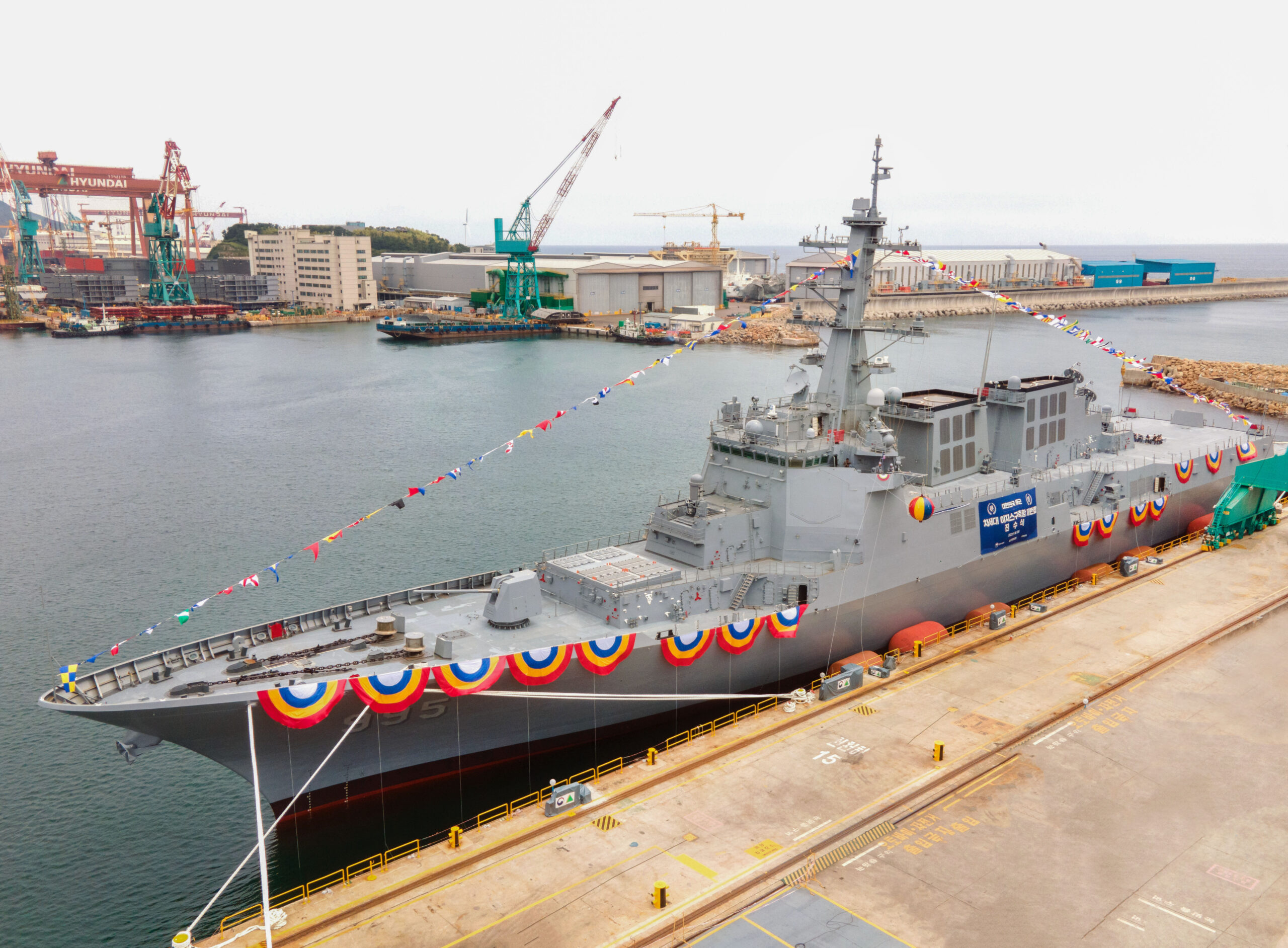
South Korea’s launch of its third KDX-III Batch-II destroyer marks a critical step toward sustaining continuous sea-based ballistic missile defence as North Korea advances more maneuverable missile threats. The expanding destroyer fleet will strengthen Seoul’s layered missile defense, while integrating SM-3 and SM-6 interceptors and indigenous weapons to improve coverage, resilience and strategic autonomy, says GlobalData, an intelligence and productivity platform. Reportedly, HD Hyundai Heavy Industries launched ROKS Daeho Kim Jong-seo, the third and final KDX-III Batch-II destroyer, at Ulsan on 30 September 2026, with delivery due in December 2027. The launch came three days before North Korea fired a claimed intermediate-range strategic missile from the Wonsan area on 3 October. South Korea’s Joint Chiefs of Staff reported a 700km flight peaking at 90km, while Pyongyang claimed the missile could alter its trajectory at low altitude. GlobalData’s report, “The Global Naval Vessels and Surface Combatants Market Forecast 2026-2036,” projects South Korea to spend approximately $19.9 billion on naval vessel and surface combatant procurement between 2026 and 2036. Destroyers account for approximately $10.4 billion of that total, or 52%, with annual destroyer spending reaching $1.4 billion in 2036. Tushar Mangure, Aerospace and Defense Analyst at GlobalData, comments: “Navies generally require three ships to keep one on station, as one is deployed, one is in training and one is undergoing maintenance at any given time. The three Jeongjo the Great-class destroyers are the Republic of Korea Navy’s only surface ships built to fire SM-3 and SM-6 interceptors, while the older Sejong the Great-class fleet will be upgraded to that standard by 2035.” Once Daeho Kim Jong-seo enters service, sea-based missile defence becomes a permanent capability rather than an intermittent one, with the Sejong the Great-class hulls extending radar tracking coverage in the meantime. South Korea approved procurement of the SM-3 in April 2024, with deliveries planned by 2030. The SM-3 is designed to intercept ballistic missiles above the atmosphere during the midcourse phase of their flight. Mangure continues: “A missile that peaks at 90km and then maneuvers lower spends almost its entire flight inside the atmosphere, largely beneath the band the SM-3 is designed to cover. Against that profile the SM-6, built to intercept ballistic missiles in their terminal phase, becomes the decisive layer. Since the Jeongjo the Great-class carries both interceptors in its 48 Mk 41 cells, the mix of SM-3 and SM-6 aboard each ship, more than the number of ships, decides how well the fleet answers North Korea’s newest missiles.” Each Batch-II destroyer also carries 24 KVLS-II cells sized for a naval ballistic missile now in development, with mass production expected in 2028 or 2029. Mangure concludes: “A single Jeongjo the Great-class destroyer can intercept North Korean missiles under South Korea’s Korea Air and Missile Defense leg and, once its naval ballistic missile arrives, hold launch sites at risk under the Kill Chain leg, from a moving position at sea that Pyongyang will find far harder to target than fixed batteries ashore. The domestically developed sonar and KVLS-II launcher, alongside the indigenous KSAM-II interceptor in prototype assembly for the KDDX destroyer, give Seoul a growing share of a naval magazine it controls itself. That sovereign depth would let the navy sustain sea-based deterrence without relying entirely on foreign missile production lines.” For Editorial Inquiries Contact: Editor Kym Bergmann at [email protected] For Advertising Inquiries Contact: Group Sales Director Simon Hadfield at [email protected]
Previous article
First Gripen E produced in Brazil by Embraer makes maiden flight
Comments
Loading comments...