
Home › Industry News
DTC launches new comms tech for warfighters, unmanned platforms
By APDR
•Nov 19, 2026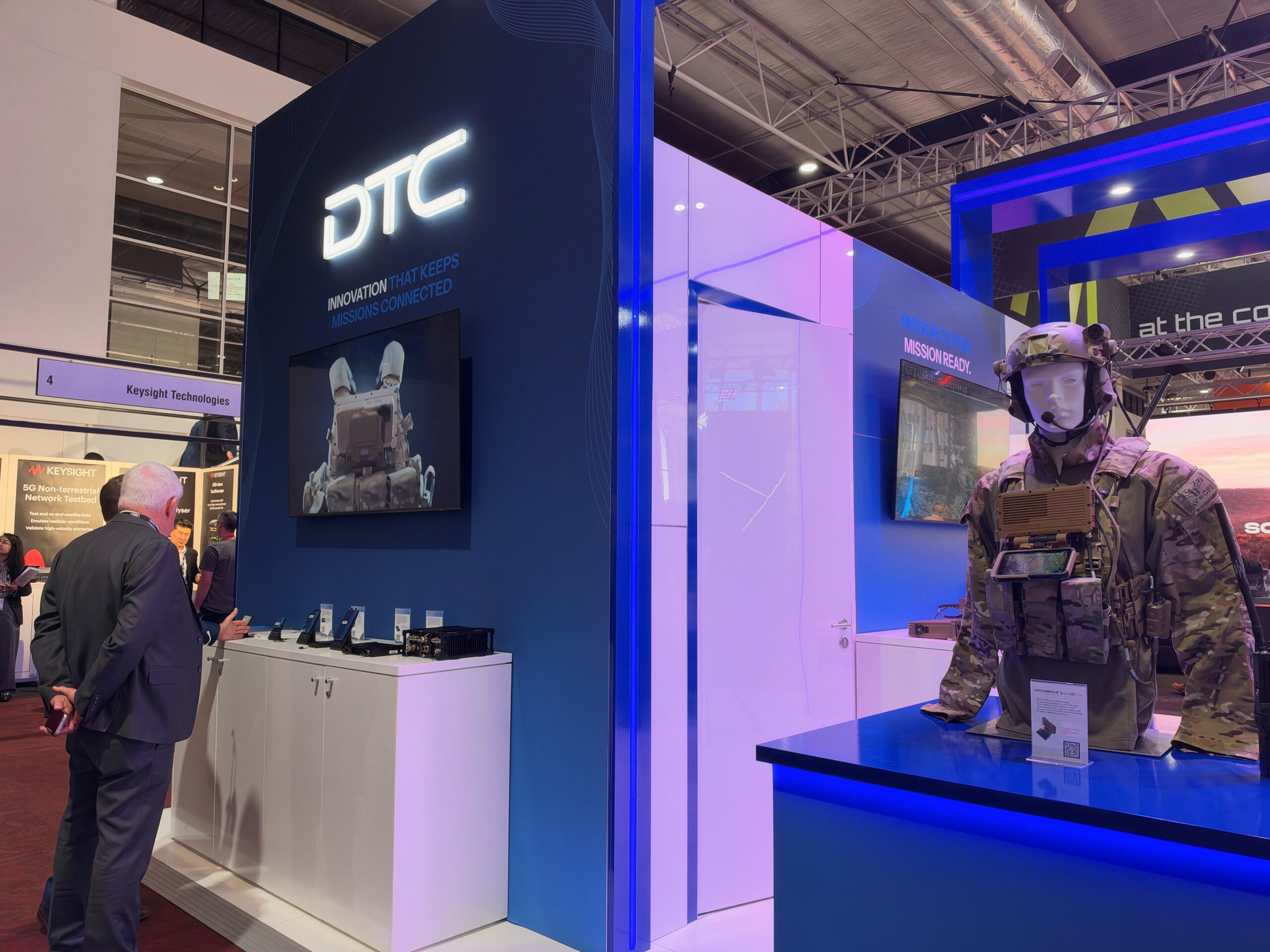
DTC announced the launch of Multiple Adaptive Generalized Interference Cancellation (MAGIC), an advanced interference mitigation technology designed to preserve critical communications under electronic attack. Available as a licensed software option within DTC’s Mesh product portfolio (BluSDRTM and Sentry Mesh), MAGIC marks a significant advance in anti-jamming technology for tactical communications. For teams operating in highly contested environments, electronic warfare can disrupt the signals carrying voice, command and control, and navigation information. MAGIC adds protection when measures to avoid detection and interference are no longer enough, enabling teams to continue exchanging critical information under jamming. “Teams cannot build their communications approach around the expectation that they will remain undetected,” said Rob Garth, Vice President of Unmanned Systems at DTC. “They must be prepared for the moment they are targeted and jammed. MAGIC strengthens our ability to support those teams with communications designed to withstand disruption and keep the mission moving.” Developed by Adaptive Dynamics Inc., now part of DTC, MAGIC draws on more than two decades of interference mitigation expertise. MAGIC Integrated Massively Parallel Separators (IMPS) is the fourth generation of the algorithm, with more than 2,000 systems deployed across five defense programs. The technology automatically suppresses interference from multiple, rapidly changing sources while preserving the desired signal and receiver sensitivity. It requires no jammer reference signals, training sequences or prior knowledge of the jammers. MAGIC’s performance has been independently verified in government laboratories using operational signal and interference waveforms. MAGIC extends DTC Spectrum Overmatch, a suite of capabilities that sustain communications in congested and contested environments. Existing protections include signature management, cognitive interference avoidance, multiple waveform options, split transmit and receive frequencies, transmit power control, scheduling and Silent Mode. RF ranging also supports positioning in GNSS-denied environments. Spectrum Overmatch Plus adds MAGIC IMPS interference cancellation to these protections. The cognitive Interference Avoidance System (IAS) first identifies cleaner spectrum in which to operate. MAGIC IMPS then automatically suppresses remaining jamming in the received signal while preserving the desired signal. This layered approach strengthens communications resilience across DTC’s MANET radio family. DTC Launches SigLINK for Small Unmanned Platforms DTC also announced the launch of SigLINK, a compact IP data link developed for autonomous and remotely controlled platforms where size, weight, power and cost are decisive. SigLINK gives platform manufacturers and systems integrators flexible communications for command and control, telemetry, video and sensor data. Its compact OEM design supports applications ranging from small tactical quadcopters and first-person view (FPV) platforms to fixed-wing ISR systems and coordinated unmanned fleets. As unmanned programs move from individual platforms to larger fleets, communications hardware must meet operational requirements while keeping integration effort and cost manageable. SigLINK expands DTC’s portfolio to address these needs, providing a cost-effective option backed by the company’s established communications expertise. “Manufacturers of smaller unmanned platforms face a clear challenge: delivering the communications capability their systems need within tight space, power and cost limits,” said Rob Garth, VP of Unmanned Systems at DTC. “SigLINK gives them a compact, flexible data link supported by a team that understands platform integration. We work alongside customers through design, testing and deployment to help turn their requirements into operational capability.” SigLINK supports point-to-point links, relay architectures and optional MANET IP Mesh networking. Its self-forming, self-healing waveform allows participating nodes to carry data through available network paths as platforms move and connections change. This gives integrators the flexibility to select an architecture suited to a single platform, a mothership configuration or a coordinated fleet. Dual S-band and C-band operation provides spectrum choice, while configurable channel bandwidths from 5 to 80 MHz allow teams to match the link to payload demands and operating requirements. SigLINK delivers up to 1 W RF output with 2×2 MIMO and includes AES encryption. For Editorial Inquiries Contact: Editor Kym Bergmann at [email protected] For Advertising Inquiries Contact: Group Sales Director Simon Hadfield at [email protected]
TAGSDTC