Home › Defence Simulation & Training
ASC workers bring nuclear submarine expertise home
By APDR
•Nov 15, 2026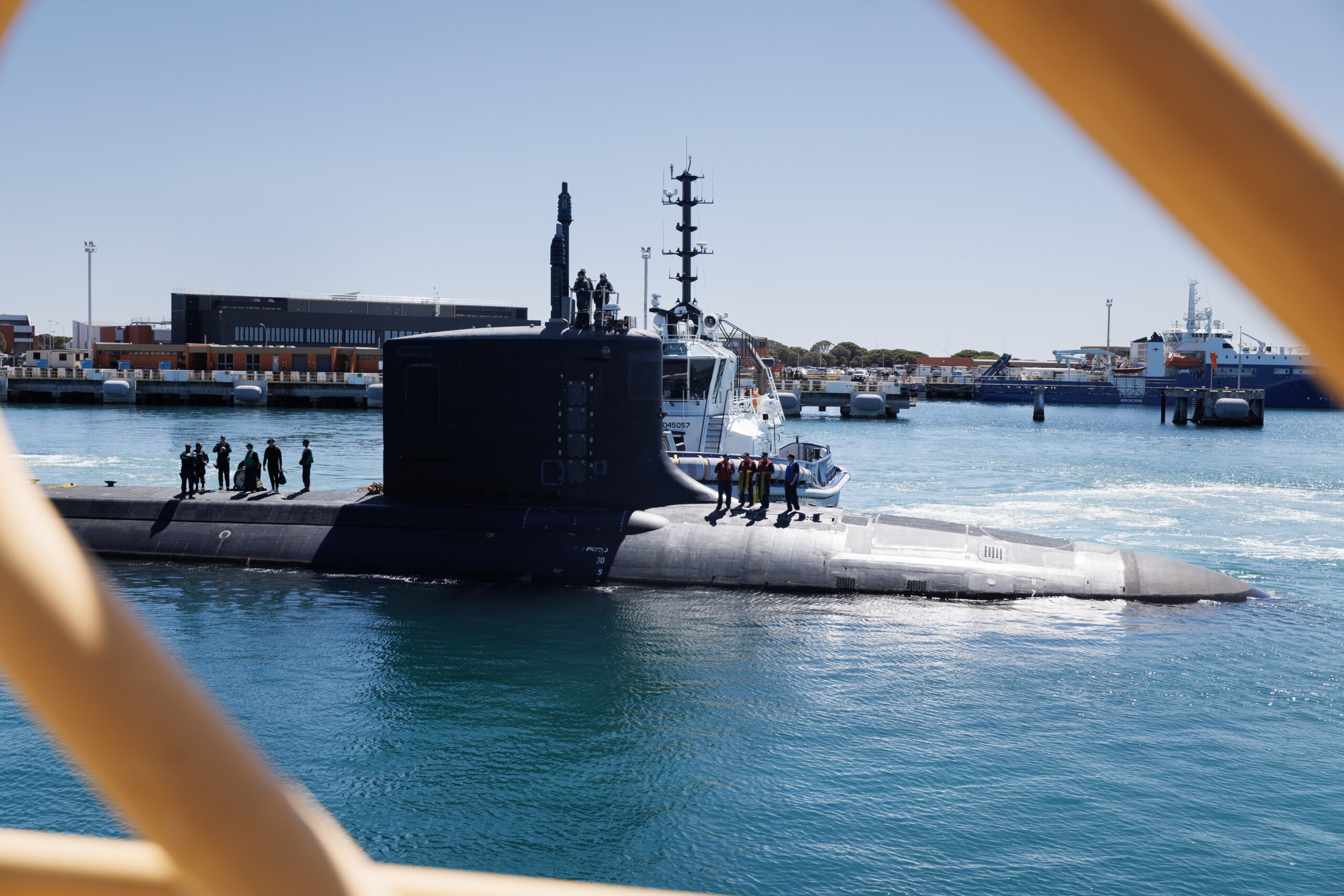
With more than 200 ASC personnel gaining experience in Hawaii, team members are now returning to Australia to put their skills into practice. Among them are three recently repatriated employees who are part of a 60-strong ASC team supporting the Submarine Maintenance Period (SMP) for USS Colorado at HMAS Stirling, south of Perth. Nuclear Engineers Carys and Taylor and Health Physicist Richard (no last names provided), are applying their US Navy specialist training and experience to the SMP, marking another important step in building Australia’s sovereign nuclear-powered submarine sustainment capability under AUKUS. It is part of ASC’s mission to develop the workforce Australia needs to support the rotational presence of US and UK nuclear-powered submarines at HMAS Stirling from 2027, known as Submarine Rotation Force-West (SRF-West), and ultimately support Australia’s own conventionally armed, nuclear-powered submarine fleet. For Carys, an ASC engineer involved in delivering WA company MAK Water’s pure water filtration system to support nuclear-powered submarine maintenance, the assignment provided an opportunity to develop her specialist knowledge and experience within the US Navy’s nuclear-powered submarine sustainment environment. “Working with the engineers in Hawaii opened my eyes to the US’s high standards for naval engineering,” Carys said. “Witnessing the Pure Water Plant being commissioned and then successfully deliver water to a US submarine for the first time, was, and continues to be, an incredibly rewarding experience. I feel proud to represent ASC and Australia overseas and bring that knowledge back home”. For Taylor, the opportunity to work alongside experienced US Navy personnel supported his ambition to become a subject matter expert. “This experience has given me a much deeper understanding of the nuclear mindset, from continuous improvement and rigorous standards to radiological controls and the importance of objective quality evidence. I’ll bring those skills and knowledge back to my role, along with a broader understanding of the discipline and approach that underpins nuclear work. I feel incredibly fortunate that I was able to go to the US and bring back the experience to contribute in a significant and immediate way to the AUKUS program,” Taylor said. “It truly feels like all my hard work has paid off and I am meant to be here.” Army veteran and Health Physicist Richard, said working alongside the US Navy gave him a first-hand understanding of how a mature nuclear program approaches nuclear safety, workforce education, and builds an organisation-wide safety culture. “As a Health Physicist, my job is to protect our people, the public, and the environment by ensuring nuclear safety programs are effective and grounded in science,” Richard said. “As a veteran, there is also a personal sense of pride in knowing that the work we’re doing today will contribute to Australia’s long-term security and create opportunities for future generations. More than anything, I’m proud to be helping build a capability that will make Australia safer for my children and for those who follow”. ASC is Australia’s sovereign submarine sustainer and is playing a central role in developing the workforce, infrastructure and industrial capabilities required to support nuclear-powered submarine sustainment under AUKUS. Through training and practical experience with US Navy partners, ASC personnel are building the specialist expertise that will underpin Australia’s future sovereign sustainment capability. ASC Chief Executive Officer Alex Walsh said the return of the employees from Hawaii demonstrated how international partnerships were translating into tangible capability for Australia. “Building Australia’s sovereign nuclear-powered submarine sustainment starts with our people”, Walsh said. “Through our partnership with the United States, ASC employees are gaining invaluable experience in one of the world’s most established nuclear-powered submarine sustainment environments and bringing that expertise back home to Australia. The skills and knowledge they are developing today will be critical to supporting future maintenance activities at HMAS Stirling and establishing Australia’s long-term sovereign sustainment capability”. For Editorial Inquiries Contact: Editor Kym Bergmann at [email protected] For Advertising Inquiries Contact: Group Sales Director Simon Hadfield at [email protected]
TAGSASCAUKUS
Previous article
Lockheed Martin reaches GMLRS production milestone