
Federal election result unlikely to change national security settings
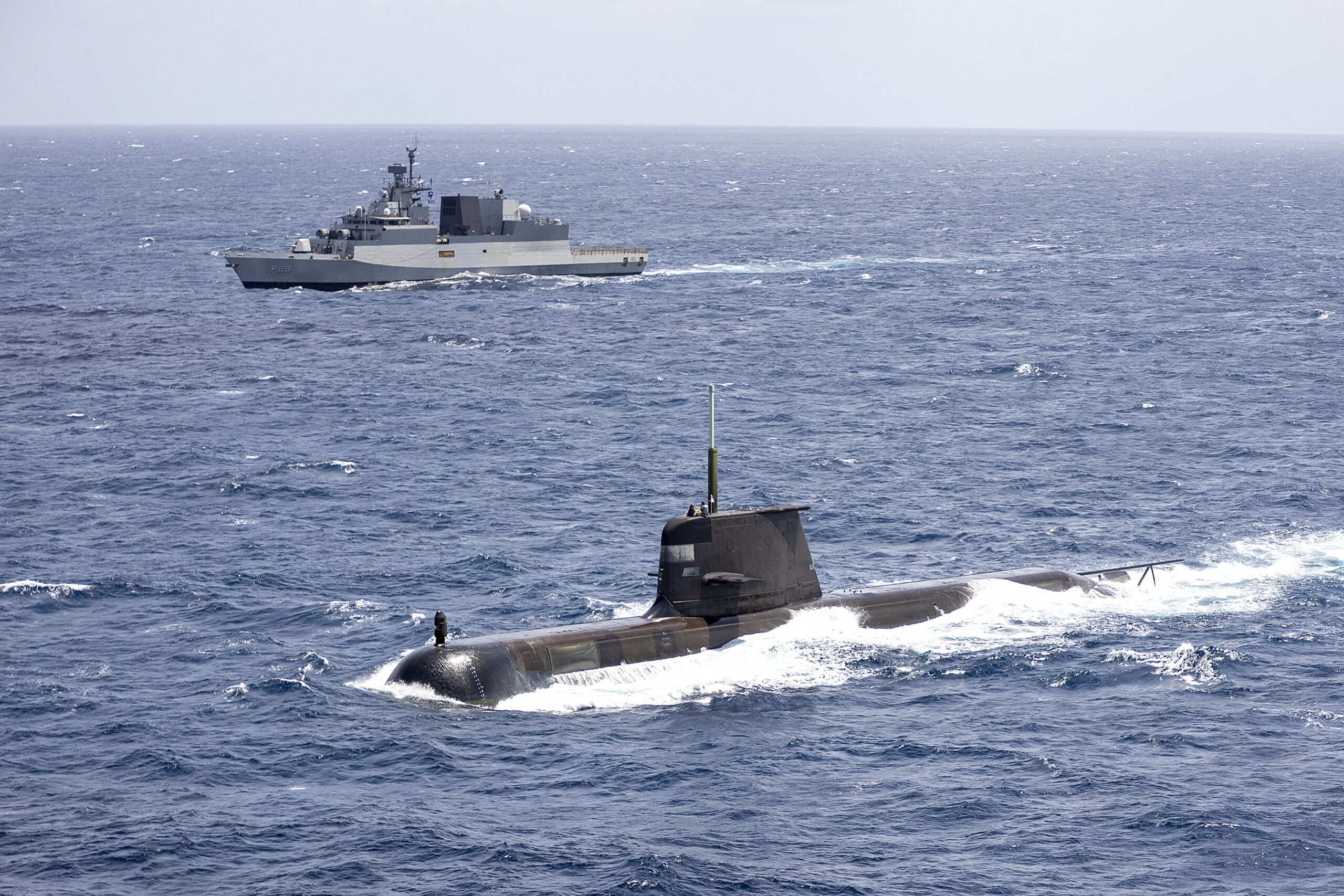
The outcome of the Federal election on May 21 means that there will be a Labor government in power, albeit with the slimmest of margins. Once again, the opinion polls were wrong. They had predicted a uniform national swing to the ALP of 3% – enough to deliver a small majority in the House of Representatives – but to the contrary, their actual national vote declined overall and many of the seats that they gained only happened with the preferences of the minor parties. The exception was Western Australia which saw massive swings to the former opposition. The result for the Liberal Party is a heavy blow, not only losing at least 15 seats but in the process quite a bit of political talent, with former Treasurer and potential leadership contender Josh Frydenberg almost certainly being replaced by an Independent. The quick summary is that many Australians wanted a change of direction but put more faith in the minor parties – particularly the Greens – than they did in Labor. It is unlikely that there will be any meaningful changes to national security settings or the Defence budget. Historically there is not a great deal of difference between Labor and Liberal, which was made clear during the election campaign when the former government unsuccessfully tried to argue that the Opposition would be soft on China. Not only did this fail to resonate broadly, there are even some suggestions that it damaged the government with people feeling that cranking up the anti-Beijing rhetoric is not necessarily the best way of securing peaceful outcomes. It seems highly likely that Deputy Prime Minister Richard Marles will want the Defence portfolio. His personal preference would probably be Foreign Minister, but that one seems earmarked for Senator Penny Wong and it probably wouldn’t be worth the internal brawl and the ill will such a move to replace her would generate. Defence is not a bad second prize with lots of travel and uniformed people saluting the Minister and rolling out the red carpet – sometimes literally. For a time Mr Marles was Shadow Defence Minister and as a consequence has some knowledge of the portfolio. However, he previously distinguished himself as having something of a low energy approach and will happily take Departmental advice on just about everything rather than rock the boat and attempt reforms – which the procurement part of the organisation desperately needs with billions of dollars being wasted on various misguided acquisitions. The best choice for Labor would be to stick with Brendan O’Connor who has performed well in recent months – particularly during the election campaign debate at the National Press Club with his counterpart Peter Dutton. O’Connor came across as thoughtful with a detailed knowledge of the portfolio – and he refused to be baited by the frankly childish insults directed at him and his colleagues. He also presented as a decent human being – something of a rare and valuable quality in Federal politics these days. The most important capability shortfall that Labor needs to address is the looming crisis in submarine capability with nuclear powered vessels a distant mirage still two decades away. There are some in the Labor Party who are not keen on nuclear power because of valid reasons connected with weapons proliferation, especially if Australia’s future fleet use bomb grade highly enriched uranium. They will be quite happy to kick that particular can well down the road with more studies and discussions about the best way forward. The country is crying out for an interim conventional submarine capability to bridge the gap between the final years of the Collins class and the eventual introduction of Virginia class SSNs, or whatever we end up with. However, this is not the position of the RAN, which frankly just can’t be bothered with the large complex task of an additional submarine acquisition and instead would rather do nothing. In this they are likely to be assisted by Mr Marles, whose instincts will be similar. The most sensible path Australia should follow for a nuclear powered submarine is to bring France back into the picture. French vessels now use Low Enriched Uranium reactors that – almost paradoxically – are more powerful than their HEU counterparts. It is true that they need to be refuelled every 10 years or so, but the details of how this could be managed needs to be explored with input from the USN in particular. Defence expenditure will remain at its present level with the possibility of an increase if strategic circumstances continue to deteriorate. The Labor government is likely to need the support of Green Senators to have legislation passed but it seems unlikely that national security measures will be held hostage to different ideologies. There will be plenty of other opportunities for that sort of horse trading. Labor have committed to a Force Posture Review and that’s entirely sensible. They also want to increase foreign aid – especially in this region – and restore the number of diplomats serving in embassies to gather intelligence and exercise a bit more soft power. Hopefully that will make it possible to avoid debacles such as the China-Solomon Islands security pact. For Editorial Inquiries Contact: Editor Kym Bergmann at [email protected] For Advertising Inquiries Contact: Director of Sales Graham Joss at [email protected]
Previous article
IFTS announces first grads from training program
Kym Bergmann has more than 35 years of experience in journalism and Australian and international defence industry. After graduating with Honors from the Australian National University, he joined Capital 7 television, holding several positions including foreign news editor and chief political correspondent.
After 2 years on the staff of a Federal Minister, he moved to the defence sector and held senior positions in several companies, including Blohm+Voss, Thales, Celsius and Saab. In 1997 he was one of 2 Australians selected for the Thomson CSF 'Preparation for Senior Management' MBA course, the other being Chris Jenkins - formerly the CEO of Thales Australia.
He has also worked as a consultant for a number of companies, including Raytheon, Tenix (now part of BAES) and Martin Marrietta (now part of Lockheed Martin). He had several board appointments, including Thomson Sintra Pacific (1994 - 96) and Saab Pacific (1998 - 2003).
He retains good personal links with senior figures in Government, as well as in industry and the media. He decided to return to journalism in May 2008, and holds the position of editor for Asia Pacific Defence Reporter (APDR) and Defence Review Asia (DRA). He is also a podcaster and commentator on defence and national security issues.
Comments
Loading comments...