
KF-21 delivery turns 2015 US tech refusal into South Korean export advantage
By GlobalData
•Oct 11, 2026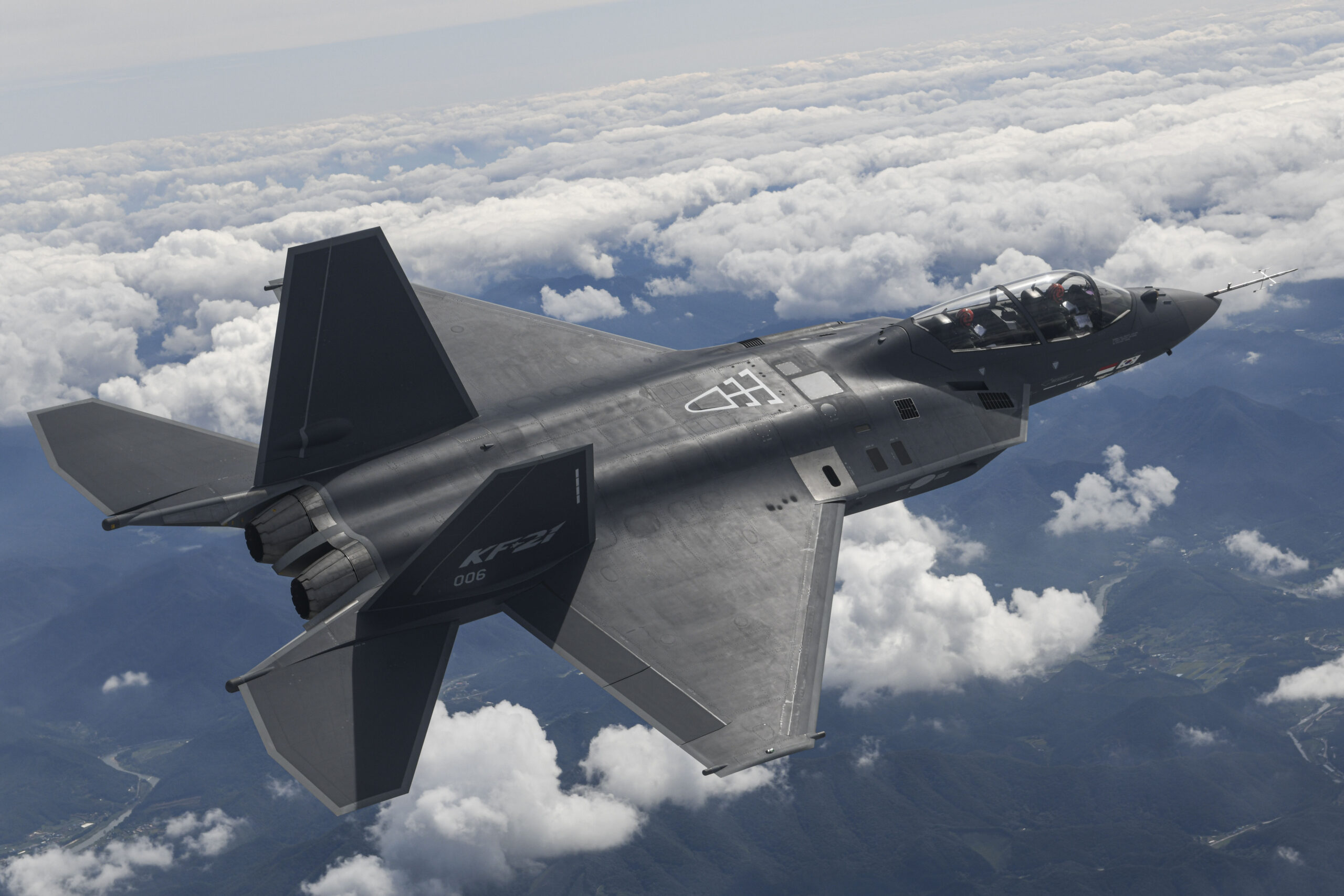
South Korea’s Air Force has recently taken delivery of its first production KF-21 Boramae, a Block I aircraft assigned to the reactivated 156th Fighter Squadron at Yecheon Air Base. More than a self-reliance milestone, delivery marks the moment when an export proposition became credible. The sensors Washington declined to share a decade ago are now Korean owned, giving Seoul authority over how the fighter is configured, upgraded and offered abroad, says GlobalData, an intelligence and productivity platform. In April 2015, the US declined to transfer four core technologies for the program: an AESA radar, an infrared search-and-track sensor, an electro-optical targeting pod, and a radio-frequency jammer. South Korea developed all four domestically, and the aircraft’s domestic content now stands at around 65%. GlobalData’s report, “The Global Military Fixed Wing Aircraft Market 2026-2036,” projects South Korea to spend approximately $12 billion on combat aircraft procurement over the next decade. That represents close to 5% of the $247.4 billion forecast for the Asia-Pacific region. Udayini Aakunoor, Aerospace and Defense Analyst at GlobalData, comments: “The US refusal to release the KF-21’s technologies have become the aircraft’s strongest selling point. With those systems now being Korean, Seoul can modify, upgrade and clear the KF-21’s mission systems for foreign buyers without seeking another government’s approval. Export customers value that control because a fighter’s combat relevance over decades of service depends on who decides its upgrades. The GE-designed F414 engine is now the principal remaining external dependency, which is why Hanwha Aerospace’s indigenous engine program for the Block III variant carries strategic weight beyond propulsion.” The Block I aircraft enters service armed with MBDA’s Meteor beyond-visual-range missile and Diehl’s IRIS-T short-range missile, with initial operational capability expected in the second half of 2027. Aakunoor continues: “Pairing a Korean radar with European missiles gives the Republic of Korea Air Force an air-to-air kill chain integrated by Seoul and its European partners, not tied to US software baselines. The Meteor’s throttleable ramjet conserves energy for the endgame, giving it a no-escape zone of more than 60km that allows KF-21 pilots to maintain a large engagement radius against escorting fighters.” KAI’s light combat aircraft customers form a ready pipeline: the Philippines ordered 12 additional FA-50 Block 70 aircraft in June 2025, and informal discussions on the KF-21 are reported to be under way with Manila. Aakunoor concludes: “If Korea Aerospace Industries (KAI) can convert its FA-50 export partnerships already established with the Philippines, Poland, Malaysia, and others into orders for KF-21s, Seoul will join the select group of nations that not only build combat aircraft but also control their own full mission system architecture. This would enhance South Korea’s status as both a sophisticated multirole fighter jet exporter and a sovereign defense technology provider, positioning it alongside the leading worldwide players.” For Editorial Inquiries Contact: Editor Kym Bergmann at [email protected] For Advertising Inquiries Contact: Group Sales Director Simon Hadfield at [email protected]

Comments
Loading comments...