
AIR 7003 armed UCAV project cancelled
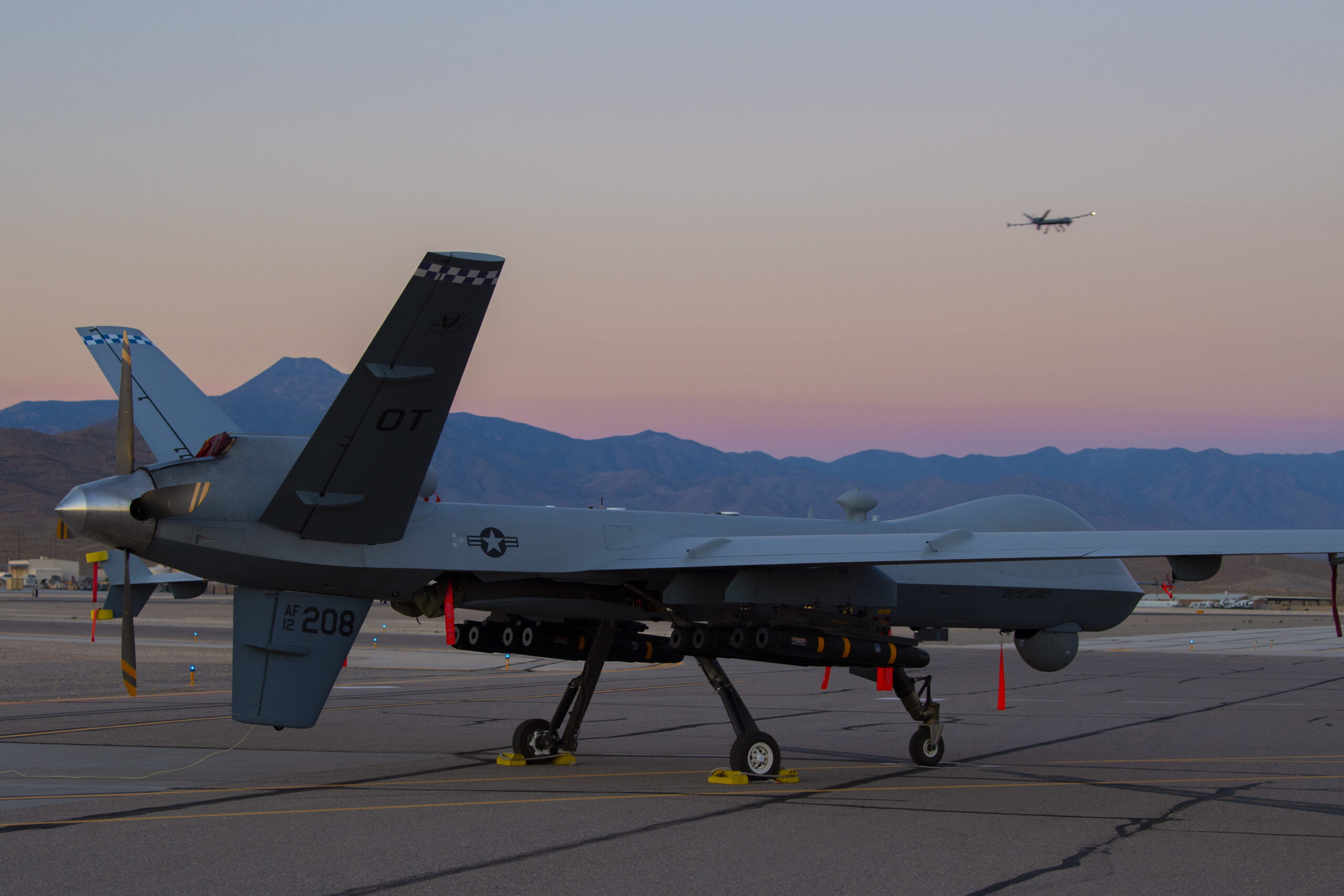
At first it appeared to be an April fool’s joke, but officials confirmed in Senate Estimates that the government is about to scrap the purchase of long range, uncrewed MQ-9Bs. This extraordinary decision will be depriving the RAAF of an important element of combat and surveillance capability – as the current conflict between Ukraine and Russia is clearly demonstrating. The version of the aircraft that the RAAF was set to acquire is based on the U.K. SkyGuardian program and would have seen an initial 12 aircraft based at Edinburgh in South Australia. With endurance of more than 24 hours and armed with a variety of weapons such as Hellfire missiles and laser guided bombs, Predators have become the platform of choice for strikes against terrorist organisations throughout the Middle East and Africa. They are operated by a number of countries including the US, UK, France, Spain, the Netherlands and India. In this region it is possible that MQ-9Bs will be acquired by Japan, Taiwan and possibly South Korea. As part of a very ambitious Australian industry plan, General Atomics had proposed developing a multi-national service hub in Adelaide. The company has probably spent around $30 million on the project over a decade and is unlikely to recover a single cent. The Ukraine armed forces have been using their UCAVs with devastating effect, destroying dozens of Russian main battle tanks, artillery pieces, multiple launch rocket systems and a variety of other vehicles. The same platforms – manufactured in this case by Turkey – are credited with being largely responsible for the victory of Azerbaijan against heavily armed Armenia in the 20202 Nagorno-Karabakh war. The decision for Australia to acquire an armed UCAV was taken in 2015 and the announcement of the selection of General Atomics occurred in 2018. Since that time the company has been working with the RAAF to refine the nature of the purchase, including issues such as the satellite communication system to be fitted and discussions about the weapons mix. A number of RAAF personnel have been located in the UK and the US as part of the project. Cancelling it makes no sense. The scant information available from Senate Estimates indicates that Defence Minister Peter Dutton has asked the Department to identify projects that need to be cancelled to free up funds to hire more personnel, particularly in support of the cyber security announcement made in the budget. Known broadly as project REDSPICE, it seeks to double the number of Australian Signals Directorate staff to 1,900. Given Australia’s current full employment circumstances that will be a difficult-to-impossible goal to achieve in the next few years. If indeed savings are required – and it’s hard to imagine why given the similarly abrupt cancellation of the Attack class submarine project after wasting $4 billion – there are plenty of candidates. These could include scrapping or cutting back on the number of M1A2 main battle tanks to be purchased or looking at reducing the number of Boxer 8×8 vehicles on order. It seems bizarre that Defence Minister Dutton has not made a comment on this, leaving it to a hapless bureaucrat to mention the cancellation of a $1 billion project almost in passing. One wonders what this will do for Australia’s international reputation, coming as it does after the equally poorly handled cancellation of the Attack class submarine with France’s Naval Group. So much for the government trying to highlight their national security credentials in the lead up to the election. While the government isn’t saying anything that’s not the case for the Shadow Defence Minister Brendan O’Connor, who issued a statement saying: “In 2019, Defence Industry Minister Melissa Price said “Local companies that provide a range of innovative sensor, communication, manufacturing and life-cycle support capabilities will have the opportunity to showcase their capabilities throughout this development process.” “The Government didn’t even have the good grace to tell Australian defence industry the program was scrapped. “Cancelling a $1.3 billion project without notice will reverberate around Australian defence industry, already reeling from the Attack Class cancellation and the secret-offshoring of the Pacific Support Vessel. “The SkyGuardian cancellation demonstrates this government doesn’t care about Australian manufacturing. Defence industry firms will rightly ask what is next on this Government’s secret chopping block? “The only reason we are aware of this cut to Australia’s defence capability is because of federal Labor’s scrutiny at Senate Estimates. “How on earth can Australians trust this Government to deliver what they promise when they hide unpopular decisions.” For Editorial Inquiries Contact: Editor Kym Bergmann at [email protected] For Advertising Inquiries Contact: Director of Sales Graham Joss at [email protected]
Previous article
Rheinmetall wins ammo order
Kym Bergmann has more than 35 years of experience in journalism and Australian and international defence industry. After graduating with Honors from the Australian National University, he joined Capital 7 television, holding several positions including foreign news editor and chief political correspondent.
After 2 years on the staff of a Federal Minister, he moved to the defence sector and held senior positions in several companies, including Blohm+Voss, Thales, Celsius and Saab. In 1997 he was one of 2 Australians selected for the Thomson CSF 'Preparation for Senior Management' MBA course, the other being Chris Jenkins - formerly the CEO of Thales Australia.
He has also worked as a consultant for a number of companies, including Raytheon, Tenix (now part of BAES) and Martin Marrietta (now part of Lockheed Martin). He had several board appointments, including Thomson Sintra Pacific (1994 - 96) and Saab Pacific (1998 - 2003).
He retains good personal links with senior figures in Government, as well as in industry and the media. He decided to return to journalism in May 2008, and holds the position of editor for Asia Pacific Defence Reporter (APDR) and Defence Review Asia (DRA). He is also a podcaster and commentator on defence and national security issues.
Comments
Loading comments...