
VIEWPOINT: Virtual simulation training in support of AUKUS
By Matt Driskill
•Aug 9, 2023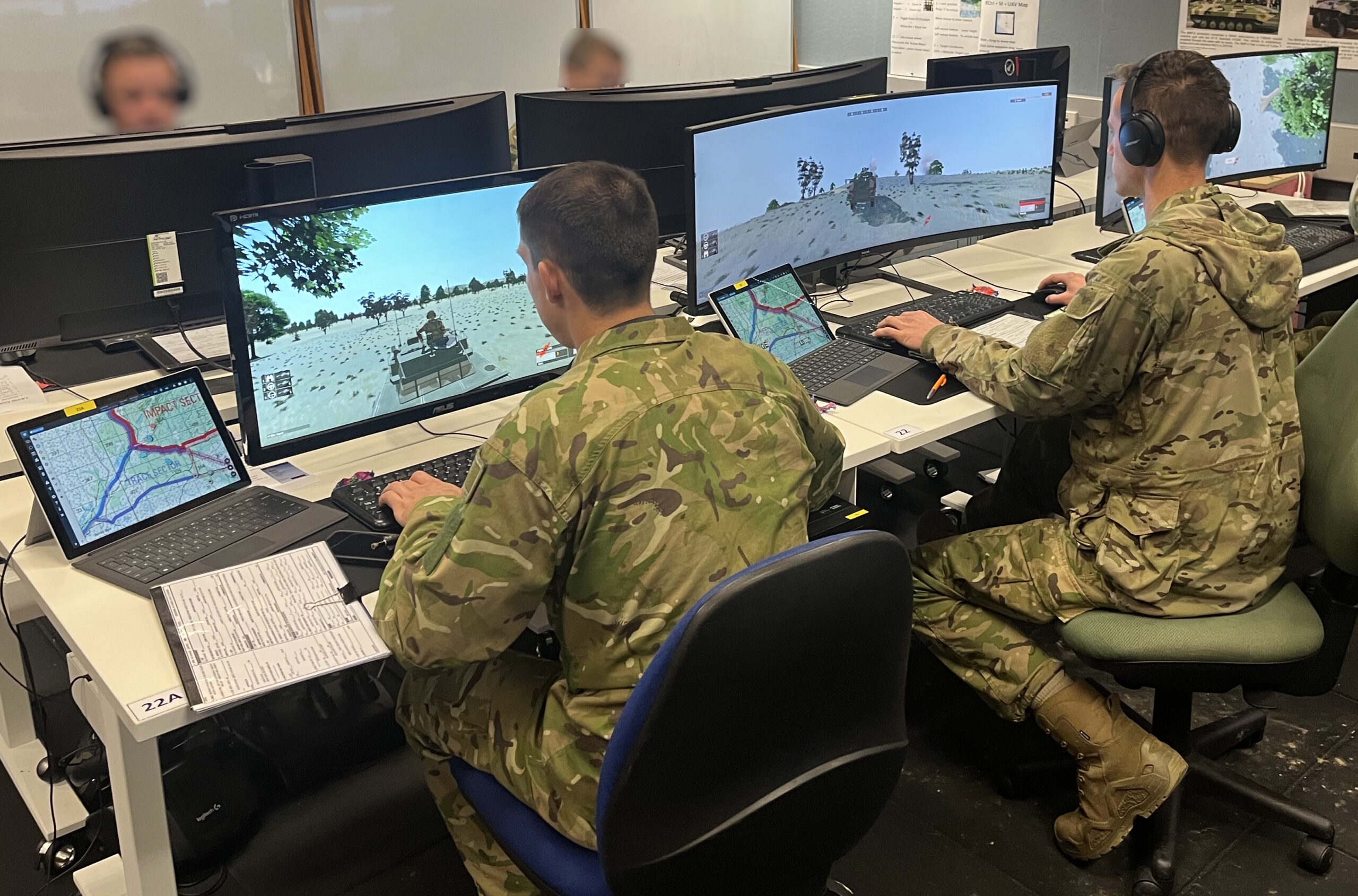
Ryan Stephenson Since its election last May, Prime Minister Anthony Albanese’s Government has committed itself to a busy schedule of international engagement that recognises the importance to Australia of ever closer coordination with our global security partners. Greater cooperation and closer integration between the Australian Defence Force (ADF), the United States and the United Kingdom, as our closest and most important military partners, is a critical part of this equation. The joint Australian, U.S., and U.K. (AUKUS) submarine announcement in March 2023 by the countries’ respective leaders highlighted this as a top priority. Entrenching this enhanced cooperation and integration will be a significant challenge. AUKUS will require a new level of engagement between the three countries, far exceeding the current, primarily in person, engagement that Australia, the U.K. and the U.S. are undertaking. To address this challenge, innovative solutions will need to be considered. Deeper links facilitated through both physical and virtual engagement will ensure Australia and our coalition partners can effectively train and operate as one — multiplying their level of deterrence in an increasingly insecure region. This was an underlying message delivered by Mr Albanese, President Joe Biden and Prime Minister Rishi Sunak in their statements, and key to ensuring the long-term success of AUKUS. During his visit to Washington, D.C., last year, Deputy Prime Minister and Minister for Defence Richard Marles also acknowledged this and articulated an important new objective for the ADF to ”move beyond interoperability to interchangeability” with our closest partners. In practice, the higher standard of interchangeability would potentially enable an Australian to slot easily into a U.S.-crewed platform or operate at the platoon and company level (in comparison to the current task force level) embedded in allied forces. Debate over sovereignty aside, it’s easy to see a need for this possibility between AUKUS partners but it will be challenging to achieve. It will require seamless exchanges of technology, training systems and doctrine between nations. While Australia is stepping up its efforts to address this interchangeability objective through enhanced defence cooperation with our global partners including in joint training and exercising, we remain limited both physically and fiscally in how frequent and expansive these activities are. We know the Defence Strategic Review (DSR) will not see rivers of gold flow into the Defence budget. Defence will need to learn to do more with less and utilise smarter spending and find creative solutions to drive efficiency, particularly with the added cost to the budget with the procurement of nuclear submarines. Common virtual simulation environments are one such solution and will form part of that equation as a critical enabler to support in-person training across every scenario in a resource conscious landscape. Modern militaries have used virtual simulation to enhance Defence capabilities since the 1980s and increasingly rely on it for individual and collective training, mission planning, mission preparation, and tactics experimentation. It offers greater opportunity for more frequent and interoperable training with partners across a broader range of assets than might otherwise be physically available, and a more cost-effective way to supplement in-person joint exercising. Virtual simulation also offers an effective early planning tool enabling the end users of a new capability to train, develop, test, and implement doctrine and agree on standard operating procedures prior to that capability being delivered. As the degrading strategic environment feeds a growing backlog in addressing capability requirements, as seen in response to the Ukraine conflict, virtual simulation technology can facilitate a quicker entry-into-service for new capabilities, addressing strategic requirements and delivering better ‘bang-for-buck’ to government and therefore to the taxpayer. NATO countries have long been making use of virtual simulation exercises to supplement live training, acknowledging the cost-efficiencies, including; reduction in wear and tear on equipment, vehicles and aircraft; and ability to conduct exercise beyond the view of foreign adversaries seeking to observe capabilities, tactics, techniques and procedures. To leverage the greatest value out of investment in simulation capabilities and promote the highest levels of interoperability between forces, all 31 NATO members are working to link their national synthetic training systems to enable inter-country training on a daily basis. In comparison, Australia has no overarching national direction for virtual simulation objectives. We are yet to examine what a comprehensive, aligned approach to simulation across Defence can deliver against Australia’s strategic objectives. At a tactical level, the greatest challenge is that users do not know how to integrate the technology into their training systems, nor how to institutionalise or normalise the systems alongside traditional training. As a follow on from this, users also struggle to develop useful policy and procedures around the use of the technology on a regular basis. These are not insurmountable issues, as NATO countries are demonstrating, and there is no reason Australia cannot do the same. As Australia implements and strengthens its AUKUS partnership, greater consideration should be paid to shared synthetic training environments that enable interchangeability with the U.S. and U.K. The procurement of updated virtual simulation training software will increase the value and utility of these synthetic training environments and will be a critical way to open the door to more joint training opportunities, particularly within the AUKUS partnership. Without proper forethought, Australia risks procuring different solutions across Defence that are not interoperable for the joint training of our own forces, let alone with our closest security partners. The inability for Australia to engage with allied partners in a meaningful and informed way as they develop their own use of simulation training solutions poses a significant risk to Australia’s ability to not only train with, but also fight alongside, our security partners should Australia need to engage in securing a peaceful Indo Pacific region. Richard Marles has defined the Government’s ambition when it come to the AUKUS partnership, which in his own words “reflects the way in which our two Defence Forces are so interoperable – really, interchangeable – in the way in which we operate…and what all of that does is make Australia a much more potent and effective partner for peace in our region.” Without deliberate consideration for the role virtual simulation technology should play to support this objective, true interchangeability will be a significant challenge to overcome. The Australian government needs to consider the creative, cost saving solutions that virtual simulation offers as it brings into service new capabilities following the AUKUS announcement and implements the transformative outcomes of the DSR. The ability to familiarise and train with a capability during the development cycle will not only aid in speeding up its entry-into-service, it may prove critical to supporting the final design of a capability itself. Ultimately, prioritising the virtual simulation components in the sequencing of Defence’s programs will not only enable greater interoperability, it will enable Australia to take advantage of the efficiency measures that these solutions offer and put Defence in the position to do more, with less. NOTE: Ryan Stephenson is managing director of Bohemia Interactive Australia Pty Ltd. For Editorial Inquiries Contact: Editor Kym Bergmann at [email protected] For Advertising Inquiries Contact: Director of Sales Graham Joss at [email protected]
Previous article
KBR’s cyber terrain mapping tool reduces digital risk for RAN
Comments
Loading comments...