
What happened to a regionally superior conventional submarine?
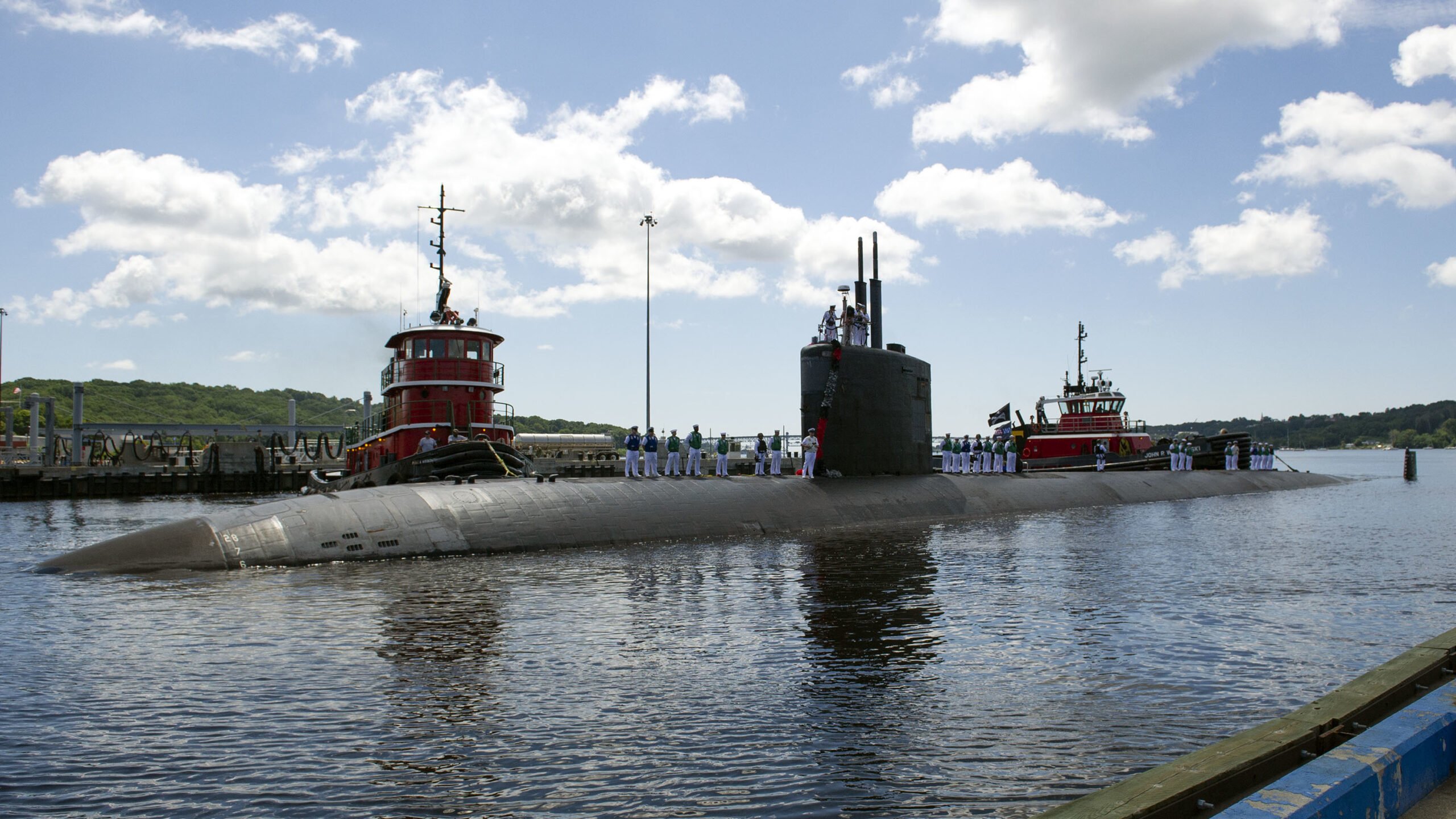
That was quick. Just a few days ago Australia was in the process of spending $50 billion – in 2016 dollars – on the most advanced conventional submarine in the region, if not the world. We know this because that is what everyone from the Prime Minister down – and including Defence and Foreign Affairs Ministers, Admirals and Departmental Secretaries – have been insisting was the case since 2016. HMAS Rankin sails in company with Indian Navy frigate INS Shivalik during AUSINDEX 21. Now Prime Minister Morrison tells us that the submarines are lemons and would have been obsolete as soon as they hit the water. Where is the RAN – and all their highly paid US advisors – in all of this? Like any prime contractor, Naval Group has been working at the direction of Defence, not the other way around. Surely if $3 billion and five years of effort has been spent on an obsolete product people need to be held to account. Similarly with the schedule, everyone had continued to insist that the program was on track with steel to be cut for the first boat in 2023 and delivered a decade later. That also has changed in just a few days, with the Prime Minister saying that the initial boat would not have been launched until 2038 – which means that the first of class Attack, following extensive sea trials, would probably not have been accepted into service for another two years after that. This would have set a world record for the least efficient submarine enterprise ever. Who has been covering up this shambles? Collins Class Submarine, HMAS Sheean at sea in the Western Australia Exercise Area. The Joint Communique issued by the Defence and Foreign Affairs Ministers of Australia and France issued on August 21 said in part: “Both sides committed to deepen defence industry cooperation and enhance their capability edge in the region. Ministers underlined the importance of the Future Submarine program. They agreed to strengthen military scientific research cooperation through a strategic partnership between the Defence Science and Technology Group and the Directorate General for Armaments.” This was a mere 25 days before the AUKUS announcement. The document is available in full here. Something similar has happened with our broader relationship with France. We have gone from trusted allies and long-term partners with mutual interests in the Asia-Pacific to now having the respective heads of government exchanging insults and making accusations against each other. To read the analysis of the conservative Australian media and listen to some Defence insiders, the vitriol – in some cases pure hatred – is such that one wonders why they have been silent the last five years. If the French are so bad and untrustworthy, why did we sign a contract with them in the first place? Referring again to the communique referred to above: “Ministers reaffirmed the shared values, interests and principles that underpin the bilateral relationship, as reflected in the Joint Statement of Enhanced Strategic Partnership between Australia and France, and the Vision Statement on the Australia-France Relationship. They agreed to publish a report on the Australia-France initiative (AFiniti) to highlight the depth and breadth of cooperative activities.” WHO HAS BEEN LYING? Clearly there is a lot to try and understand in all of this and the complete story might never be known. Without being in possession of the full facts it is difficult to make firm judgements – but we can make some guesses. Prime Minister Morrison has given several accounts of the dinner with President Macron in June during which he says he told his counterpart that the submarine contract would be terminated. Macron asserts that no such thing was said and that France was oblivious to the dramatic switch that was about to occur. These two different versions are compatible and do not indicate that either Morrison or Macron have been lying. It all gets down to the exact words that were used and in what context. It happens all the time and neither individual is deliberately stating a falsehood. Person A: “You didn’t show up on Friday”; Person B: “You said next Friday, not this Friday.” Perhaps a message of the enormous consequences of cancelling a strategic partnership worth tens of billions of dollars between two nations should not have been delivered casually during a friendly dinner, perhaps with a few glasses of alcohol involved. Whatever message the Australian Prime Minister thought he was delivering, the French President heard something different. We know this from the now infamous leaked “is it good news or bad news” text from Macron a couple of days before everything went public on September 16. WHY NOT A 4-WAY ALLIANCE? One of the great mysteries is why there was no attempt to structure a relationship between France, Australia, the US and the UK. All four countries are already connected via various security arrangements, not the least of which being NATO for the three northern hemisphere countries. The Attack class submarine is already a tri-nation undertaking with a US nuclear submarine combat system, the AN/BYG-1 from Lockheed Martin and US weapons, principally the Mk 48 heavyweight torpedo in a French hull for an Australian customer. One of the paperwork chores when the project was first established was to put in place the necessary security protocols and procedures so that French, Australian and US personnel could share Top Secret data. A number of them have been co-located in the Attack class design centre in Cherbourg. Adding the UK to the mix would have been administratively simple. Such a group might have been able to conclude that the best solution was to fast track the Australian version of a nuclear-powered Barracuda – which already exists – perhaps with the first of class built in France. NAVAL REACTORS As we have previously written, there is a quite a bit of misinformation about naval nuclear reactors, particularly the assertion that US and UK systems are far superior because they never need to be refuelled. This might be true, but they still need to be thoroughly inspected regularly, itself an intrusive process that is inherently risky because the material, highly enriched bomb grade Uranium 235, is completely toxic to humans if it leaks out. Each Virginia or Astute class submarine is powered by about 300kg of the stuff, enough to make a dozen or so nuclear weapons. There is still a very long way to go in legal and regulatory matters if Australia is ever to receive such technology. French reactors use commercial grade Low Enriched Uranium and need to be refuelled every ten years. Various Australians, including the Prime Minister and Defence Minister, have said this is a no-no because refuelling them is a complex and dangerous process – and that if it had to be done in France this would be an unacceptable risk to national sovereignty. This might be true, but it seems at least worth exploring in a bit more detail. The French have developed a highly automated process that can be completed in three weeks, some sources say a few days, and it would be interesting to see if that technology could be transferred to Australia. The bottom line is that refuelling a reactor with LEU is not that much more dangerous than the regular safety inspections that are needed for one using HEU. UNTRUE OFFICIAL STATEMENTS There are some other untruths being uttered about the supposed superiority in all regards of nuclear- powered submarines over conventional ones. This is a clumsy retrospective attempt to make the diesel-electric Attack class look unacceptably bad. In an opinion piece published in the Australian Financial Review on October 26, Defence Minister Dutton wrote: “Compared to their conventional counterparts these submarines are superior in terms of stealth, speed, manoeuvrability, endurance and survivability. Nuclear-powered submarines can carry a greater number of advanced weapons and deploy underwater vehicles. There’s also significant interoperability advantages in working with the UK and US.” He is wrong on several counts: Nuclear submarines are not stealthier. This is factually incorrect. At all speeds, particularly slow and stationary, nuclear submarines are noisier, mainly because of the need to cool their reactors; Nuclear submarines are not more manoeuvrable. They are large and not particularly agile – certainly not compared with a Collins class or smaller vessels; The endurance of a submarine is limited by the amount of food that can be carried for the crew and the amount of time that people can be confined underwater in a large metal tube without going insane. A nuclear submarine certainly has the capacity to carry a lot more supplies than a conventional one, but human mental frailty means that missions of more than 70 days for either type are unlikely. The reason why Collins currently and the future Attack class use the AN/BYG-1 combat system and Mk 48 torpedoes is to maximise commonality with the US. This commonality therefore already exists. There is no commonality with UK submarines, which have their own combat system and weapons. Nuclear submarines can deploy uninhabited vessels, but so can conventional submarines. There is no difference. The Minister is new to the portfolio and next time might wish to have his article fact checked by experts before submitting it for publication. INDISCRETION RATES AND MORE FALSE INFORMATION As if the piece in the AFR isn’t bad enough when it comes to misleading the public, a lot has been said about the supposed weakness of conventional submarines because of their indiscretion rate. This is a consequence of their need to come near the surface to put up the snort mast, which sucks in huge quantities of air when the diesel engines are running to charge the battery pack. A lot of work has been done on developing stealth masts that are undetectable by radar and EO systems. Secondly, there is a great deal of junk floating around on the sea surface that has signatures similar to those given off by submarines. Thirdly, skilled submariners move their vessels at the same speed and direction as the waves so that there is no tell-tale wake. Finally, the diesels only need to be run for a short time and have an acoustic signature very similar if not identical to thousands of merchant vessels and fishing boats chugging around all the time. Conventional submarines can be made stealthier by the use of Air Independent Propulsion and lithium ion batteries. The RAN – and especially the highly paid US advisors referred to earlier – have shown no interest in either. France and Naval Group cannot be blamed for that. These are entirely Australian decisions – and backward ones at that. Another thing that no one is pointing out is that nuclear submarines also come to the surface. That is why they have numerous masts, including periscopes and radar / ESM systems. These wonderful pieces of technology only work when they are poked up into the air to see what is going on. Submarines have an attack periscope because the captain likes to verify a target before blowing it out of the water in case it’s a hospital ship or a friendly vessel. Imagine the embarrassment of sinking one’s own flagship by mistake. When a nuclear submarine comes to the surface to put up its masts, it is just as vulnerable to detection as a conventional one. It has the option of staying underwater the entire time, but if it does that why bother with all those fancy masts in the first place? Nuclear submarines have the advantage that they can run at high speed underwater for extended periods of time, but even this needs to be qualified. Because of the noise caused by hydrodynamic flow, the faster a submarine travels the less its sonars can detect anything in the area because of the vast rush of water over its own arrays. This means that there must be a compromise between high speed and situational awareness – you can have one or the other, but not both. DEFENCE’S SELF-DEFEATING INFORMATION BLACKOUT In words dear to the heart of APDR, French Ambassador Jean-Pierre Thebault told the National Press Club on November 3 that he felt the Department of Defence had concealed positive information about the Attack class program to make it easier to cancel it. He said: “We have questioned the Australian government several times over the years about the false and misleading allegations which have been regularly made – with scarce official response. We were told: such things are normal in Australia, go away – and have to be managed by Defence. “But in light of subsequent events, the question arises: why was it not possible earlier to state the basic truth about the program?” The Ambassador is referring to clear statements during Senate Estimates and earlier hearings involving senior Defence officials who stated repeatedly that the Attack class program was on time and on budget. “Why was the smear campaign not stopped? In retrospect and knowing what we know today – and I thank the press – about the relentless conduct of an alternative plan, some had an interest in sabotaging public support for the Attack class program.” The handling by Defence of information about the Attack class has indeed been abysmal, hiding behind the cloak of national security to say nothing about it publicly. But things have gone much further, with the French and Naval Group saying that they have been blocked by the Department from having any contact with the Australian media. If true, this is a disgrace and should have resulted in the Naval Group CEO writing the following letter: Dear Minister, It has come to my attention that your officials are attempting to prevent communication between Naval Group and the media. If correct, such actions are in breach of the Trade Practices Act, which makes it unlawful for a government to stop a company going about its usual lawful commercial activities. We have the right – within the bounds of military and commercial sensitive information – to communicate in general terms about our activities. By attempting to muzzle us, the Department is not protecting matters of national security – it is seeking to hide its own deficiencies. We will continue with our usual marketing activities and if Defence would like to have a representative present at all briefings to make sure that nothing untoward happens, it is welcome to do so – at its own cost. Finally, if you have been a party to the suppression of unclassified positive information about the project you might also be personally liable for the consequences of your actions. Yours sincerely, POSSIBLE LEGAL CONSEQUENCES If the cancelled Attack class contract ends up in court – as well as it might – Naval Group could have a huge financial claim against Defence for trashing the company’s international reputation and thereby costing it billions of dollars in foregone revenue. Lawyers would be salivating at the prospect of running a case if there is written proof that Defence has been blocking the release of unclassified, positive information about the performance of the company. Make no mistake – the international arms trade is huge and competition is fierce. Without doubt, the many competitors of Naval Group will be capitalising on the Australian decision and will be gleefully repeating the words of various Ministers who have been seeking to damage the company for several weeks. Perhaps this is why Defence officials have been far more circumspect, saying that the cancellation has nothing to do with contractual performance and everything to do with changed international circumstances. However, these words cannot undo the damage caused by years of suppressing any good news. THE WAY AHEAD A Collins Class submarine. (PHOTO: Shutterstock) Build a fleet of Next Generation Collins class submarines in Adelaide and repeat the original highly successful formula of a US combat system and French sonars and French optronic masts. The experts consider Collins to be the most potent conventional submarine in the world. Stop wasting any more time and build more of them. For Editorial Inquiries Contact: Editor Kym Bergmann at [email protected] For Advertising Inquiries Contact: Director of Sales Graham Joss at [email protected]
Previous article
ADF works with regional partners on illegal fishing
Kym Bergmann has more than 35 years of experience in journalism and Australian and international defence industry. After graduating with Honors from the Australian National University, he joined Capital 7 television, holding several positions including foreign news editor and chief political correspondent.
After 2 years on the staff of a Federal Minister, he moved to the defence sector and held senior positions in several companies, including Blohm+Voss, Thales, Celsius and Saab. In 1997 he was one of 2 Australians selected for the Thomson CSF 'Preparation for Senior Management' MBA course, the other being Chris Jenkins - formerly the CEO of Thales Australia.
He has also worked as a consultant for a number of companies, including Raytheon, Tenix (now part of BAES) and Martin Marrietta (now part of Lockheed Martin). He had several board appointments, including Thomson Sintra Pacific (1994 - 96) and Saab Pacific (1998 - 2003).
He retains good personal links with senior figures in Government, as well as in industry and the media. He decided to return to journalism in May 2008, and holds the position of editor for Asia Pacific Defence Reporter (APDR) and Defence Review Asia (DRA). He is also a podcaster and commentator on defence and national security issues.
Comments
Loading comments...