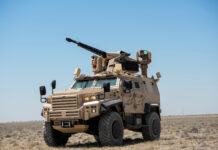
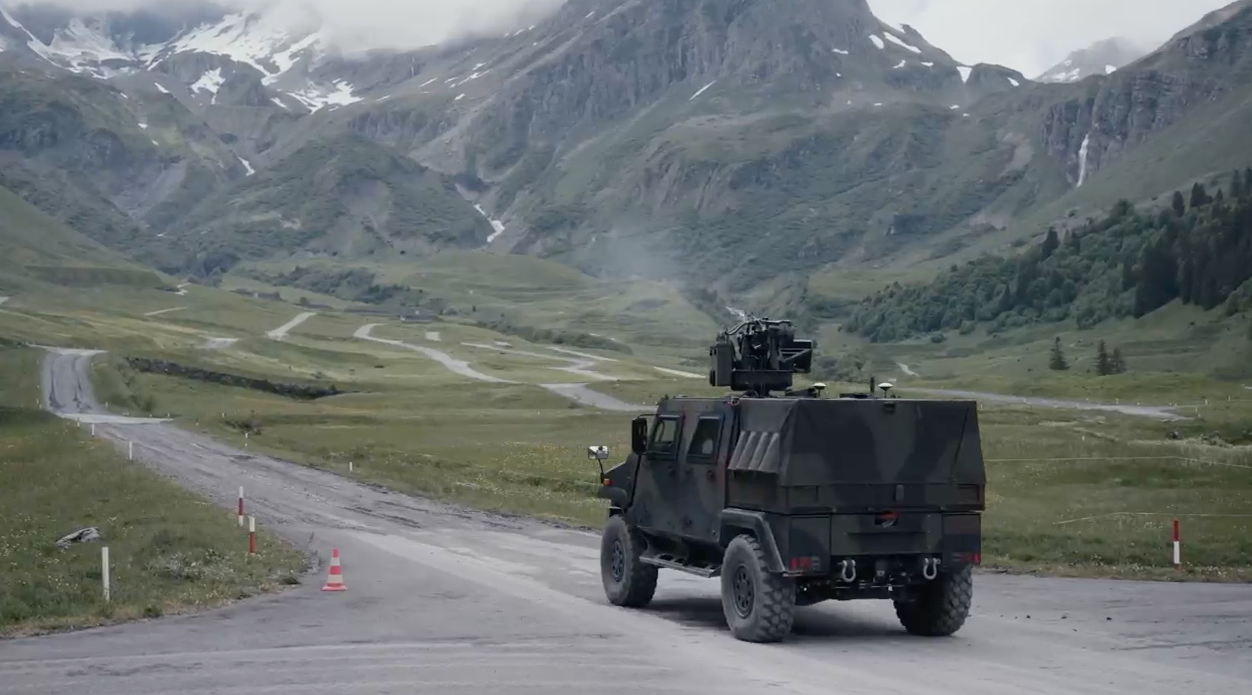
 Advanced Navigation has secured a $26 million supply agreement with KONGSBERG. Under the deal, Advanced Navigation will supply hundreds of its Boreas Fibre-Optic Gyroscope (FOG) Inertial Navigation System (INS) for integration into KONGSBERG’s PROTECTOR Counter-Unmanned Aerial Systems (C-UAS) platforms. The inertial systems provide precise positioning, orientation and heading, allowing C-UAS stations to accurately detect, track and engage air threats when GPS signals are jammed, spoofed or unavailable.
Manufactured out of Norway, the PROTECTOR platforms will be delivered to the Polish Armaments Agency as part of a NOK 16 billion deal (about $2.41 billion), to protect the country against the evolving air threats. Supported by the Australian Department of Defence’s Global Supply Chain (GSC) Program, this agreement demonstrates how deep-tech disrupters can integrate into international defence manufacturing networks.
This collaboration follows a previous multi-million dollar deal which saw Advanced Navigation provide its Boreas D90 FOG INS for integration into KONGSBERG’s PROTECTOR RS4 platform.
“As electromagnetic warfare becomes a defining feature of modern conflict, precision is no longer determined by arsenals or sensors alone. It depends on knowing exactly where the platform is, how it is moving and maintaining that accuracy even when GPS is denied. That’s where Boreas becomes mission-critical,” said David Leniewski, Manager Director at Advanced Navigation EMEA. “By providing a resilient source of positioning, orientation and stabilisation independent of satellite navigation, Boreas enables PROTECTOR to maintain accurate sensor alignment and target engagement under conditions that would degrade conventional navigation systems. It ensures operators retain confidence in every engagement, even in the most heavily contested electromagnetic environments. By integrating Advanced Navigation’s inertial navigation technology into our PROTECTOR C-UAS platforms, we are providing forces with a resilient capability that continues when GPS is denied. Whether protecting tactical land convoys from asymmetric attack, safeguarding critical airfields, or defending coastal naval assets against uncrewed swarms, this partnership delivers the reliable, multi-spectrum resilience modern forces demand.”
BAE Systems fast-tracks combat vehicle work with KONGSBERG turret
BAE Systems delivered two concept Infantry Fighting Vehicles to the U.S. Army in April to support the Transformation in Contact (TiC) 2.0 initiative. The vehicles were developed through $17 million of BAE Systems Internal Research and Development funding and based on the proven chassis of the Armored Multi-Purpose Vehicle (AMPV). Since delivery, the TiC unit has run the AMPV 30s through rigorous field evaluations, including live fire testing, benchmarking the platform’s capabilities against what Soldiers require to maintain advantage on the modern battlefield.
“Our mission was speed and innovation, and we delivered beyond expectations,” said Bill Sheehy, vice president of BAE Systems’ Ground Maneuver futures. “With today’s battlefield evolving faster than ever, it’s paramount that Soldiers have the capabilities they need to win the fight. Throughout this effort, our team demonstrated how we can integrate new design solutions in a time-effective and more cost-efficient manner for the Army.”
From start to finish, the development of the AMPV 30s took only six months before the company delivered them to the Army. Both AMPV 30s are equipped with common top plates that include the KONGSBERG Medium Caliber Turret (MCT), a compact and light weight remote turret system currently in production with the U.S. Marine Corps’ Amphibious Combat Vehicle.
Beyond firepower, the AMPV 30s are designed for superior survival and connectivity. The tracked combat vehicles feature counter-unmanned aircraft systems (C-UAS) capabilities for combating drone threats, a cross-platform target handoff system that provides multiple vehicle connectivity for target identification and synchronization across the battlefield, and a 360 situational awareness camera system that allows Soldiers to view surroundings from the safety of the vehicle.
The modular and open architecture design of the AMPV chassis combined with BAE Systems’ common top plate enables the seamless incorporation of mission equipment packages onto the platform and is adaptable to more than 30 different turret systems. These two AMPV 30s mark eight total turreted AMPV prototypes the company has invested in over the last two years to support the Army’s modernisation needs.

For Editorial Inquiries Contact:
Editor Kym Bergmann at [email protected]
For Advertising Inquiries Contact:
Group Sales Director Simon Hadfield at [email protected]