HTT-40 deliveries turn India’s pilot-training pipeline into a test of engine sovereignty
By GlobalData
•Oct 2, 2026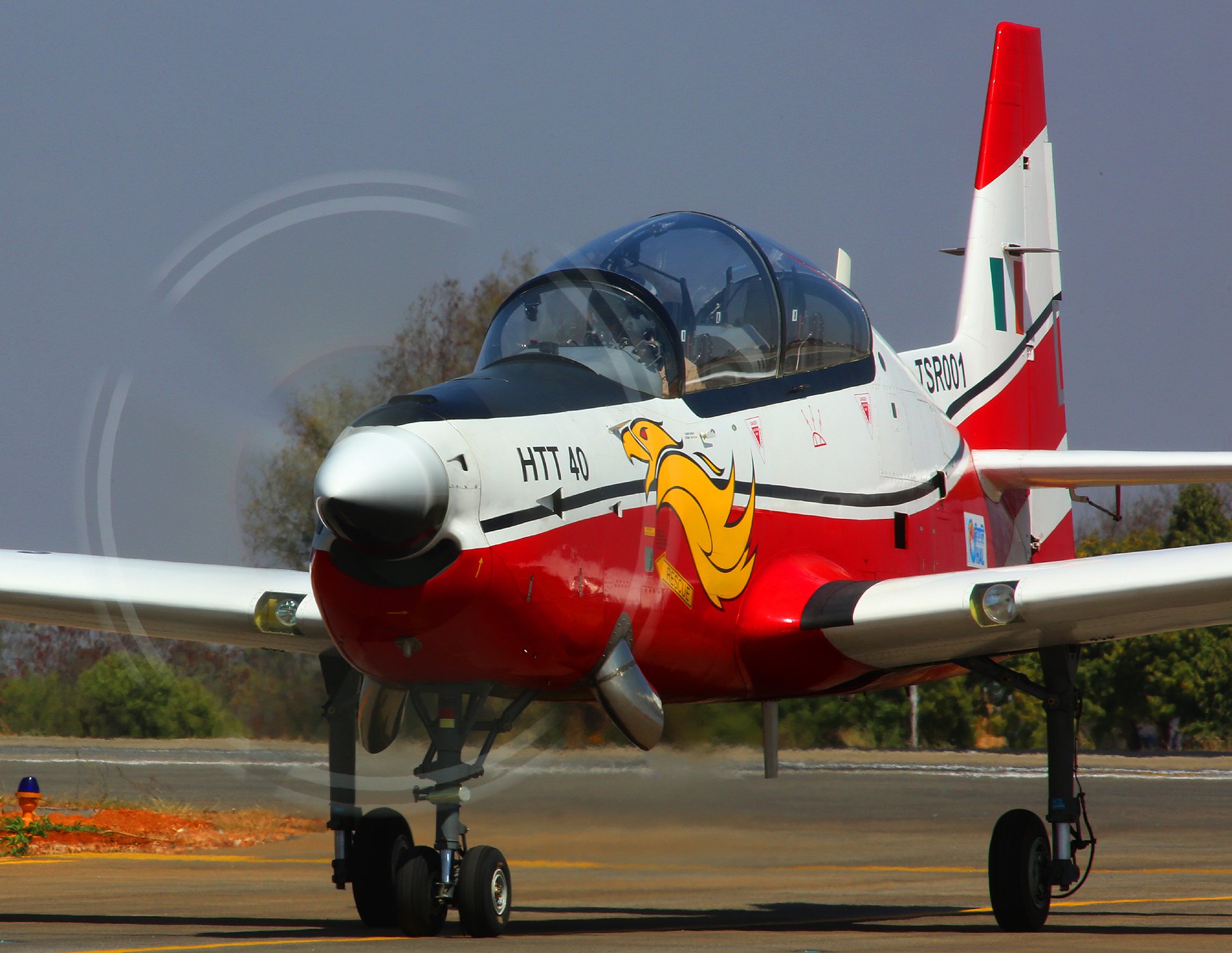
Hindustan Aeronautics Limited (HAL) handed over the first three HTT-40 basic trainers and the final two Tejas Mk.1 twin-seat trainers to the Indian Air Force (IAF). However, despite plans to deliver 12 HTT‑40s in FY 2025–26, no deliveries took place due to supply-chain constraints affecting the Honeywell TPE331‑12B turboprop engines. The handover is being framed as an indigenous milestone, but it is better understood as a test of whether India can secure the engine supply that underpins its pilot-training pipeline, says GlobalData, an intelligence and productivity platform. The IAF has ordered 70 HTT-40 trainers worth $832 million. HAL plans to increase production to around 20 aircraft per year, completing deliveries in roughly four to five years. A follow-on order for another 36 aircraft is planned once the type achieves full operational maturity. The HTT-40 will supplement rather than replace the 75 Pilatus PC-7 Mk II trainers. As per GlobalData’s report, “The Global Military Fixed Wing Aircraft Market 2026-2036,” India is projected to spend approximately $86.4 billion on military fixed‑wing aircraft procurement over the 2026–2036 forecast period. That would account for nearly 24.4% of the $354.6 billion total forecast for the Asia–Pacific (APAC) region over the same period. Vinayak Kamath, Aerospace and Defense Analyst at GlobalData, comments: “The HTT-40 is Indian in design and assembly, yet its engine is American, and the past year showed that a single component supplier can hold back an entire pilot intake. Every fighter pilot begins with a basic trainer, so a delay at that first stage limits how quickly the IAF can crew the fighters it is procuring. Honeywell supplies 16 of the 88 engines and kits under contract, with HAL building the remainder under technology transfer. If HAL’s licensed engine production matures alongside its airframe lines, India will gain greater sovereign control over the long-term support of its basic training fleet.” India has previously experienced the risk of relying on a single basic trainer fleet. After the HPT-32 was grounded in 2009, the IAF procured the Pilatus PC-7 Mk II, which has since handled Stage-I training. Operating the HTT-40 alongside the PC-7 should reduce the risk that problems with either will disrupt training. Tejas twin-seater variants also support fighter conversion, but overall training output will ultimately depend on aircraft availability and support. Kamath concludes: “The requirement is arithmetic rather than doctrine. The IAF operates roughly 29 fighter squadrons against an authorized strength of 42, and recent tensions have shown how quickly demand for trained crew can surge. If HAL can induct about 20 HTT‑40s a year and sustain high availability through assured engines, spares, and maintenance support, this would allow the IAF increase pilot throughput and keep training on schedule.” For Editorial Inquiries Contact: Editor Kym Bergmann at [email protected] For Advertising Inquiries Contact: Group Sales Director Simon Hadfield at [email protected]
Previous article
Boeing wins order for first full-rate production Grey Wolf helos
Comments
Loading comments...