
Home › Govt Policy & News
Is the Defence Strategic Review a plot to kill Australian industry?
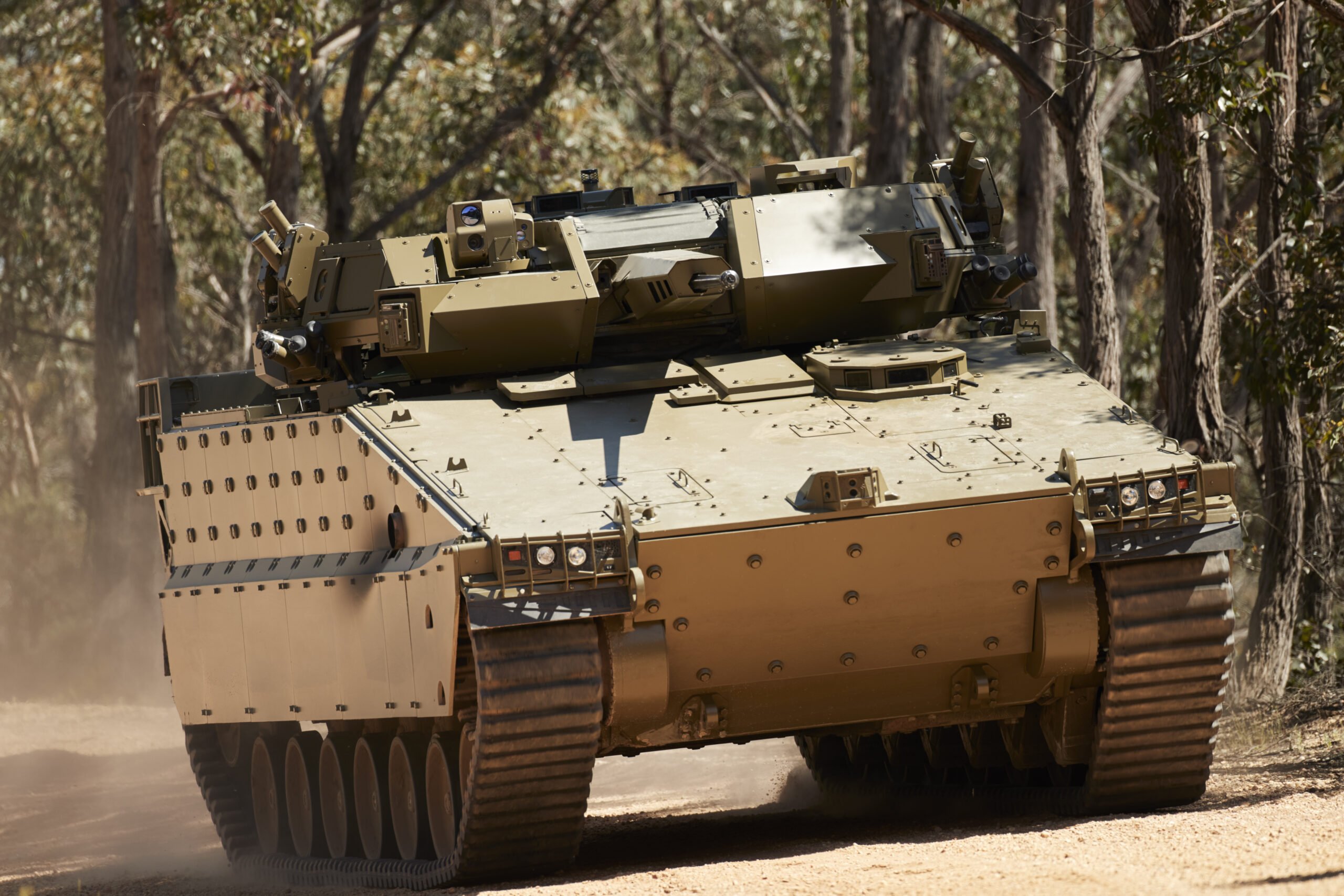
The answer is almost certainly no – and sorry for the clickbait headline – because a plot requires both intent and planning. However, this theory put to APDR – which actually came from a Defence insider and not a disillusioned corporate hack – is only the most alarming of many concerns being expressed about the current procurement freeze caused by the DSR. There is further anxiety about the length of time it will take to implement the recommendations of the review once they are handed to the department for implementation. Officially there is no procurement freeze – apart from the delay to the hugely consequential multi-billion-dollar LAND 400 Phase 3 Infantry Fighting Vehicle decision – but anecdotally many smaller companies have not been receiving anywhere near the level of orders that they would normally expect this financial year. This is being noticed particularly by third and fourth tier subcontractors, who are a long way removed from the large primes that sign the head contracts with Defence. Another project that might be a victim of the DSR process is JP 9102, the Defence communications satellite network. Already about two years late, a shortlisting decision was meant to be made before Christmas, but many in industry believe it has no chance of being announced in advance of the review publication, expected before the end of March. Such a delay is not particularly rational – almost everyone accepts the need for a sovereign Australian military communications system – but on the other hand no one wants to steal the thunder of Sir Angus and Professor Smith. To return briefly to the theory that all of this is a plot to destroy Australian defence industry – admittedly put to APDR in a social environment – it goes something like this. By delaying project announcements but not altering in-service dates, it places prime contractors under even more schedule pressure than normal. This means that rather than using local suppliers – who need to be contracted and brought up to speed, which takes time – the orders instead will go to established supply chains and known vendors in Europe and the US. A further component of the theory is that by starving local contractors of cash flow from Defence, they will either go out of business or switch their focus to purely commercial activities, from which they are unlikely to ever return. This is probably closer to reality than a plot and is still an alarming possibility. The Defence integrated investment program is made up of about 200 projects. Each of these needs numerous, extremely detailed financial spreadsheets that must accord with rigid Department of Finance guidelines. This is not surprising given that purchasing and then supporting platforms for the ADF runs at around $20 billion per year – which is the equivalent of buying 400,000 Toyota Klugers or 900,000 Sydney-London return 1st Class air fares – and taxpayer funds must be correctly accounted for. We are told that the DSR is quite independent of the Department. We are also told that the Department cannot begin work on implementing the forthcoming recommendations until they have received Government approval. Not only do all of those spreadsheets for 200 acquisitions need to be completed – a process that for some projects could take months – but contracts then need to be negotiated and signed with prime contractors. Primes then need to engage subcontractors, who then need to order materiel, and so on. Everyone says they are aware that this needs to happen quickly, but good intentions are no guarantee of a happy outcome. It is possible that the DSR will make some hugely controversial decisions – and at the very top of that list is the possible cancellation of LAND 400 Phase 3. Coming on top of the scrapped Attack submarine program – which cost $3 billion for no benefit and starved Australian industry of about 40 years of work – to ditch the tracked IFVs would not only deprive Army of what they say is a vital capability, it would be a catastrophe for a manufacturing sector already badly damaged by the loss of the local car industry. It would also further damage Australia’s reputation on the international stage as a reliable and trusted purchaser of military systems, reducing us to the level of a third world country with decisions being made on political whim. A full order of 450 very hi-tech IFVs in the form of either the Hanwha Redback or the Rheinmetall Lynx will cost around $25 billion. It is expected that 60% of that will go directly to local industry – although some things such as diesel engines and automatic transmissions will always be imported – and once they have been delivered, support costs over their 30-year life might be around another $50 billion. This buys a lot of jobs and a lot of technology in all Australian states and territories. Even if the DSR compromises with a smaller number of vehicles – 300 is often mentioned – that still has consequences because the shorter the production run the less economic it generally becomes to do things in Australia. If the number is reduced much below that, a fully imported solution – albeit with local support – starts to look like the best financial option. Readers outside the Canberra bubble also need to be aware that the departments of Treasury and Finance – which control the money – have an institutional set against local defence industry. To their way of thinking, which has not altered in decades, resources would be better allocated where Australia has a natural advantage – mining and agriculture – than on military stuff that can be imported at a lower cost. The level of enthusiasm Defence shows for Australian industry waxes and wanes in accordance with how it views the attitude of the government generally – and their Minister specifically. The jury is still out on the current government, remembering that it has been in power for less than a year. Defence Minister Richard Marles managed to set some alarm bells ringing when he expressed an early preference for the speedy delivery of capability ahead of local content – and the way things are shaping up he is likely to get neither. Another worrying example – started by the previous government with much fanfare in March 2020 – is the Guided Weapons and Explosive Ordnance enterprise (the GWEO). This was meant to bring forward up to $1 billion to fast track the development and production of the types of advanced weapons that are essential for modern, high intensity conflicts. Just look at the vast amount of munitions – guided and unguided – that Ukraine is having to use to fight off the Russian invasion. Almost three years, or a thousand days, after being announced not much seems to have happened on the GWEO front. There have been many discussions – a great many, by the sound of it – and some study contracts have been awarded, but that’s about it. The two US strategic partners – Lockheed Martin and Raytheon – have strategically and subtly reframed the debate away from the development of Australian weapons to focus much more on having adequate in-country stockpiles. These stockpiles, naturally enough, will come from Lockheed Martin and Raytheon. In the 1950s Australia was a world leading producer of guided weapons. These included Malkara, one of the first guided anti-tank missiles; Ikara – a rocket launched anti-submarine torpedo; and Jindivik, a remote-controlled jet powered target-towing drone. They all came to an end because of government indifference and a Defence procurement system that increasingly preferred imported solutions to home grown ones. The only survivor of what had been a large pool of talent is Nulka – the shipborne hovering rocket decoy in use by Australia, the US and Canada. If Australian defence industry is not to go further down the path of extinction, the implementation of the DSR will have to be done with the sort of speedy decision-making and implementation never before seen from the Department. We wish them well. In retrospect, the process should have been a two-track solution with all the completely uncontroversial projects waved through at the beginning and only the top 20 or 30 most consequential ones targeted for intense scrutiny and yes/no decisions. At least by the end of March an unclassified version of the DSR should be publicly released – along with the AUKUS plan for acquiring nuclear powered submarines – so we will have some sense of where we are going. The Defence acquisition process as it is currently structured is unlikely to be able to cope with the workload. For Editorial Inquiries Contact: Editor Kym Bergmann at [email protected] For Advertising Inquiries Contact: Director of Sales Graham Joss at [email protected]
TAGSAustraliaDefence Strategic Review
Previous article
Monash University releases paper on nuclear submarine research
Kym Bergmannhttps://asiapacificdefencereporter.com/
Kym Bergmann has more than 35 years of experience in journalism and Australian and international defence industry. After graduating with Honors from the Australian National University, he joined Capital 7 television, holding several positions including foreign news editor and chief political correspondent.
After 2 years on the staff of a Federal Minister, he moved to the defence sector and held senior positions in several companies, including Blohm+Voss, Thales, Celsius and Saab. In 1997 he was one of 2 Australians selected for the Thomson CSF 'Preparation for Senior Management' MBA course, the other being Chris Jenkins - formerly the CEO of Thales Australia.
He has also worked as a consultant for a number of companies, including Raytheon, Tenix (now part of BAES) and Martin Marrietta (now part of Lockheed Martin). He had several board appointments, including Thomson Sintra Pacific (1994 - 96) and Saab Pacific (1998 - 2003).
He retains good personal links with senior figures in Government, as well as in industry and the media. He decided to return to journalism in May 2008, and holds the position of editor for Asia Pacific Defence Reporter (APDR) and Defence Review Asia (DRA). He is also a podcaster and commentator on defence and national security issues.