
Luerssen offers easy transition to Corvettes from OPVs
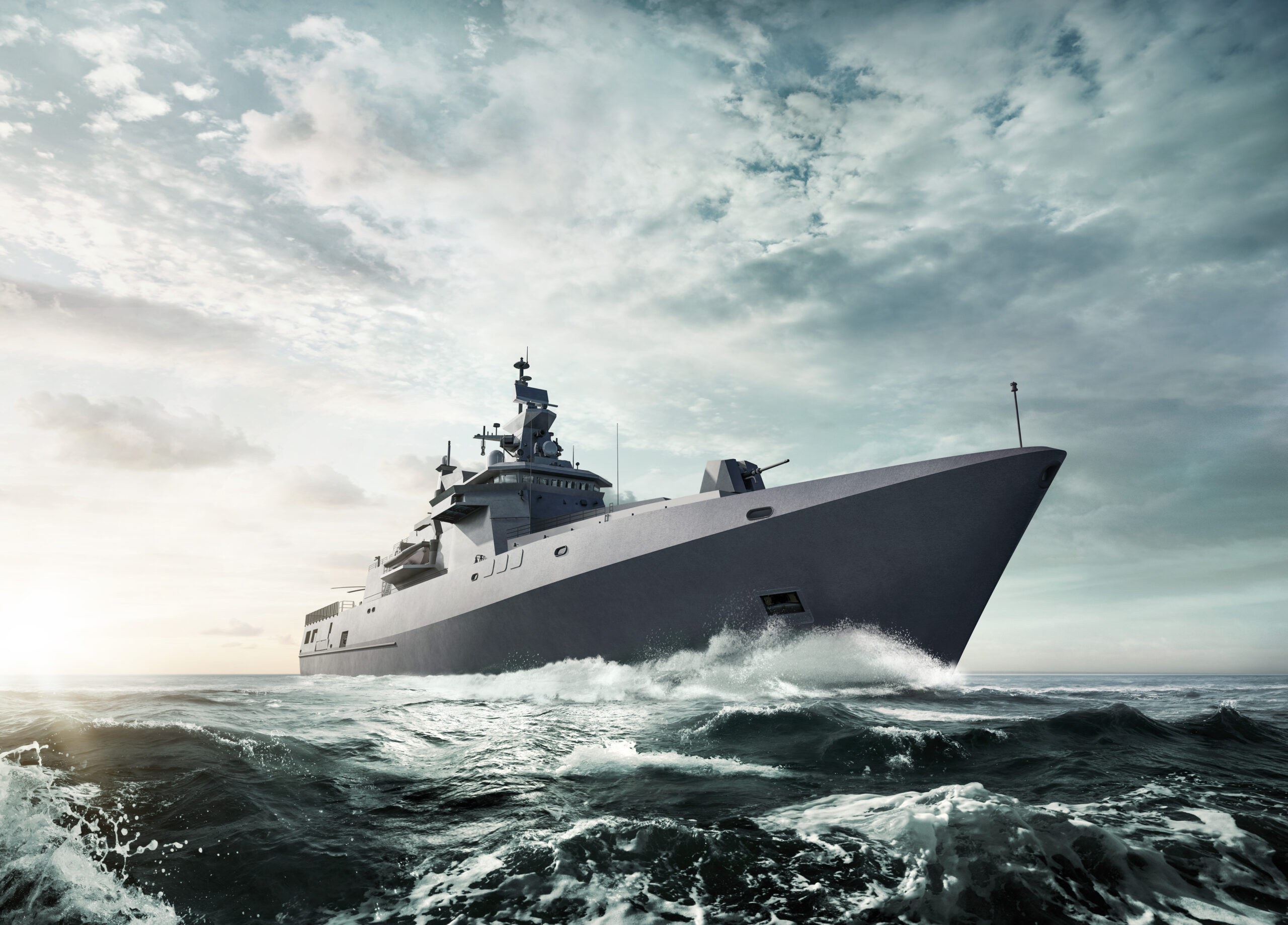
It has been an open secret that something has not been right with SEA 1180, the project for a new class of Arafura Offshore Patrol Vessels, for a while. They are being successfully constructed by Luerssen Australia – the first two at Osbourne and the remainder in Henderson – but rumours have been swirling for some time about various technical and contractual issues. This climate of uncertainty has not been assisted by Defence refusing to answer many questions about schedule – and now we have added to the mix the Hilarides review into the entire surface fleet expected to make its recommendations in September. Putting all this together, it looks like the RAN – having specified an OPV; contracted for an OPV; and watched a class of OPVs being built – has simply changed its mind and now wants a Tier 2 heavily armed small surface combatant instead. As far as APDR has been able to determine there is nothing wrong with the Arafura class, or at least nothing outside the parameters of a normal shipbuilding program, though Luerssen – recently rebranded as NVL – have needed to take a more direct hands-on role than was originally the case. However, the RAN seems to have decided that a very lightly armed ship is not for them, even though they were the ones that stripped the parent design of a powerful main gun and surface-to-surface missiles. All the Canberra betting is that the construction of Arafura class will cease, and a new program will start to buy Corvettes instead. Definitionally, a Corvette can be approximately the same size as an OPV, but it is designed to military rather than commercial standards and is packed with as many weapons as can be sensibly carried. Having a combat system and being able to embark a helicopter are also typically important features. As it happens, Luerrsen not only builds OPVs but also Corvettes – and currently has two programs of direct relevance for the RAN: K-130s for the German Navy as it dramatically recapitalises and two C90s for Bulgaria. The good news for Australia is that both classes have considerable overlap with the Arafura design – same general layout, same propulsion, same hull form and numerous overlapping subsystems meaning that commonality is around 70%. During a media tour looking at both Corvettes, Luerrsen explained that because of this commonality, the company could switch seamlessly from building Arafuras to building new Corvettes without losing time. However, that presupposes a quick decision in their favour and a 6 month design period confirming which weapons and sensors need to be incorporated. Steel on the first ship could be cut in 2024 and delivered in 2028 – and from then on at 10 month intervals. On the subject of budget, presumably there is something left in the SEA 1180 bucket since this was originally to acquire 12 OPVs and only half of them have been built. But that would only cover a small part of the budget for a new class of Tier 2 combatants so something else will need to be cut or new money found. Given the government’s strange lack of enthusiasm for increasing the size of the Defence budget, APDR suggests cancelling the $3 billion gift to US industry as some sort of weird bribe to get a seat at the AUKUS table. That alone would pay for half a dozen Corvettes. A more likely casualty will be some of the Hunter class frigates that have been heavily criticised for having only 32 VLS cells as well as the build occurring at glacial pace. It has always been the plan to contract for construction in batches of three and since the first of these has not yet been signed there is scope to reduce the number from the planned nine. Cancelling the entire project and writing off close to $6 billion is probably a bridge too far, though it does have some support. A C90 could easily accommodate 8 Mk41 VLS cells – the same number as an ANZAC frigate – and 16 at a pinch. They also have a sonar, AWS torpedoes and the capacity for a towed array. A major bonus is that they use the Saab 9LV combat system – with consoles coming from Australia. They would need to be lengthened to embark an MH-60R helicopter but Luerssen – which has been successfully building ships for 120 years – says this sort of design change is routine and low risk. Another major boost in capability would be to equip them with a CAE fixed face radar array. Luerrsen has done some preliminary design work and APDR has observed that the cubed golf ball structure sits neatly over the bridge area. Luerssen state that the C90 has power and weight margins sufficient to all these changes. We had the opportunity to discuss this with no less a figure than Peter Luerssen, co-owner of the company, who explained why the C90 design is more suitable for Australia than the K-130: “The Bulgarian ship has a three-dimensional warfare capability. It is a heavier ship and therefore slower than the one for Germany but it has been designed for very rough seas. You want a stable, strong platform because you (the RAN) will need to be at sea for a prolonged period of time. You can’t do that in a ship that does not offer the best human comfort because without that, the capabilities of the crew will suffer. “Yes, the K-130 has great capabilities but I think in the waters around Australia you are probably better off with a 90 metre heavy ship.” Put simply: a fully equipped 2,100 tonne C90 has a lot of combat power for a small ship with a crew of about 60. If Luerrsen were given the go ahead to promptly switch from Arafura – at 1,640 tonnes – to C90 it would pave the way for a rapid restructuring of the surface fleet with an increase in combat strength and power projection throughout the region. The Australian workforce and supply chain would remain intact and, in many cases, would be unaware that anything has changed. The existing Arafuras could continue to be used for various peacetime tasks or even transferred to Australian Border Force. It can be argued that Australia made a major error of judgement in not continuing the construction of Hobart class Air Warfare Destroyers with block upgrades to meet the requirements of a Tier 1 naval surface combatant. In retrospect, this might have been better than switching to an entirely new class of warship based on the UK Type 26 with all of the delays and risks in doing so. Luerssen presents a compelling case for not repeating that mistake. This means no disrespect to the other designers who have shown an interest in this space, such as tkMS and Navantia. Both can produce extremely capable Corvettes, but the simple fact is that only one company in the form of NVL has a current production line in Australia. (Disclaimer: Kym Bergmann travelled as a guest of Luerssen. He would like to particularly thank Krystle Thein for her assistance.) For Editorial Inquiries Contact: Editor Kym Bergmann at [email protected] For Advertising Inquiries Contact: Director of Sales Graham Joss at [email protected]

Kym Bergmann has more than 35 years of experience in journalism and Australian and international defence industry. After graduating with Honors from the Australian National University, he joined Capital 7 television, holding several positions including foreign news editor and chief political correspondent.
After 2 years on the staff of a Federal Minister, he moved to the defence sector and held senior positions in several companies, including Blohm+Voss, Thales, Celsius and Saab. In 1997 he was one of 2 Australians selected for the Thomson CSF 'Preparation for Senior Management' MBA course, the other being Chris Jenkins - formerly the CEO of Thales Australia.
He has also worked as a consultant for a number of companies, including Raytheon, Tenix (now part of BAES) and Martin Marrietta (now part of Lockheed Martin). He had several board appointments, including Thomson Sintra Pacific (1994 - 96) and Saab Pacific (1998 - 2003).
He retains good personal links with senior figures in Government, as well as in industry and the media. He decided to return to journalism in May 2008, and holds the position of editor for Asia Pacific Defence Reporter (APDR) and Defence Review Asia (DRA). He is also a podcaster and commentator on defence and national security issues.
Comments
Loading comments...