
OPINION: The Federal response to the pandemic – where is Border Force?
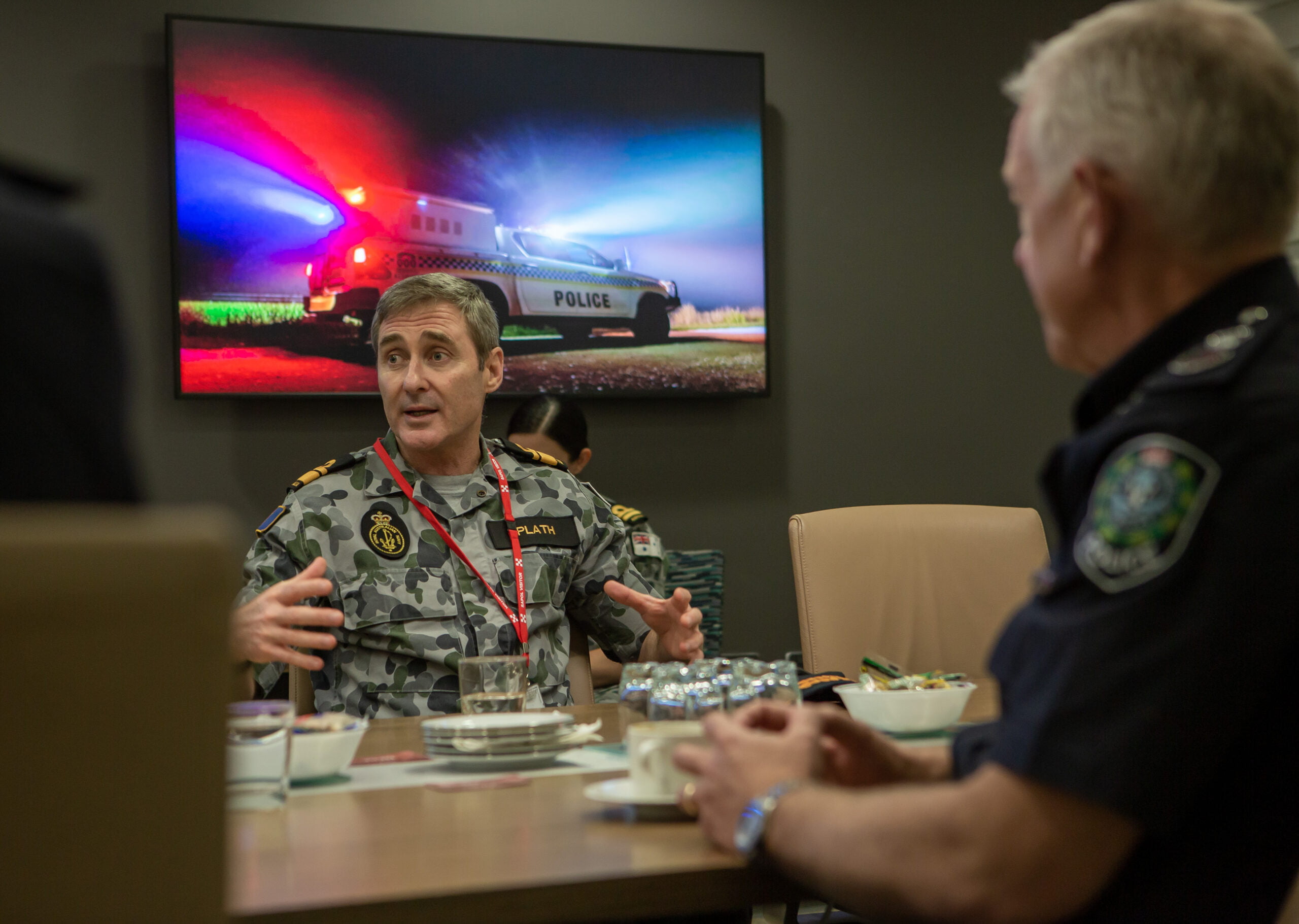
Because of the structure of the Australian Federation, much of the day-to-day battle against COVID-19 has been left to the individual states. While quite successful by world standards, there is room for improvement because – as the epidemiologists assure us – it is only a matter of time before the next pandemic hits. Many countries in the Asian region have done well – especially Taiwan, South Korea and Singapore – because they received a big fright in 2003 with the SARS outbreak and have put far more rigorous whole of Government public health measures in place as a consequence. As has become the norm with domestic crises, the ADF has been reasonably quick providing around 1,500 personnel to help with tasks such as contact tracing and quarantine efforts. But there is another Federal Government agency answering to Home Affairs Minister Peter Dutton that seems to be under-utilised. They are not the border agency, they are not the border police – they are the Australian Border Force, with matching smart black uniforms and guns. A major task of Border Force has been policing international travel – particularly at airports – but since the number of people travelling to and from our shores has been reduced to a tiny fraction of what it once was, presumably some of this cadre of more than 5,000 trained officers could be made available for other tasks. If they can protect Australia’s international borders, why not redeploy them to protect the country’s internal ones between states? One assumes that overworked police forces would welcome the help – just as they have welcomed the assistance of the ADF. For readers concerned about jurisdictions, cast your mind back to 28 August 2015 – not long after the creation of Border Force – and Operation Fortitude. This was a plan to deploy ABF personnel in Melbourne to undertake random visa checks on suspicious looking people – although to be fair the organisation said those targeted would not be selected randomly and was unable to explain the finer points of how it would work. After a public outcry, Operation Fortitude was cancelled. All but the most xenophobic amongst us would surely concede that we now face a far greater danger from the spread of COVID-19 than we do from people overstaying their visas. If the concept was good enough for the Federal Government in 2015, why not deploy Border Force agents to places such as train stations and bus stops where they could make a positive contribution by policing mask wearing and social distancing? As for the view of Border Force itself, a spokesperson said: The work carried out by the ABF has not stopped as a result of COVID-19. Our borders remain strong. It is business as usual when it comes to detecting illicit substances, stopping illegal imports and preventing worker exploitation. As a result of the border measures put in place because of COVID- 19, we have seen a downturn in the number of passenger arrivals at our airports. That means we have even more ABF staff available to inspect goods coming in through our ports and mail centre. Containers are still coming into Australian with goods that the country relies on. We are keeping the economy moving as much as possible, but at the same time, we are committed to ensuring our borders remain strong. Returning to the role of the ADF, as commendable as that has been, we are still of the view outlined in October that use should be made of major Defence bases such as Laverton in Melbourne and Richmond on the outskirts of Sydney to quarantine Australians returning home. https://venturaapdr.partica.online/apdr/apdr-oct-2020/flipbook/4/ These facilities are large, secure and can accommodate thousands of additional people – particularly if they only have to stay there for a fortnight. While far from luxurious, it seems likely that people will be prepared to put up with a minor level of discomfort as long as they can come home. If Defence wanted to house people on a cost recovery basis that would be fine – after all, it is still likely to be less expensive than staying in a hotel in the CBD. (Main Photo: (L-R) Commander of the Defence COVID-19 task force Rear Admiral Robert Plath, RAN, met with the South Australia Police Commissioner Grant Stevens during his visit to South Australia. For Editorial Inquiries Contact: Editor Kym Bergmann at [email protected] For Advertising Inquiries Contact: Director of Sales Graham Joss at [email protected]
Previous article
Major General Pearce completes tenure as Force Commander United Nations Force In Cyprus
Kym Bergmann has more than 35 years of experience in journalism and Australian and international defence industry. After graduating with Honors from the Australian National University, he joined Capital 7 television, holding several positions including foreign news editor and chief political correspondent.
After 2 years on the staff of a Federal Minister, he moved to the defence sector and held senior positions in several companies, including Blohm+Voss, Thales, Celsius and Saab. In 1997 he was one of 2 Australians selected for the Thomson CSF 'Preparation for Senior Management' MBA course, the other being Chris Jenkins - formerly the CEO of Thales Australia.
He has also worked as a consultant for a number of companies, including Raytheon, Tenix (now part of BAES) and Martin Marrietta (now part of Lockheed Martin). He had several board appointments, including Thomson Sintra Pacific (1994 - 96) and Saab Pacific (1998 - 2003).
He retains good personal links with senior figures in Government, as well as in industry and the media. He decided to return to journalism in May 2008, and holds the position of editor for Asia Pacific Defence Reporter (APDR) and Defence Review Asia (DRA). He is also a podcaster and commentator on defence and national security issues.
Comments
Loading comments...