
The U.S. Army is moving to new generation helicopters, but not Australia
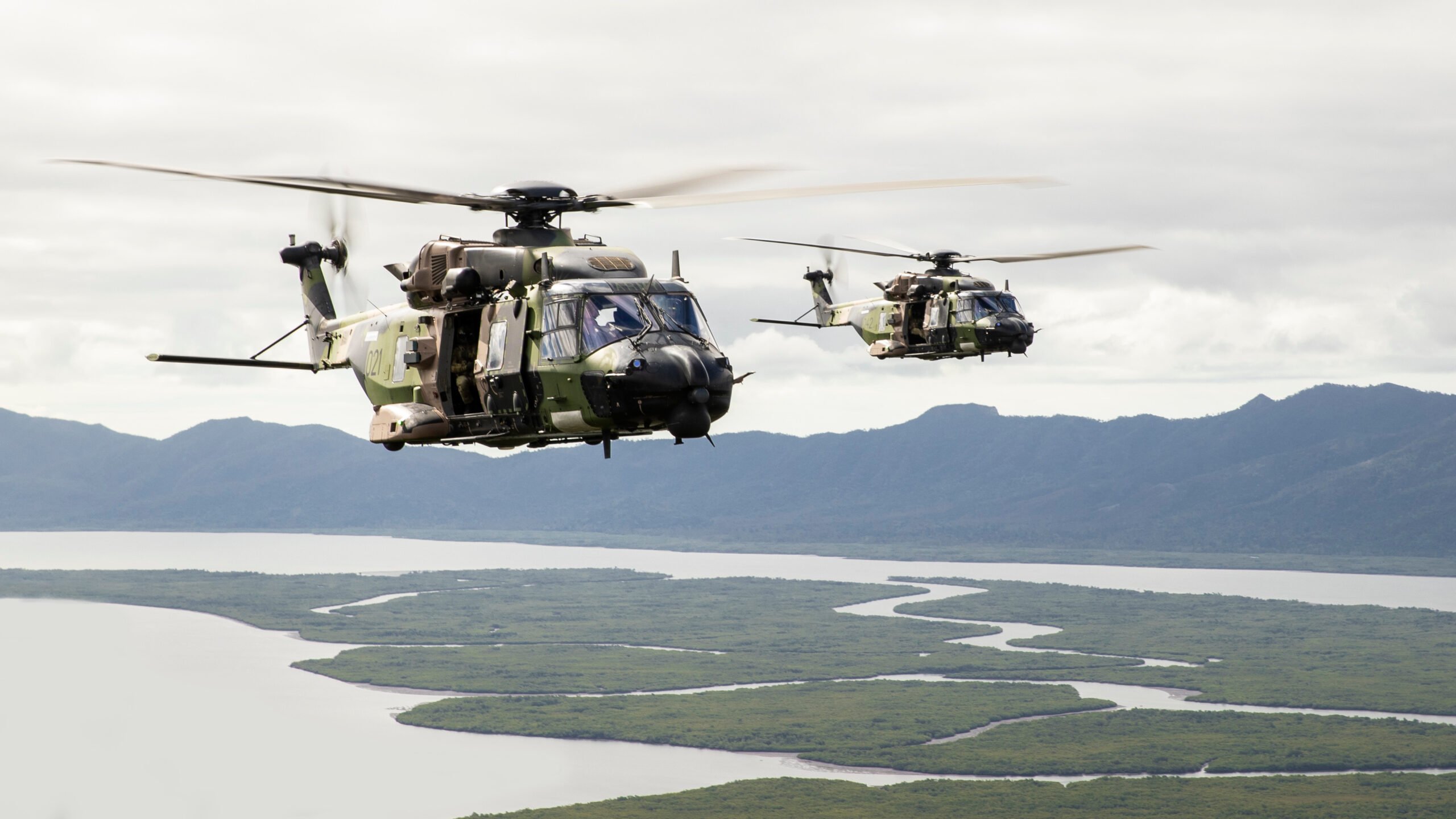
The official announcement on January 18 that Australia will ditch 47 Taipan Multi-Role Helicopters (MRH) and replace them with Blackhawk UH-60M has been widely expected. The previous Defence Minister Peter Dutton foreshadowed this development in December 2021 on the day when the last of the previous generation Blackhawks were retired. This comes just weeks after the U.S. Army announced on December 6 that it will be replacing its Blackhawks with the Bell V-280 Valor next generation assault aircraft. Strictly speaking, these are not helicopters because they are based on the tilt rotor concept of being able to rotate the engines during flight shifting the propellers from a vertical position for take-off and descent to the horizontal plane for normal flight. This method combines the performance of helicopters with that of conventional aircraft. The USMC has been using earlier versions of the technology in the form of the V-22 since 2007. Around 500 of them have been built, so the tilt-rotor concept is quite mature and has been selected by the U.S. and Japan. The UH-60M is the latest version of the Blackhawk, which first flew in 1974. More than 4,000 have been built and they are one of the most recognisable military helicopters in the western world. Australia selected the Taipan to replace early generation Blackhawks for a number of reasons, including that the MRH had modern fly-by-wire controls rather than mechanical systems, advanced sensors such as night vision, and a rear loading ramp – still unique for a helicopter in the 10-tonne class. As has been frequently reported, Army has been unhappy with the level of availability of the MRH fleet, which has been the subject of numerous groundings, some of which have been for dubious technical reasons. This lack of availability has, in turn, driven up the cost of each flying hour. To give an extreme example, if the annual support budget is $300 million and the fleet is grounded, except for one helicopter for one hour, then the official cost per flying hour is $300 million – which is ridiculous in real life situations. An Army pilot recently summarised the situation to APDR in the following colloquial terms: “The MRH is easily the best helicopter I have ever flown – by far. But to be effective when you turn the ignition key on it has to work.” Other pilots have spoken enthusiastically about the benefits of fly-by-wire, which includes 4-axis flight control, that allows very precise auto-hover and confined space landings even in extreme conditions. An MRH is about the same dimensions as a Blackhawk and they both have an empty weight of just over 6 tonnes. They can carry an extra 1.4 tonnes with a maximum take-off weight of 10,600kg v 9,200kg – though some sources indicate that a UH-60M has an MTOW of almost 10 tonnes, narrowing the gap. As has been discussed previously in APDR, there has been frequent criticism of the MRH family regarding cost and availability. They are currently being operated by 14 nations, of which two – Australia and Norway – have decided to discontinue their use. It has proven almost impossible to understand why the majority of operators seem to have overcome these problems – or have decided to live with them – while two have not. People have been quick to blame the European manufacturer, Airbus Helicopters, but while this has been a factor the reality seems to be a far more complex mix involving contracts and the support arrangements that various services have put in place. As an aside, in retrospect it would have been far better for the MRH fleet to have been maintained by the RAAF, which has systems in place to support advanced digital platforms. The same can be said about the Tiger Armed Reconnaissance helicopters, which set the pattern of first being maligned and then ditched because of support issues and replaced with older generation (albeit updated) Apache AH-64Es. The 40 UH-60Ms will cost more than $2 billion to acquire and their annual support costs are unclear at this stage. Given this amount of money, one wonders if this matter was considered by the Defence Strategic Review. It should have been. Perhaps it was – and unlike every other acquisition snagged up in that process has been given the all-clear. The big question for Army is why they are moving to the UH-60M when their U.S. counterparts have selected the V-280 as their Blackhawk replacement. The decision is under protest from rival Lockheed Martin, but this will probably only serve to delay the project by a month or two. The V-280 has a maximum cruising speed of 520kph; the Blackhawk 300kph. They can carry 4 tonnes more payload than a UH-60M and have about double the combat range of around 1,400km. In summary, they can fly further, faster, higher and with more troops and equipment. The V-280 still has some time to go before scaling up to full rate production and entering service, which is expected to occur in the later part of this decade. The Australian Army says the first of the UH-60Ms will start to arrive this year, which seems unusually fast, but the Blackhawk production line is still cranking them out. For Editorial Inquiries Contact: Editor Kym Bergmann at [email protected] For Advertising Inquiries Contact: Director of Sales Graham Joss at [email protected]
Previous article
Australia to acquire 40 Blackhawks
Kym Bergmann has more than 35 years of experience in journalism and Australian and international defence industry. After graduating with Honors from the Australian National University, he joined Capital 7 television, holding several positions including foreign news editor and chief political correspondent.
After 2 years on the staff of a Federal Minister, he moved to the defence sector and held senior positions in several companies, including Blohm+Voss, Thales, Celsius and Saab. In 1997 he was one of 2 Australians selected for the Thomson CSF 'Preparation for Senior Management' MBA course, the other being Chris Jenkins - formerly the CEO of Thales Australia.
He has also worked as a consultant for a number of companies, including Raytheon, Tenix (now part of BAES) and Martin Marrietta (now part of Lockheed Martin). He had several board appointments, including Thomson Sintra Pacific (1994 - 96) and Saab Pacific (1998 - 2003).
He retains good personal links with senior figures in Government, as well as in industry and the media. He decided to return to journalism in May 2008, and holds the position of editor for Asia Pacific Defence Reporter (APDR) and Defence Review Asia (DRA). He is also a podcaster and commentator on defence and national security issues.
Comments
Loading comments...