
SBG Systems launches new Pulse-40 OEM
By APDR
•Jul 13, 2026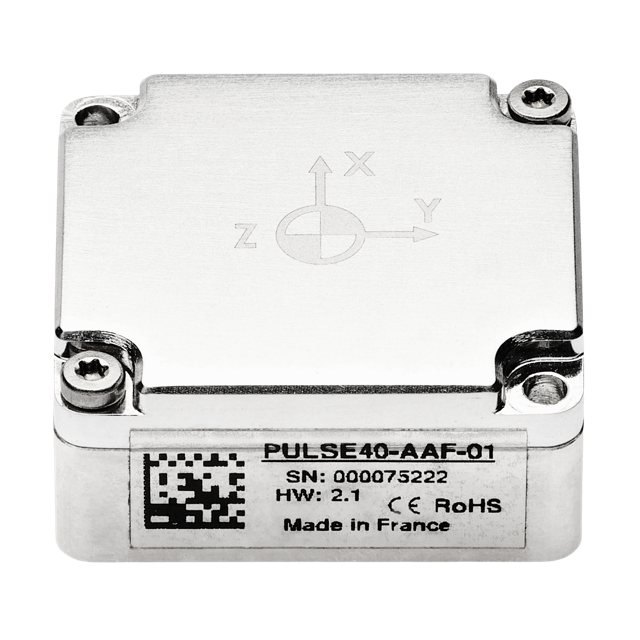
SBG Systems announced the launch of the new Pulse-40 OEM, the latest generation of its miniature tactical-grade Inertial Measurement Unit (IMU). Built on the success of the original Pulse-40, the new model delivers significant improvements in performance, environmental robustness, manufacturing scalability, and integrated vibration spectrum monitoring while preserving the compact size, low weight, ultra-low power consumption, and seamless integration capabilities that have made the Pulse-40 a solution for demanding navigation, stabilization, and guidance applications. Designed for engineers who require uncompromising inertial performance in space-constrained systems, the version 2 of the Pulse-40 OEM maintains full form and function compatibility with existing Pulse-40 integrations, allowing customers to upgrade to the latest generation with minimal system redesign. “The defense market is increasingly looking for navigation and stabilization solutions that fit into smaller platforms without compromising performance,” said Gaël Bielecki, Business Development Manager – Defense at SBG Systems. “The new Pulse-40 OEM delivers exactly that combination. Its unique blend of tactical-grade performance, vibration resilience, low SWaP, and integrated vibration monitoring makes it particularly well suited for guided rockets, precision-guided glide bombs, loitering munitions, and next-generation optronic systems operating in demanding environments.” The new version of Pulse-40 OEM retains the core strengths that established the Pulse-40 as one of the industry’s most compact tactical-grade IMUs. With dimensions of only 30×28×13.3 mm, a weight of just 19 grams, and typical power consumption of only 0.3 W, the Pulse-40 OEM continues to set the benchmark for Size, Weight, Power, and Cost (SWaP-C) efficiency. The new generation also preserves the architecture that made Pulse-40 unique, including: Tactical-grade inertial performance in an OEM form factor Ultra-low-noise MEMS sensing Continuous Built-In Test (CBIT) capabilities High-integrity redundant sensor cluster architecture High data output rates up to 2 kHz and advanced synchronization capabilities These characteristics enable system designers to integrate high-end inertial sensing into platforms where every gram, millimeter, and watt matter. For Editorial Inquiries Contact: Editor Kym Bergmann at [email protected] For Advertising Inquiries Contact: Group Sales Director Simon Hadfield at [email protected]
Previous article
Unseenlabs deploys second-gen satellite for RF detection
Comments
Loading comments...