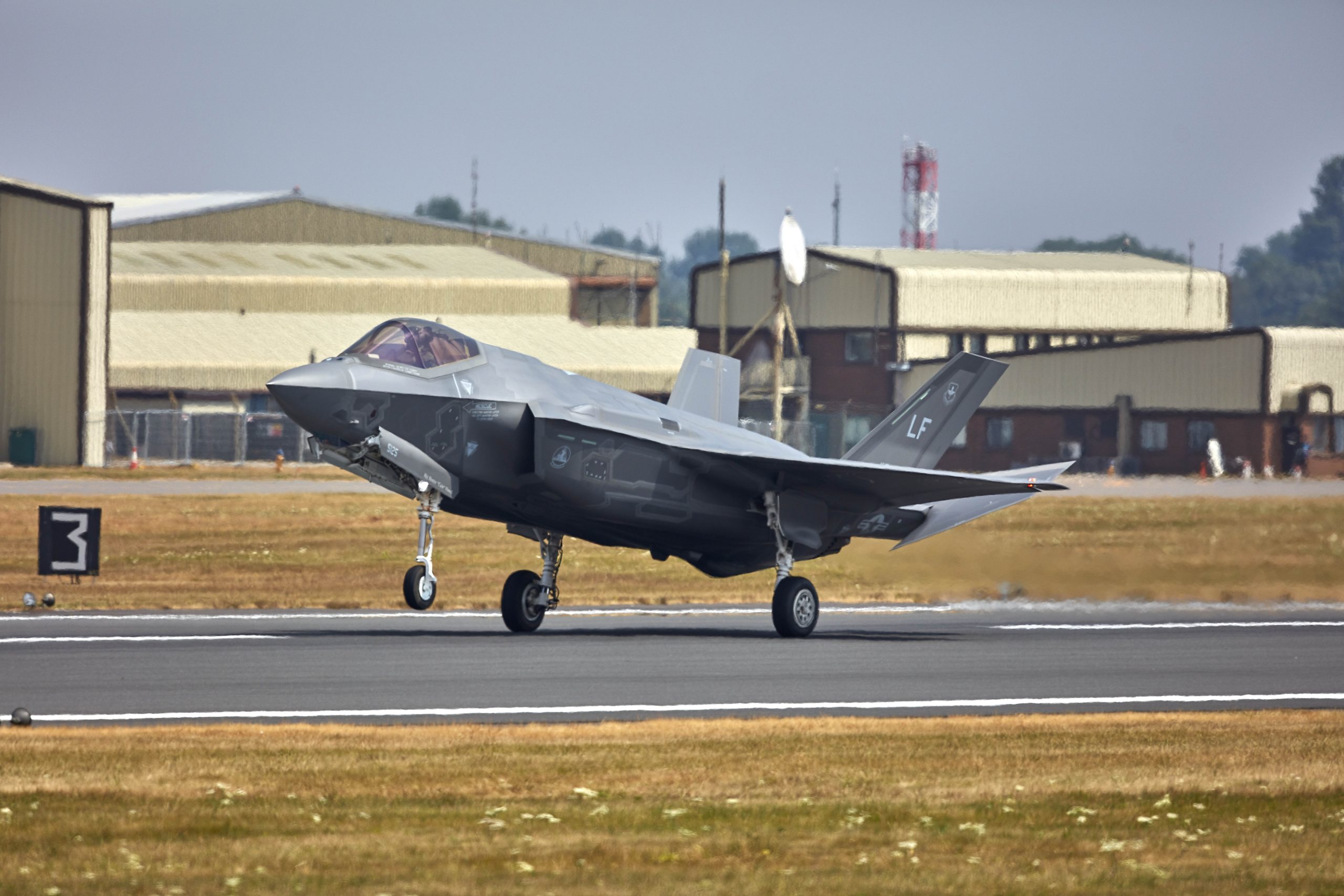
 Lockheed Martin recently flight tested an artificial intelligence (AI)-enhanced Combat Identification (Combat ID) capability integrated into the F-35’s information fusion system. The successful demonstration, known as Project Overwatch, marks the first time a tactical AI model has been used in flight to generate an independent Combat ID on the pilot’s display.
This builds on work across the company to innovate with intent to meet the warfighter’s real-time needs in an evolving threat environment. In practice, that means accelerating capability at scale with speed. Using innovative methods, Lockheed Martin has deployedreal-time, over-the-air software updates to the Aegis multi-mission combat system to deployed U.S. Navy ships in the Red Sea to enable rapid counter-measures against advanced drone and missile threats.
During the Project Overwatch test flight, which was conducted at Nellis Air Force, Nevada, a Lockheed Martin-built and trained AI/machine learning model resolved ID ambiguities among emitters, improving situational awareness and reducing pilot decision making latency. Engineers then used an automated tool to label new emitters, retrain the AI model to learn the new emitter class within minutes, and reload the updated model for the next flight, all in the same mission planning cycle.
Embedding this advanced AI into the F-35’s mission system helps pilots understand threats faster so they can make decisions more quickly, because operators don’t have time to synthesize data in combat. Lockheed Martin will continue to improve upon this capability, expanding the AI model’s training to further enhance reliability and accuracy.
“This is a demonstration of 6th Gen technology brought to a 5th Gen platform,” said Jake Wertz, vice president of F 35 Combat Systems at Lockheed Martin Aeronautics. “Equally important is our ability to re program the AI model on the ground and have those updates available for the next sortie—an essential step toward maintaining a tactical edge in a rapidly evolving threat environment. These capabilities embody Lockheed Martin’s 21st century strategy, which advances every product line by integrating next generation performance, continual software modernisation, and AI driven decision making to keep our customers ahead of emerging challenges.”
Lockheed Martin has decades of investment and innovation in AI to ensure our systems are smarter, more secure and more interconnected. Initiatives like Project Overwatch demonstrate how we’re innovating with intent, building solutions that integrate seamlessly and deliver immediate value. These flight test results will inform future development and potential integration pathways.
With 12 nations operating the F-35 across the global fleet, and more than 1,300 aircraft in service, the F-35 is delivering on its promise of unmatched reliability and lethality. Lockheed Martin is positioned to keep the fleet at the cutting edge of technology and support our allies as they expand their capabilities worldwide to ensure the F-35 remains an indispensable contributor to global security for decades to come.
Lockheed Martin Australia marks delivery of 300th C-130J
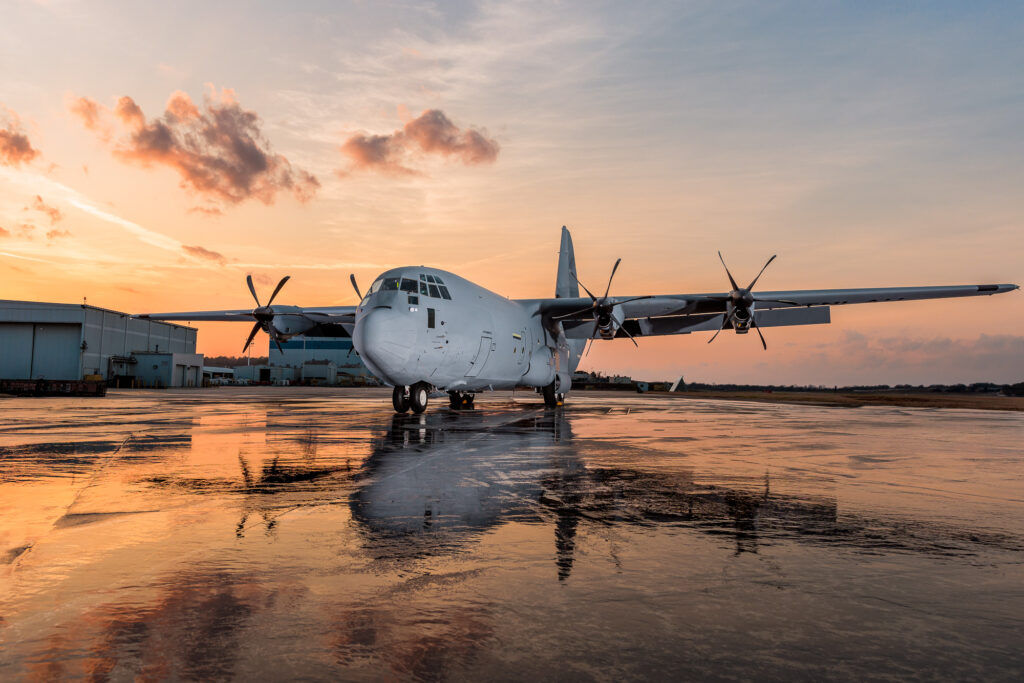 Lockheed Martin Australia announced Australian industry partner Quickstep, wholly owned subsidiary of ASDAM has completed the 300th ship-set of composite wing flaps for the C-130J Super Hercules aircraft. Manufactured at Quickstep’s Bankstown Airport facility, the 300th ship-set will be delivered to Lockheed Martin’s production facility in Marietta, Georgia. This milestone also includes the completion of composite wing flaps for the first aircraft for the Royal Australian Air Force’s new C-130J fleet. The aircraft is scheduled to be delivered by Lockheed Martin in 2028 under Project AIR 7404—Australia’s largest current defence‑aerospace program of record.
Quickstep has been a trusted partner to Lockheed Martin for more than a decade, supporting the delivery of complex composite components across multiple aerospace programs. Lockheed Martin has worked closely with Quickstep to develop and sustain advanced manufacturing capability in Australia, enabling the company to meet the rigorous quality, scale and certification requirements of global defence programs. Under Lockheed Martin’s C-130J program, Quickstep is the sole global supplier of composite wing flaps for the aircraft and Australia’s only production supplier to the program to date. All C-130 aircraft manufactured since 2014 incorporate wing flaps manufactured by Quickstep at its Bankstown Airport site, reflecting Lockheed Martin’s reliance on Australian industry to deliver critical, mission-essential components across its global programs.
Quickstep produced its 100th ship-set in 2017 and its 200th in 2021. Today, Quickstep has approximately 200 employees, with approximately one quarter directly involved in C-130J wing flap production, alongside broader employment across the Australian defence supply chain.
“Reaching the 300th ship-set milestone is a significant achievement for Quickstep and for Australian defence manufacturing and even more significant that these components will be installed on the first of Australia’s new C-130Js,” said Toni Marzulli, Vice President Operations, Lockheed Martin Australia and New Zealand. “Quickstep has proven itself as a long-standing, reliable and critical partner, consistently delivering mission-essential composite structures to the quality, scale and precision required for global aerospace programs. Lockheed Martin Australia is proud to work with partners like Quickstep to build resilient sovereign capability and integrate Australian industry into global aerospace supply chains.”
Rohan Stocker, Chief Executive Officer of ASDAM, said “the milestone reflected decades of technical excellence and sustained investment. Being the sole global supplier of C-130J composite wing flaps is a testament to the capability of our people and the strength of our partnership with Lockheed Martin,” Mr Stocker said. “This program has been foundational to Quickstep’s growth and continues to provide highly skilled jobs and advanced manufacturing capability here in Australia. Our entire team is proud to contribute to the Lockheed Martin Global Supply Chain.”
Australia has a long operational history with the C-130 aircraft, having introduced the Hercules into Royal Australian Air Force service more than 65 years ago. Milestones such as the delivery of the 300th C-130J wing flap ship-set underscore the role Australian industry continues to play in sustaining and evolving that capability. The new C-130J fleet will extend Australia’s relationship with the Hercules beyond a century of service, ensuring a proven and reliable medium air mobility capability for decades to come.

For Editorial Inquiries Contact:
Editor Kym Bergmann at [email protected]
For Advertising Inquiries Contact:
Group Sales Director Simon Hadfield at [email protected]