
South Korea’s defence technology export boom explained
By APDR
•Feb 5, 2026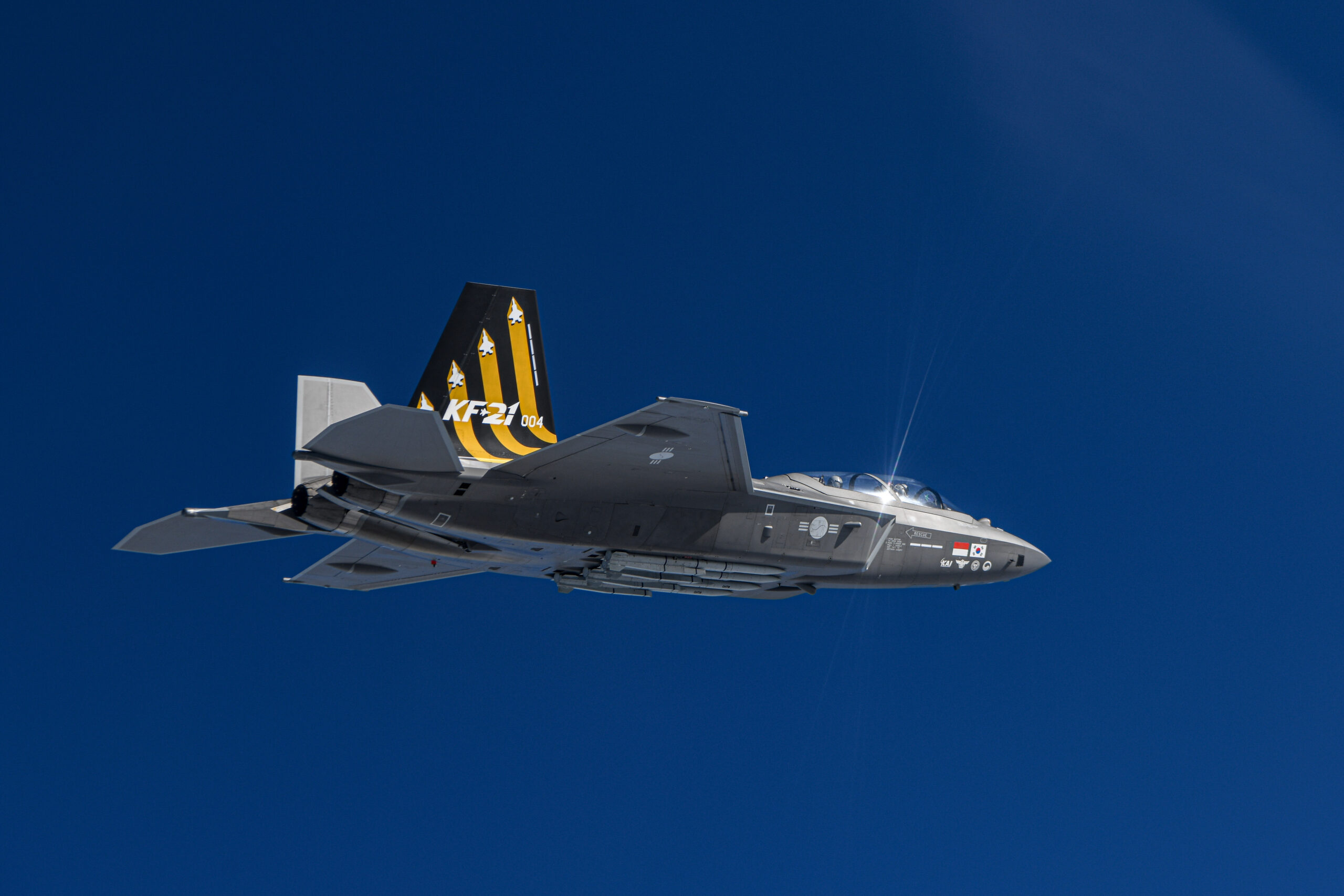
While many of us have been aware of the existence of South Korea’s defence industry for some time, it’s only in the last decade – and more particularly in the last four years following Russia’s invasion of Ukraine – that the world is waking up to the huge industrial capacity of the country. Formerly obscure names such as KAI, Hyundai, Hanwha and LIG Nex are now almost instantly recognisable as producers of high-quality military equipment. Eugene Kim Understanding how this success has come about so rapidly and at such scale is not always easy for people outside the Republic of Korea – but fortunately we have an expert guide in the form of Mr Eugene Kim, who is the Chairman of Huneed Technologies and the now twice-elected Chairman of the country’s peak military industrial body, the Korean Defense Industry Association (KDIA). Established in 1976, KDIA represents more than 750 ROK companies and supports its members in enhancing industrial competitiveness and international cooperation efforts through working closely with the ROK Government. Huneed Technologies is – by the standards of the ROK – a medium sized, hi tech, export-oriented company developing and supporting both military and commercial products. An export success story, it specialises in military communications and is a leader in implementing Industry 4.0 protocols through the use of additive manufacturing, particularly in the aerospace domain where it works closely with industry giants such as Boeing and Airbus. Mr Kim was kind enough to share his knowledge with readers of APDR. FA-50 trainers/light attack aircraft (KAI photo) Kym Bergmann: Many countries have noticed how quickly the ROK can build military platforms. How is this being achieved? Eugene Kim: The speed of South Korean production is not a miracle; it is the structural result of maintaining a “hot” industrial base. Unlike many Western nations that allowed their defense industrial capacity to atrophy during the post-Cold War “peace dividend” era, South Korea has maintained a state of high readiness due to the constant security threat on our border. We never turned off the assembly lines. This speed is achieved through a unique dual-use ecosystem. Our defense companies are deeply integrated with Korea’s world-class commercial sectors—semiconductors, shipbuilding, and automotive manufacturing. At Huneed Technologies, for example, we leverage the same supply chains and precision manufacturing techniques used by Korea’s global electronics giants. This allows us to source components rapidly and scale production without the long lead times that plague other nations. Furthermore, the relationship between the Defense Acquisition Program Administration (DAPA) and the industry is symbiotic. We design for mass production from the blueprint stage, not as an afterthought. When Poland ordered K2 tanks and K9 howitzers, Korean firms didn’t have to build new factories; they simply ramped up existing active lines. This “always-on” capability means we can deliver in months what takes others years. In a security crisis, time is the most valuable commodity, and that is what we are selling. Q2: Most of the growth in the defense sector seemed to occur from the 1990s. Is this a correct assessment and what factors have led to the sector developing so rapidly? Eugene Kim: It is accurate to say the visible acceleration began in the 1990s, but the foundation was laid in the 1970s with the Yulgok Project, which aimed for self-reliant defense. However, the 1990s marked the critical pivot from license production to indigenous development. Before that, we were students assembling foreign kits; in the 90s, we became engineers designing our own solutions. Two major factors drove this. First was the “Selection and Concentration” strategy. The government realised we couldn’t master every technology at once, so we prioritized ground systems and artillery—areas critical for countering North Korea. This focus allowed companies like Hanwha and Hyundai Rotem to gain deep proficiency and scale in specific domains before branching out. Second was the Asian Financial Crisis in the late 90s. Paradoxically, this crisis saved the industry. It forced disparate, inefficient defense units to consolidate into leaner, stronger entities. It also forced us to look outward. With domestic budgets tight, companies had to explore exports to survive. Today, as Chairman of the KDIA, I see the result: a sector that combines the efficiency of a commercial survivor with the strategic support of the government. We didn’t just grow; we evolved to survive, and that “survival DNA” makes us incredibly competitive today. Q3: The ROK defense budget is a fairly modest 2.1 – 2.3% of GDP, yet the armed forces have a huge amount of Korean-built equipment. What is the secret of this success? Eugene Kim: The secret is the “virtuous cycle of domestic demand.” Because the ROK maintains a large standing army of nearly half a million troops, our domestic procurement orders are massive. We don’t buy 50 tanks; we buy 500. This guarantees a baseline volume that allows manufacturers to achieve economies of scale that European or even some US manufacturers cannot match. This high volume dramatically lowers the unit cost. When Huneed produces tactical communication systems (TICN), we are producing them for an entire army corps, not just a specialised brigade. This lowers the cost of R&D recovery per unit. We pass these savings on to the government, allowing them to stretch that 2.3% of GDP much further than other nations. Additionally, the domestic market is ruthlessly competitive. The government pits companies against each other to drive down costs while demanding strict adherence to military standards (Mil-Spec). There is no room for inefficiency. This means when international buyers look at Korean equipment, they are seeing a product that has already survived a gruelling selection process and is being produced at an optimal price point. We offer “High-End Specs at Mid-Range Prices”—that is the Korea Premium. Q4: To an outside observer, it looks as if the ROK is methodically moving to 100% Korean solutions for all military equipment. Is this a correct assessment, and what is the thinking behind it? Eugene Kim: The goal is not “100% localisation” for the sake of nationalism, but “Strategic Autonomy” for the sake of security. We have learned that in a geopolitical crisis, you cannot rely entirely on external supply chains. If a part is withheld or a shipping lane is blocked, our national defense cannot grind to a halt. Therefore, we are methodically localising the “core technologies”—the mission computers, the AESA radars, and the guidance systems. However, we remain pragmatic globalists. We do not seek to reinvent the wheel where trusted partners are already dominant. For instance, while the K2 tank is Korean, the transmission initially used German technology until we perfected our own. The KF-21 fighter uses US engines. At Huneed, we have maintained a strategic partnership with Boeing for over a decade. The thinking is: “Own the brain, share the body.” We want to control the integration and the software source code so we can upgrade systems without asking for foreign permission, but we are happy to integrate best-in-class components from global partners. This hybrid approach ensures we have sovereign control over our military usage while maintaining interoperability with our US and NATO allies, which is crucial for joint operations. Q5: Generally speaking, is the defense sector profitable for ROK companies and is this encouraged by the government? Eugene Kim: Historically, the domestic defense market was not a place for high profits. It was regulated as a public service, with strict caps on operating margins to protect taxpayer money. Companies participated out of patriotism and stability, not for windfalls. However, this has changed dramatically with the explosion of exports. The export market is where the profitability lies. Selling to Poland, Australia, or the UAE allows companies to achieve margins that justify heavy reinvestment. The government now actively encourages this because they understand that a profitable defense company is a sustainable one. DAPA and the Ministry of Trade, Industry and Energy (MOTIE) view defense as a “New Growth Engine” for the national economy, replacing slowing sectors like heavy shipping. As KDIA Chairman, I actively lobby for policies that allow companies to retain more export profits to fund high-risk R&D. The government supports this through tax incentives for defense R&D and by underwriting export insurance. They want us to be profitable because they want us to reinvest that capital into 6th-generation technologies. It is a shift from “Defense as Utility” to “Defense as Industry.” Q6: How much defense technology R&D is being done by companies and how much by government agencies such as ADD? Eugene Kim: For decades, the Agency for Defense Development (ADD) was the brain of Korean defense, doing 90% of the R&D while companies were merely the hands that built the blueprints. That model is now obsolete. We are currently in a major transition where the government is transferring R&D leadership to the private sector—a “Private-Led Defense” model similar to the US system. The clearest evidence of this is our recent activity at ADEX 2025, where Huneed demonstrated that we are no longer just a manufacturer, but a total solution provider. For example, Huneed independently developed a Long-Range Tracking Antenna capable of auto-tracking drones from up to 200km away. This was a company-funded R&D initiative to solve a critical gap in unmanned operations, not a government directive. Similarly, we signed a strategic MOA with Tron Future Tech to co-develop Maritime Anti-Drone Systems using AESA radar, effectively creating a new product category for naval defense. Furthermore, our R&D is now deeply integrated with global giants. At ADEX, we expanded our partnership with Boeing, securing a major contract for the F-15EX and H-47 Chinook programs, and signed a landmark MOU with General Atomics (GA-ASI) to develop core avionics (EWIS) for their next-generation UAVs. These agreements prove that Korean companies are now sophisticated enough to co-develop technology with the world’s best, moving beyond simple licensed production to becoming true R&D partners. Q7: Much of the world is discovering that the ROK is an excellent supplier of military equipment. What is the value of defense technology exports and what are the prospects for future growth? Eugene Kim: The growth has been nothing short of exponential. We have moved far beyond the $17 billion “breakout” of 2022. Preliminary figures for 2025 suggest we are approaching the $23 billion (approx. KRW 32 trillion) mark in annual export contracts. This places us firmly among the world’s top tier of defense exporters, and remarkably, we are now the second-largest supplier to NATO member states, trailing only the United States. The prospects for 2026 and beyond are even brighter because the quality of our order book has evolved. We are no longer just selling “steel” like tanks; we are selling high-value strategic systems. In late 2025 alone, we saw landmark deals such as the $3.2 billion Cheongung-II missile defense contract with Saudi Arabia and a $1 billion K9 howitzer deal with Romania. Furthermore, the “backlog” held by our major firms—Hanwha, KAI, LIG Nex1, and Hyundai Rotem—has surpassed $72 billion (100 trillion won) for the first time. This massive backlog guarantees steady production lines for the next 4–5 years. As global security uncertainty drives nations to prioritise delivery speed over brand prestige, Korea’s ability to deliver NATO-standard equipment on time makes our future growth not just probable, but inevitable. I foresee significant growth not just in our traditional strongholds of land systems (tanks and howitzers), but in higher-value sectors. The naval sector—submarines and frigates—is the next frontier, as is the aerospace electronics sector where Huneed operates. As global supply chains fracture, Korea’s reputation as a reliable, politically stable supplier will only increase the value of our exports. Q8: Are there any particular countries or regions that could be future purchasers of military technology from the ROK? Eugene Kim: Poland has served as our bridgehead into Europe, but the ripple effects are spreading. We are in active discussions with Romania, which has similar flank-security needs, and the Baltic states are showing strong interest in our ground systems. We are also seeing “tier-two” European nations looking at Korean equipment as a cost-effective alternative to German or French platforms that are currently backlogged. Beyond Europe, the “Five Eyes” nations are a major strategic target. We are looking at Canada for submarine replacements and Australia for surface vessels and infantry fighting vehicles. These are high-bar markets that validate our technology. The Middle East—specifically Saudi Arabia and the UAE—remains a critical region. They are moving away from simple purchasing to “industrial partnerships,” looking for joint ventures to build local capacity. Interestingly, the United States is becoming a key market for components and MRO (Maintenance, Repair, and Operations). As the US industrial base struggles with capacity, trusted allies like Korea are filling the gaps in the supply chain. Huneed is positioning itself to be a key supplier of avionics and communication modules for US platforms. Q9: Does the ROK government support the export of this technology or is it up to individual companies to do their own marketing? Eugene Kim: The ROK government is the “Captain” of Team Korea. Defense exports are no longer just business deals; they are diplomatic treaties. The President himself actively promotes Korean defense systems during state visits. It is a “Whole-of-Government” approach. When a company like Huneed or Hanwha enters a tender, we are not alone. The government provides a support package that includes G2G (Government-to-Government) contract guarantees, export financing from the K-Exim Bank, and industrial cooperation offers. DAPA has even set up a specialised “Defense Export Support Center” to help companies navigate regulations. The KDIA plays a crucial role here as the bridge. We coordinate “Korea Pavilions” at international expos like the Singapore Air Show, ensuring that small and medium enterprises (SMEs) get visibility alongside the giants. We also host foreign military delegations to show them our factories. It is a highly coordinated effort where the government clears the political path, and the companies deliver the technological solution. Q10: Are there any new technologies being developed in the ROK that you would like to mention, for example exploring the implications of AI or developing new materials? Eugene Kim: The entire Korean defense sector is aggressively sprinting toward “Defense Innovation 4.0.” The most visible application of AI is in Manned-Unmanned Teaming (MUM-T). KAI is currently developing “loyal wingman” drones that will fly alongside the KF-21 fighter, using AI to autonomously identify targets and sacrifice themselves if necessary to protect the piloted aircraft. On the ground, companies like Hyundai Rotem and Hanwha Aerospace are pioneering AI-driven unmanned ground vehicles (UGVs) that can navigate complex terrain and perform resupply missions without human intervention. The goal is to reduce casualties by replacing soldiers with autonomous systems in the most dangerous zones. Regarding new materials, the industry is revolutionizing the supply chain through Additive Manufacturing (3D Printing). We are moving away from traditional casting to printing with high-grade titanium and specialized alloys. Huneed, for instance, has established a specialized 3D printing center to produce flight-critical parts for global aerospace platforms. This allows the Korean industry to offer “Smart Logistics”—where we can digitally transmit and print spare parts in the field, ensuring that the high-tech platforms built by KAI and Hanwha remain operational anywhere in the world. Q11: Are ROK companies open to the idea of licensed production in other countries and are there any government restrictions on defense exports? Eugene Kim: We are exceptionally open to Technology Transfer (ToT) and local production—it is our competitive advantage. We understand that major buyers like Poland, Australia, or Saudi Arabia want to build their own domestic industries. They don’t just want to buy fish; they want to learn how to fish. Unlike some competitors who guard their IP jealously, Korea is willing to share the “how-to” in exchange for long-term partnerships. The K2 tank deal in Poland, for instance, includes a clear roadmap for a factory in Poland to produce the “K2-PL” variant. Regarding restrictions: Yes, we adhere to global norms like the MTCR (Missile Technology Control Regime) and our own Foreign Trade Act. We strictly control exports to conflict zones or unstable regimes. However, for allies and approved partners, the government is very proactive in streamlining export licenses. They view technology transfer not as losing a secret, but as gaining an ally. As long as end-user agreements are respected, we are open for business. Q12: My recollection is that the government hopes that by 2030, the ROK will be the world’s 4th largest defense technology exporter. In your opinion, is this achievable? Eugene Kim: It is an incredibly ambitious goal—aiming to surpass established giants like the UK, Italy, and possibly China to sit behind the US, Russia, and France. But yes, I believe it is achievable. The geopolitical tectonic plates have shifted in our favor. Russia’s defense industry is sanctioned and struggling, creating a vacuum in the market that Korea is filling. To hit the “Top 4,” however, we must evolve. We cannot rely solely on selling “steel” (tanks and guns). We must succeed in high-value sectors like aerospace (the KF-21 fighter) and complex naval systems. We also need to expand our “After-Market” services—MRO, training, and software upgrades—which provide long-term revenue streams. If we can successfully penetrate the US market with our trainer jets or naval MRO, and solidify our foothold in Europe, the math works out. It will require the continued “One Team” effort of the government, military, and industry. As Chairman of KDIA, I am committed to rallying the industry to meet this national challenge. Q13: Anything else you would like to add. Eugene Kim: I would like to emphasize that the Korean defense industry is built on “Trust” and “Tenacity.” We are a nation that rebuilt itself from the ashes of war, so we understand the value of security more than anyone. When a Korean company delivers a system, we are delivering a promise that we will stand by that partner for the 30-year lifecycle of that product. As the global defense community gathers in Singapore, my message to the readers of APDR is simple: Korea is not just a vendor; we are a permanent partner in Asian security. We are committed to sharing our “success DNA” with our neighbors. Whether through direct cooperation or industrial partnerships, we are ready to work together to build a safer, more resilient Asia-Pacific region. Thank you. For Editorial Inquiries Contact: Editor Kym Bergmann at [email protected] For Advertising Inquiries Contact: Group Sales Director Simon Hadfield at [email protected]

Comments
Loading comments...