



 Reactions to the new National Defence Strategy released by Australia last week were generally positive across the board. Companies expressed their endorsement of the upgrade in spending and other measures announced by the Australian government.
 NIOA CEO welcomes National Defence Strategy update: The Group CEO of Australian-owned defence prime Robert Nioa has welcomed the Australian Government’s latest National Defence Strategy (NDS) and Integrated Investment Program (IIP) released by Deputy Prime Minister and Defence Minister Richard Marles. “Today’s announcement is another endorsement of a future made in Australia and continues to deliver on the Government’s commitment to providing the Australian Defence Force with the capabilities it needs to safeguard our national interests while contributing to global security,” Nioa said. “The focus on long-range strike capabilities, missile defence, autonomous and uncrewed systems as well as counter-drone capabilities reflects an astute understanding of the evolving battlefield. The lessons of Ukraine and the Middle East suggest we need to accelerate our work in this area quickly. Establishing domestic production of solid rocket motors and critical missile components will be vital to ensuring that readiness while providing industry with the confidence and opportunity to move forward. NIOA’s partnerships with companies such as L3Harris and Innovaero and our tenancy at the Australian government owned, contractor operated (GOCO) munitions facility at Benalla in Victoria underline our commitment to investing, innovating and working closely with Government to help deliver on these priorities.”
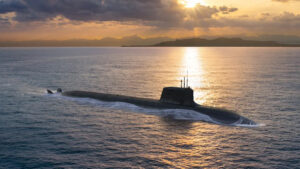 SIA welcomes 2026 National Defence Strategy and IIP: The Submarine Institute of Australia (SIA) welcomed the release of the 2026 National Defence Strategy (NDS) and the 2026 Integrated Investment Program (IIP) by the Acting Prime Minister and Minister for Defence Richard Marles. These foundational documents provide critical continuity, building upon the frameworks established in 2024 to strengthen Australia’s maritime security. The 2026 NDS reinforces the Strategy of Denial adopted in 2024 with increased self‑reliance, and a more robust sovereign industrial base. Notably, the Strategy acknowledges the pivotal importance of undersea warfare to Australia’s deterrence posture, with submarines and advanced undersea systems recognised as some of the nation’s most strategically valuable assets.
The SIA is pleased to note the progress achieved and the ongoing commitment to the acquisition of conventionally armed nuclear-powered submarines. Commitments of long-term investment, reform to enhance delivery, partnerships to ensure a skilled and integrated national workforce, and continuation of efforts to involve Australian industry in global supply chains are timely and welcome.
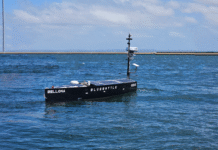
While much public discussion of submarines focus on the AUKUS program, the SIA is pleased with the Government’s commitment to current and near-term undersea capability requirements. This includes continued investment in the current submarine force – including investment in the Collins class submarines to ensure they remain a powerful strike and deterrent capability and operationally viable until 2040. The Government’s support for undersea warfare requirements and uncrewed maritime systems, such as Ghost Shark, Speartooth, and Bluebottle, is also welcomed by the SIA.
SIA President, Michael Fitzgerald, commented: “The 2026 NDS and IIP recognise that Australia’s undersea capability is fundamental to national security and prosperity. Submarines—and the broader undersea warfare ecosystem that supports and supplements them—provide Australia with a capability to deliver impactful projection to deter conflict and coercion. The SIA strongly supports the Government’s commitment to both the current and future sub-sea capability.”
 AAUS calls for clear delivery model to unlock drone capability: The Australian Association for Uncrewed Systems (AAUS) has welcomed the Federal Government’s strong commitment to uncrewed and autonomous systems in the 2026 National Defence Strategy (NDS) and Integrated Investment Program (IIP), describing it as a pivotal moment for Australia’s sovereign capability. AAUS President Andrew Crowe said the strategy confirms that drones and autonomous systems are now central to Australia’s future defence posture. “The 2026 NDS and IIP make it clear—uncrewed and autonomous systems are no longer emerging technologies; they are foundational to modern defence capability,” Crowe said. “This level of investment presents a generational opportunity to build a sovereign Australian ecosystem spanning design, manufacturing, operations and support.”
However, Crowe said the Strategy now needs to be matched with a clear and scalable delivery approach. “While the Strategy strongly articulates the importance of uncrewed systems, it is less clear how these capabilities will be delivered, integrated and scaled across the ADF. At present, there is no unified concept of operations, delivery model or integration pathway for uncrewed systems. Without that, there is a real risk that capability development becomes fragmented.”
Crowe said fragmentation across Defence could limit the effectiveness of investment. “Without a coordinated approach, we risk duplication across services, inconsistent standards and inefficient procurement outcomes. The risk is not a lack of investment—it is a lack of coordination in how that investment is translated into capability. To fully realise the benefits of autonomous systems, Defence will need a coherent, enterprise-level model that connects platforms, operators, data and mission systems into an integrated capability.”
Crowe said a strong commercial drone sector will be critical to delivering that capability at scale. “A sovereign defence capability cannot exist without a strong commercial foundation. The workforce, operational experience, supply chains and innovation pipelines are all built in the commercial sector. The same technologies and operational models used today in agriculture, infrastructure, survey and emergency response are directly transferable to defence applications.”
Crowe said realising the full potential of Defence investment will also require urgent regulatory reform. “Defence investment alone is not enough. If we are serious about sovereign capability, we must ensure our regulatory frameworks enable testing, development and deployment at the pace required.” He said current regulatory service delivery constraints are becoming a critical bottleneck for industry growth and capability development. “CASA plays a vital role in maintaining aviation safety and has made important progress toward more risk-based approaches, including the Broad Area BVLOS framework. However, demand for advanced operations is now outpacing the system’s ability to respond. Approval timelines for complex operations can extend for months, creating uncertainty for businesses and limiting the ability to test and deploy new capabilities.”
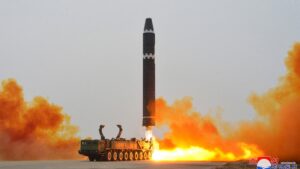 Defence Minister highlights nuclear risks: Against a backdrop of growing international tension and conflict involving nuclear weapons states, Defence Minister Richard Marles told the National Press Club that the world is on the “foothills of a new nuclear arms race” which “will drive elevated risks to Australia’s security and prosperity over the coming decade, increasing our exposure to conflict and coercion”. Marles’ comments were used to justify a major increase in Defence spending and come amid Australia’s increasing defence engagement with the US and the UK—both nuclear weapon states.
ICAN—the Australian civil society initiative that received the 2017 Nobel Peace Prize for its efforts in driving a global nuclear weapons ban treaty, the Treaty on the Prohibition of Nuclear Weapons (TPNW)—has called on the Australian government to urgently move to advance its long standing commitment to sign the TPNW as a clear and vital regional assurance and risk reduction step to lower nuclear tensions and temperatures. The call comes as the federal Government continues to accept our AUKUS allies’ policy of “neither confirm, nor deny” as to whether their submarines and aircraft operating in Australian seas and skies are nuclear-capable or nuclear-armed.
“Minister Marles is right in identifying rising nuclear threats—now he and the federal Government need to take meaningful and effective action to reduce them,” said A/Prof Tilman Ruff AO, ICAN Australia co-founder. “Australia must not facilitate nuclear weapons in our region and needs to send a clear message to our region that Australia does not support or endorse weapons of mass, indiscriminate destruction. Signing the TPNW is both Labor policy and common sense and is our best way to get rid of our worst weapons. When it comes to nuclear weapons Australians have both a right to know and a right to say No.”
 New strategy confirms C2 Robotics’ Speartooth part of ADF force structure: The government’s 2026 National Defence Strategy (NDS) has confirmed that C2 Robotics’ Speartooth Large Uncrewed Underwater Vessel will be part of the Australian Defence Force’s force structure. The new 2026 Defence Integrated Investment Program that supports the 2026 NDS states that in addition to acquiring an Extra-Large Uncrewed Underwater Vessel, the Government will invest in “a fleet of large uncrewed underwater vehicles – known as Speartooth. Speartooth is capable of conducting shorter range intelligence, surveillance, reconnaissance, strike and logistics operations at sea. Due to its smaller size and lower unit cost, Speartooth is optimised for seabed warfare and agile undersea operations, reaching areas Ghost Shark cannot.”
Troy Duggan, C2 Robotics’ CEO, said, “We’d like to congratulate the government on its recognition that affordable, attritable autonomous systems such as Speartooth are now an indispensable element of successful militaries and its decision to invest in them.”
Speartooth is designed to generate force-mass in the maritime domain as affordably as possible. Its purpose is to deliver military payloads over strategically relevant ranges at scale and with a high degree of stealth, reliability and autonomy. Speartooth has also been designed to be payload agnostic so that it can rapidly integrate whatever capabilities its operators require. The Australian Department of Defence recently announced that it has formed the Maritime Autonomous Systems Unit to ‘accelerate the development, integration and operational employment of maritime autonomous systems.’ The MASU will operate Speartooth alongside the Ghost Shark Extra-large UUV and the Bluebottle Uncrewed Surface Vessel.
Duggan noted that, “Australia will have a world-leading maritime autonomous systems capability, with three unique systems designed and built in Australia. We’re looking forward to working with Defence, and Australian industry to introduce Speartooth into service and extend Australia’s leadership in this field.”
The NDS also announced $12 billion-15 billion in funding for uncrewed and autonomous systems over the next decade including $2.2 billion-$3.1 billion investment in smaller uncrewed systems across all domains.

For Editorial Inquiries Contact:
Editor Kym Bergmann at [email protected]
For Advertising Inquiries Contact:
Group Sales Director Simon Hadfield at [email protected]



Sorry to a bit skeptical of the NDS/IIP announcement but we’ve heard it all before, until they ( the Government ) actuallly start putting these things into action, I’ll hold off on the back slapping. So many off these announcements of Sovereignty and great leaps forward end up going to U.S. primes masquerading as Australian Companies and have delivery times of decades.
It’s a bit of a mix – some extra money for new capabilities such as medium range air defence missiles and more drones, but the overall picture hasn’t changed that much.