
Operation Bushfire Assist 2019-2020
The Australian Defence Force (ADF) has been working with Emergency Management Australia to assist with firefighting efforts in New South Wales, Queensland, Western Australia, Victoria and South Australia since November 8.
Defence established liaison officers in the State Disaster Coordination Centres (SDCC) in Queensland, New South Wales, Victoria and South Australia when the SDCC ‘stood up’. The SDCC in Queensland is currently ‘stood down’.
In the next five days, the following additional support is planned:
Ongoing Defence Assistance to the Civil Community (DACC) support to current events.
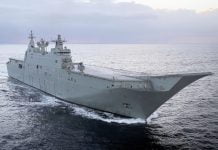
- Navy support. HMAS Choules and MV Sycamore will continue to providing relief operations in Mallacoota, including supporting the relocation of vulnerable and high-priority people to Westernport.
- Air Force support. An additional C-27 Spartan aircraft, based at RAAF Base Amberley, will arrive in Victoria on January 3 to support the movement of firefighters within Victoria, as well as provide humanitarian assistance to remote and isolated communities.
- Aviation Support. Two CH-47 Chinooks will deploy from Townsville to provide additional support and are scheduled to arrive at RAAF Base East Sale on Saturday, January 4. These aircraft will provide support to firefighting operations, as well as provide humanitarian assistance to remote and isolated communities.
- Transport and logistics. An expansion of the ground transport and logistics tasks already supported to five new locations – Tamworth, Mudgee, Nowra, Maitland and Queanbeyan. This task is expected to run from January 6-20.
- Mobility operations. The provision of personnel and equipment to supplement state capabilities to clear and reopen roads in fire-affected areas of Victoria, as well as general engineering tasks to remove debris from public areas and clear fire breaks and fire trails. This will began on January 2, with priority for the Gippsland region.
- Support to evacuation operations. Provision of access to RAAF Base East Sale as a staging point to receive the flights evacuating vulnerable persons from Mallacoota and for the Department of Health and Human Services to collect the evacuated persons. This began on January 2.
- Light engineering. Fire trail clearance at Mudgee from January 6-10.
- Recovery operations. Provision of personnel and equipment to undertake recovery tasks as identified and assessed by the NSW Government based on advice from specialist ADF advisers. These tasks – in Tamworth, Wollondilly, Nowra, Mudgee, Maitland and Wingecarribee – will start from January 6.
In the past 24 hours, the ADF has provided the following support:
- Orders were issued on December 31, 2019, for the establishment of two Joint Task Forces (JTF) to provide command and control over Australian Defence Force elements supporting Operation Bushfire Assist 2019-2020. Both JTFs will work in direct support of state authorities.
- JTF 646 was established on January 1, based on the Army’s Reserve 4th Brigade in Victoria, to coordinate Australian Defence Force support to firefighting efforts in Victoria.
- JTF 1110 has been established in New South Wales, based on the Army’s Reserve 5th Brigade.
Victoria – JTF 646 – DACC 2 (At request of state government)
- Damage Assessments. From January 1, the Australian Defence Force has provided support to the Victoria Metropolitan Fire Brigade (MFB) to undertake rapid damage assessments in regional Victoria. The Australian Defence Force is enhancing the capacity of the MFB Urban Search and Rescue assessors with additional vehicles and drivers.
- Helicopter support. Two S-70A Black Hawk helicopters and one MRH-90 Taipan helicopter were deployed to Victoria on January 1 and are based out of RAAF Base East Sale.These helicopters have been involved in transporting firefighters from Bairnsdale to Mallacoota and transporting the injured and vulnerable from Mallacoota to East Sale for medical treatment by emergency services.
- Navy support. Two vessels, HMAS Choules (one of Australia’s three amphibious ships) and MV Sycamore (a multi-role aviation training vessel contracted by Navy) arrived off the coast of Mallacoota on January 2 to help Victorian authorities with evacuations. More than 900 people are expected to be evacuated on the two ships on January 3. Victorian authorities are the lead for all evacuations, including the integration of all support agencies. Choules has also provided the movement of water, fuel and humanitarian stores, prioritised medical assistance and basic engineering.
- ADF officers have been liaising with state authorities, including on the ground in Mallacoota, to contribute to planning the complex task of embarkation and evacuation by sea.
- One MRH-90 is Taipan is embarked in Choules to provide support to relief tasks.
- Three CH-47F Chinook helicopters also arrived at RAAF Base East Sale on January 2 and will be available for tasking from January 3. The aircraft will support firefighting operations and provide humanitarian assistance to remote and isolated communitues.
- Additional Navy Support. HMAS Adelaide will arrive at Mallacoota on January 7 to help with evacuations.
- Air Force support. One C-27J Spartan aircraft, based at RAAF Base Amberley, arrived in Victoria on January 1 to support the movement of fire fighters within Victoria, as well as provide humanitarian assistance to remote and isolated communities. A second C-27J Spartan arrived in Victoria on January 2. A third C-27J Spartan is to provide air mobility support from January 3.
- Support to aviation operations. From December 20, 2019 to January 14, 2020, a pressurised fuel tanker from RAAF Base East Sale is supporting the operation of a civilian firebombing helicopter from Bairnsdale Airport, Victoria.
- Since December 29, 2019, Joint Operations Support Staff (JOSS)-Victoria personnel have been embedded in the Victorian Government State Control Centre (SCC) due to State Tier 3 Red notification for forecast catastrophic fire conditions.
New South Wales, Defence Assistance to the Civil Community (DACC) 4 (standing arrangements with NSW Government)
- Large Aerial Tanker: RAAF Base Richmond is providing refuelling and support to operating services for the NSW Rural Fire Service multiple Large Aerial Tanker and spotter aircraft that are permanently based at RAAF Base Richmond.
- Support to aviation operations: Since November 29, HMAS Albatross has assisted with water refuelling and retardant loading of aircraft fighting the Currowan fires from Naval Air Station Nowra. Seven NSW Rural Fire Service aircraft continue to operate from Nowra, comprising four fixed-wing and three helicopters.
New South Wales – JTF1110 – DACC 2 (at request of state government)
- Contingency air movements: From November 8 to February 1, Air Force is providing contingency airlift support to move large groups of firefighters and their equipment between interstate locations as required.
- Catering: From November 17 to January 13, Army is supplying personnel to prepare and cook three meals a day for 250 firefighters at the Rural Fire Service staging ground in the Northern Rivers Region.
- Transport and logistics: From November 26 to January 13, Army is providing the NSW Rural Fire Service with ground logistic support for the movement of vehicles, stores and equipment in the Glen Innes, Casino, Wollondilly and Hawkesbury areas.
- Accommodation for firefighters: From December 27 to January 29, Defence is providing accommodation and catering support for up to 90 firefighters at HMAS Albatross.
- Support to aviation operations: From December 21 to January 3, RAAF Base Richmond is providing support in the form of one Aircraft Rescue and Fire Fighting (ARFF) Striker fire vehicle and crew of two to three personnel. The vehicle will provide fire protection (overwatch) to NSW Rural Fire Service aircraft conducting hot refuelling at Picton in south-west Sydney, freeing up a Rural Fire Service vehicle to fight fires.
- Accommodation and support to aviation operations: From December 3 to January 26, Army is providing logistics support at Marrangaroo Training Area to NSW Rural Fire Service helicopter assets and personnel. Additionally, accommodation facilities for up to 50 Rural Fire Service personnel are being provided on site until January 26, including the use of the mess kitchen facilities by civilian caterers.
- Support to aviation operations: Until January 13, 41st Battalion, Royal New South Wales Regiment, will support the Rural Fire Service Casino flight line with loading of fire retardant at Casino airport, reducing aircraft turnaround times and enabling more sorties to be flown in the effort to defend the townships in the area.
- Support to aviation operations: From December 21 to January 3, RAAF Base Richmond is providing support in the form of one Aircraft Rescue and Fire Fighting Striker, and crew of two to three personnel, to provide fire protection (overwatch) to NSW Rural Fire Service aircraft conducting hot refuelling at Picton in south-west Sydney, freeing up a Rural Fire Service vehicle to fight fires.
- Liaison officers: On December 27, 14 ADF personnel deployed within NSW Rural Fire Service incident management teams and are now finalising reports detailing possible options for ADF support during initial recovery operations after the bushfire threat has passed. Defence is expecting a request for assistance from NSW authorities and is preparing forces for such a request
- Helicopter support: From December 30 to January 6, Army and Navy will provide a combination of MRH-90 Taipan, MH-60R Seahawk and EC-135 helicopters for fire mapping, surveillance, and search and rescue operations supporting the NSW Rural Fire Service throughout the Hunter, Greater Sydney and Illawarra regions. An additional helicopter was provided under DACC 1 arrangements to support possible evacuation operations on December 31.
- On January 1, an MRH-90 was involved in the rescue of three people from Moruya on the south coast of New South Wales. The rescue was undertaken in extremely difficult conditions and was only successful because of close cooperation between the New South Wales Rural Fire Service, New South Wales Ambulance, Toll AME and the Australian Defence Force. Helicopters continue to conduct damage assessment, search and rescue and fire-mapping tasks.
- Generators: On January 2, Defence transported DFAT-provided generators from RAAF Base Amberley to HMAS Albatross (Nowra).
New South Wales, DACC 1 (through local requests)
- Accommodation: From November 12, the Lismore Depot of the 41st Battalion, Royal New South Wales Regiment, has been tasked to provide accommodation and catering support to firefighters from outside the region if requested.
Queensland, DACC 1 (through local requests)
- Support to aviation operations: Hosting refuelling assets from Queensland Fire and Emergency Services to provide aircraft refuelling at Kokoda Barracks, Canungra. This support is on an as-required basis.
Victoria, DACC 2 (at request of state government)
- Support to aviation operations: From December 20 to January 2, a pressurised fuel tanker from RAAF Base East Sale is supporting the operation of a civilian firebombing helicopter from Bairnsdale Airport.
- Embedded personnel: Since December 29, Joint Operations Support Staff-Victoria personnel have been embedded in the Victorian Government State Control Centre due to State Tier 3 Red notification for forecast catastrophic fire conditions .
South Australia, DACC 1 (through local requests)
Support to aviation operations: From December 28, RAAF Base Edinburgh is providing refuelling and water re-supply support to a Large Aerial Tanker while it is supporting the South Australian Country Fire Service.
Embedded personnel: On December 30, Joint Operations Support Staff-South Australia personnel were embedded in the South Australian State Emergency Centre (SEC) due to activation of the SEC as a result of fire conditions, including a declaration of three catastrophic fire regions.
Since September 5, Defence has provided the following support to firefighting efforts:
- The Australian Defence Force provided support to firefighting efforts near Canungra in south-east Queensland from September 5-21, 2019. This assistance included support to firefighting helicopter operations, the provision of accommodation and meals to firefighters, geospatial intelligence for fire mapping, and support to the incident control centre.
- From November 8 to February 1, the Royal Australian Air Force is providing contingency airlift support to move large groups of firefighters and their equipment between interstate locations.
- A RAAF 737 Boeing Business Jet transported ACT Rural Fire Service firefighters from Canberra to Port Macquarie on November 8.
- A RAAF C-130J aircraft transported firefighters and their equipment from Adelaide to Port Macquarie on November 9.
- A RAAF C-130J Hercules aircraft transported firefighters and their equipment from Hobart to Port Macquarie on November 10.
- A RAAF C-130J Hercules aircraft transported firefighters and their equipment from Essendon and Mildura to Armidale on November 12.
- A RAAF KC-30A multi-role tanker transport aircraft transported 150 firefighters and their personal equipment from Melbourne Airport to Sydney Airport on November 14.
- Two RAAF KC-30A multi-role tanker transport aircraft transported 258 firefighters and their personal equipment from Sydney Airport to Melbourne Airport on November 15.
- A RAAF C-17A Globemaster aircraft transported 165 firefighters and their equipment, using two flights, from Melbourne to Coffs Harbour on November 17.
- A RAAF C-17A Globemaster aircraft transported 130 firefighters and their equipment from RAAF Base Richmond to Melbourne. The same aircraft then transported an additional 130 firefighters and their equipment from Coffs Harbour to Melbourne on November 18.
- A RAAF C-17A Globemaster aircraft transported 130 firefighters from Melbourne to RAAF Base Richmond on November 19.
- A RAAF C-130J Hercules aircraft transported 140 firefighters and their equipment from Melbourne to Coffs Harbour on November 20.
- A RAAF C-130J Hercules aircraft transported 167 firefighters and their equipment from Coffs Harbour to Melbourne on November 21.
- A RAAF C-130J Hercules aircraft transported 108 firefighters and their equipment from Coffs Harbour to Melbourne on November 24.
Other support has entailed:
- On November 18, 21 and 22, Army supported Queensland Fire and Emergency Services helicopter operations at Borneo Barracks, near Toowoomba.
- From November 11-13, Singleton Army Barracks provided accommodation and catering support to about 200 firefighters from the Victorian Country Fire Authority.
- From November 12-14, a Navy and Army aviation liaison capability worked within the NSW Rural Fire Service State Operations Centre to ensure ADF air support was appropriately coordinated.
- From November 12-14, two MRH-90 Taipan helicopters from the Navy and two S-70 Black Hawk helicopters from the Army provided movements for Rural Fire Service strike teams and, if required, the rescue of civilian personnel.
- From November 12-13, the Navy provided two MH-60R Seahawk helicopters to fly night missions from Sydney and Coffs Harbour to facilitate the operation of Rural Fire Service air observers. Two EC135 helicopters continued support on November 14.
- Two EC135 helicopters from the Navy and two S-70 Black Hawk helicopters from the Army flew in support of NSW Rural Fire Service impact assessments on November 14.
- ADF personnel from Kokoda Barracks, Canungra, and the 7th Brigade, Brisbane, provided engineering support to assist Queensland Fire and Emergency Services to clean up fire breaks near Beechmont.
- From November 12-13, Kokoda Army Barracks, Canungra, provided evening meals for 40 firefighters.
- On November 14, RAAF Base Pearce provided support to aerial firefighting aircraft from the Western Australian Department of Fire and Emergency Services under DACC arrangements.
- From November 12-16, RAAF Base Williamtown provided refuelling and water re-supply support to a Large Aerial Tanker from the NSW Rural Fire Service.
- From November 13-17, Army Tiger Armed Reconnaissance Helicopters supported Queensland Fire and Emergency Services conducting night fire mapping. On November 17, a Tiger provided support to search for isolated persons in a high-threat fire area. Queensland Fire and Emergency Services safely recovered the individuals.
- From November 13-23, RAAF Base Richmond provided accommodation and catering support for varying numbers of between 150 and 300 firefighters, as well as providing workshop/maintenance hangars for up to 50 fire appliances and support vehicles.
- On November 18, the 7th Brigade provided a platoon to support Queensland Police and Queensland State Emergency Services to search for a missing person around Mount Glorious, Queensland. The missing person was located on the morning of November 18.
- From November 18-19, the Army’s Borneo Barracks near Toowoomba established a helicopter-landing site, overnight parking and refuelling capability for firefighting and support to civilian rotary-wing aircraft.
- From November 20-21, two Australian Army MRH-90 Taipan helicopters conducted night fire mapping in south-east Queensland in support of the Queensland Fire and Emergency Services.
- On November 21, a NSW Rural Fire Service Large Aerial Tanker was refuelled at RAAF Base Edinburgh after a mission was completed in South Australia.
- From November 22-27, Army provided logistics support to the Queensland Fire and Emergency Services incident control centre, hosted on Borneo Barracks, Cabarlah.
- On November 26, RAAF Base Gingin provided 18,900 litres of water to two water bombers fighting a fire in the vicinity of Yanchep.
- From November 26 to December 21, Army provided NSW Rural Fire Service with ground logistic support for the movement of vehicles, stores and equipment in Wauchope.
- From December 2-6 and December 10-11, Army provided rotary-wing support to the NSW Rural Fire Service from Holsworthy Barracks to support search and rescue and firefighting intelligence.
- On December 3-4, HMAS Albatross was used to provide catering and accommodation for the NSW Rural Fire Service at Naval Air Station Nowra.
- On December 4, RAAF Base Pearce provided 12,000 litres of water to two water bombers fighting fires in the vicinity of the City of Swan, Perth.
- On December 9, ADF Joint Operations Support Staff-Victoria personnel were established in the Victorian Government State Control Centre following State Tier 3 Red notification for forecast catastrophic fire conditions.
- From December 10-11, a Navy helicopter provided support to the the NSW Rural Fire Service for 24 hours to fly day and night missions from the Naval Air Station Nowra to facilitate the operation of Rural Fire Service-trained air observers
- On December 15, RAAF Base Pearce provided support to aerial firefighting aircraft from the Western Australian Department of Fire and Emergency Services under DACC arrangements. Some 60,000 litres of water and 17,870 litres of fuel was provided for the firefighting efforts in the vicinity of Collie and 18,000 litres was provided for firefighting efforts in the vicinity of Yanchep.
- On December 16, RAAF Base Pearce provided support to aerial firefighting aircraft from the Western Australian Department of Fire and Emergency Services. About 3000 litres of water was provided to fight a fire in the vicinity of Brand Highway.
- From December 19-23, two Navy helicopters operated from Nowra to provide daytime search and rescue, as well as night-time fire mapping and support missions to the NSW Rural Fire Service.
- On December 20, support was provided from RAAF Base Edinburgh, South Australia, to refuel two Large Aerial Tankers fighting fires near Cudlee Creek and Munno Para. This support continued on the morning of 21 December.
- From December 20-23, an additional Joint Operation Support Staff Liaison Officer was deployed to the South Australia Country Fire Service Incident Management Team at Mount Barker to provide direct advice.
- On December 21-22, RAAF Base Williamtown provided fuel and movements support for two NSW Rural Fire Service fire scanner aircraft under a standing DACC 4 Memorandum of Understanding request.
- From December 27-30, 2019, 14 ADF personnel deployed within New South Wales Rural Fire Service incident management teams and are now finalising reports detailing possible options for ADF support during initial recovery operations after the bushfire threat has passed. Defence is expecting a request for assistance from New South Wales authorities and is preparing forces for such a request.
Validation activity complete
At the request of the Minister for Defence, Senator the Hon Linda Reynolds, the Governor-General enacted a limited call out of Reserves to enable Defence to validate its planning and preparation for large-scale emergencies of national significance and prolonged periods of civil emergency, in support of civilian agencies.
This was the first annual validation of Reserve call-out procedures and has provided valuable lessons.
A total of 23 Reserve personnel were bound by the call out order, starting on November 28 and concluding on December 7.
Overview
- The ADF is not trained, equipped or certified to undertake ground-based or aerial bush firefighting and does not get involved in the direct act of fighting bushfires outside Defence property.
- The state and territory governments have primary responsibility for the protection of life, property and the environment, and for coordinating and planning emergency responses or recovery actions in disaster-affected areas within their jurisdiction.
- The ADF is able to support the states and territories, within resource limitations, in accordance with Defence Assistance to the Civil Community arrangements as part of a whole-of-government response, where state or territory capacity or resources do not exist, or are not available in sufficient time.
- Defence has arrangements in place to call out ADF reservists if required to supplement regular personnel.
- Defence is working with Emergency Management Australia to identify what other ADF capabilities, such as aviation, logistics, transport, engineering and accommodation support can be provided to aid firefighting efforts in eastern Australia.
- Defence is postured to provide further airlift support and is prepared to provide assistance in areas such as aerial fire reconnaissance, logistical support (ground transport, accommodation, meals etc.) and engineering (field work) upon request from state or territory governments.