
Home › Sea
US Chief of Naval Operations concerned about submarine construction tempo
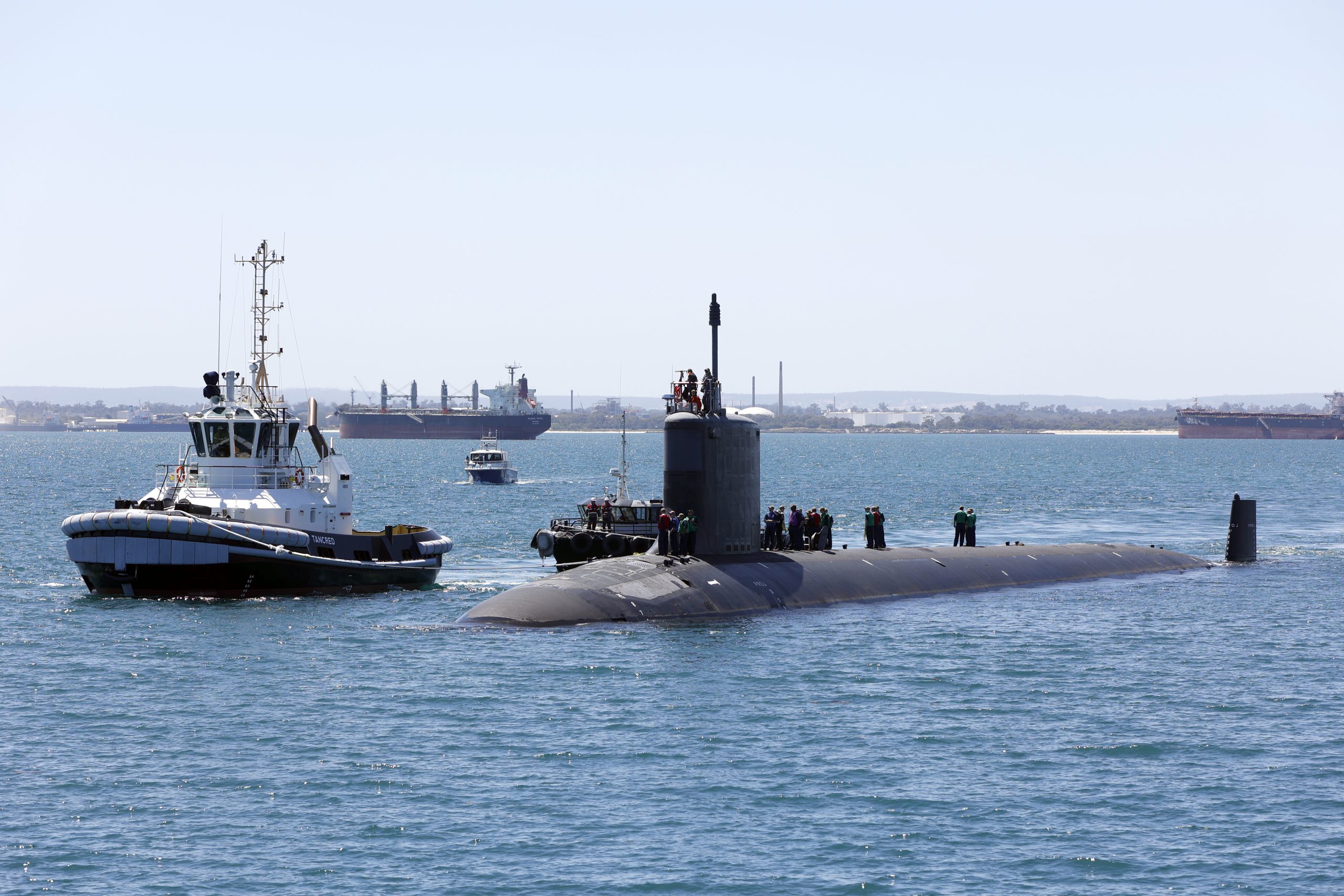
As usual, the sunny optimism of Australian politicians and the leadership of the RAN about the purchase of second-hand Virginia class submarines is in stark contrast to the more cautious position of the US. At his confirmation hearing on July 24 in Washington DC, Admiral Daryl Caudle, explained – as numerous other US officials have done – that the rate of construction will have to double before a sale can occur. This comes just days after US media reported that Australia has transferred another $800 million to the Pentagon to subsidise submarine production, following an identical amount much more very visibly handed over by Defence Minister Richard Marles in February. It has been suggested that a third payment will take place before the end of 2025, lifting the total of Australian donations to the US industrial base so far to $2.5 billion. This is out of a promised $4.7 billion over the decade. Speaking to the Senate Armed Services committee, Admiral Caudle stated bluntly that the current production rate of Virginia class submarines is not where it needs to be to permit a sale to Australia and continues to languish around 1.2 per year. He was complimentary about Australian submariners, describing them as “incredible”, saying that many have served on USN platforms during the last 30 years. He mentioned that as a submariner himself, he is a close personal friend of Australia’s Chief of Navy, VADM Mark Hammond. However, he summarised the overall situation with AUKUS Pillar One and Virginia production: “We do have to understand whether or not the industrial base can produce the submarines required so that we can make good on the pact that we have made with the UK and Australia, which is around 2.2 or 2.3 Virginia class submarines per year. “That’s going to require a transformational improvement – not a 10% improvement, not a 20% improvement – a 100% improvement. “We need a transformational improvement to deliver twice the capacity that we are currently delivering.” He added that AUKUS Pillar Two – a basket of technologies such as cyber, Artificial Intelligence and undersea capabilities – needs to be “on steroids already” for the faster delivery of capability. He said it cannot be a business-as-usual approach, continuing: “In parallel, we need to transformationally improve the output of the two yards that are producing our Virginia class submarines. There needs to be some creativity; some ingenuity; some outsourcing improvements.” He expressed concerns about the workforce attrition levels of both Electric Boat and Huntington Ingalls Industries, saying an “all hands on deck” approach was needed to lift the build rate. Later in the hearing there was discussion about whether a third submarine construction yard, possibly on the West coast of the US, should be added to the mix – a topic that has been around for several decades. The problem is that this will not fix the immediate problem, as Admiral Caudle said: “This has to be a country-level effect. I heard a quote recently about additional shipyards and this is as good a time to say it as ever: the best time to plant a tree is 20 years ago. The second-best time is today. “Whatever solution we have going forward, if a new yard is what we need – if I start today then in ten years, I’ll have something firing on all cylinders. I think that has to be on the table. “I’m worried that we just don’t have the capacity with efficiency increases alone to deliver the 2.3 that’s needed for our nation.” To summarise: in a time when the Defence budget is under pressure, Australia keeps giving huge amounts of cash to the US – without a refund clause – when their own officials are doubtful about being able to meet production targets. For Editorial Inquiries Contact: Editor Kym Bergmann at [email protected] For Advertising Inquiries Contact: Group Sales Director Simon Hadfield at [email protected]
TAGSAUKUSChief of Naval OperationssubmarinesUS Navy
Previous article
Eptec Defence Solutions wins Hunter frigate contract
Kym Bergmannhttps://asiapacificdefencereporter.com/
Kym Bergmann has more than 35 years of experience in journalism and Australian and international defence industry. After graduating with Honors from the Australian National University, he joined Capital 7 television, holding several positions including foreign news editor and chief political correspondent.
After 2 years on the staff of a Federal Minister, he moved to the defence sector and held senior positions in several companies, including Blohm+Voss, Thales, Celsius and Saab. In 1997 he was one of 2 Australians selected for the Thomson CSF 'Preparation for Senior Management' MBA course, the other being Chris Jenkins - formerly the CEO of Thales Australia.
He has also worked as a consultant for a number of companies, including Raytheon, Tenix (now part of BAES) and Martin Marrietta (now part of Lockheed Martin). He had several board appointments, including Thomson Sintra Pacific (1994 - 96) and Saab Pacific (1998 - 2003).
He retains good personal links with senior figures in Government, as well as in industry and the media. He decided to return to journalism in May 2008, and holds the position of editor for Asia Pacific Defence Reporter (APDR) and Defence Review Asia (DRA). He is also a podcaster and commentator on defence and national security issues.