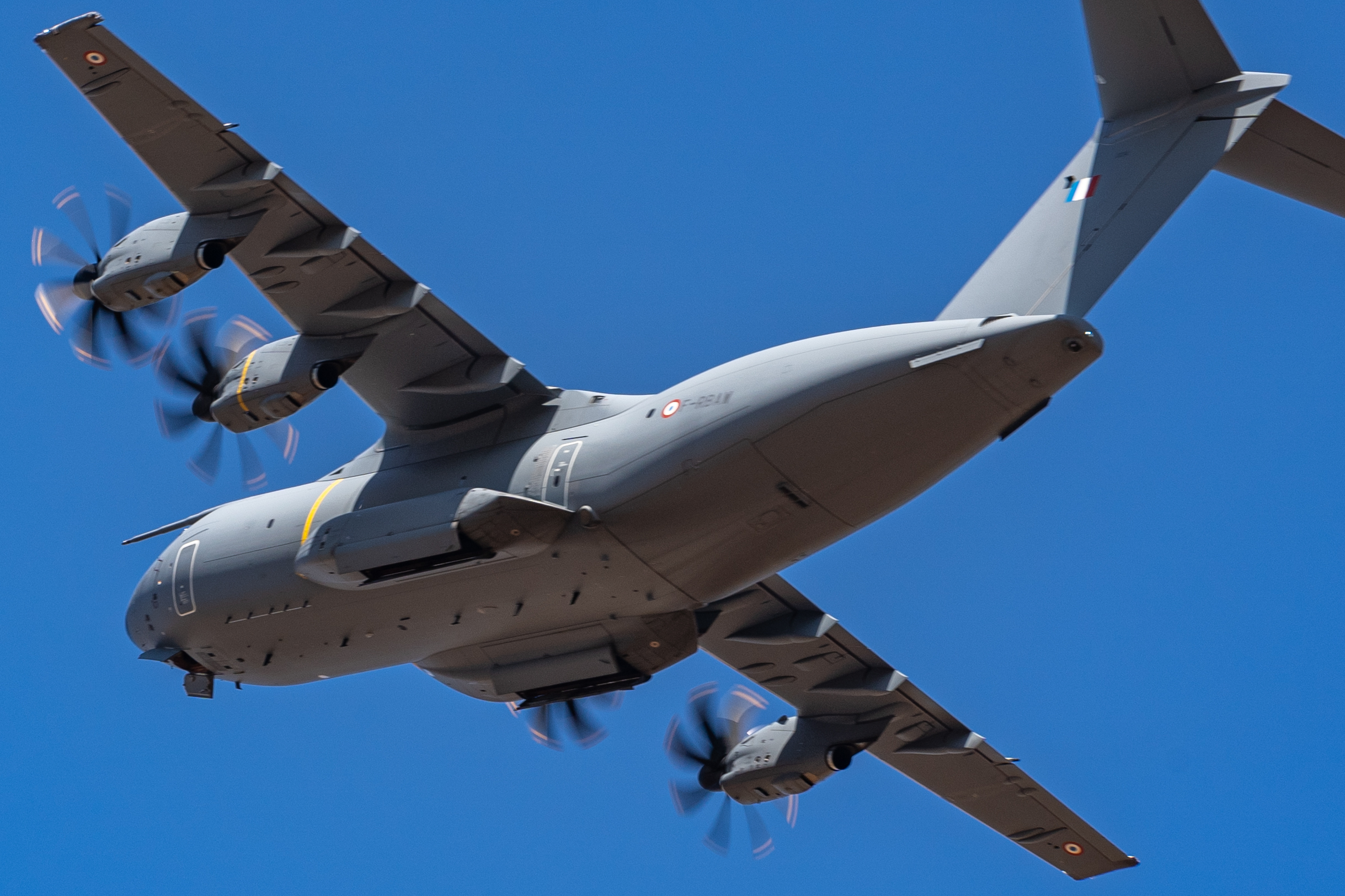
 Airbus Defence and Space has signed a contract with OCCAR (Organisation for Joint Armament Cooperation), acting on behalf of the French Directorate General of Armaments (DGA), for the development of new capabilities for the A400M. These upgrades, known as the “Parallel Mission System” (PMS), aim to equip French A400M with multi-mission capabilities in the fields of intelligence, surveillance and reconnaissance (ISR).
“The A400M is a true Swiss Army knife for the armed forces that use it. It has the capabilities and potential to continue expanding the scope of its missions,” said Jean-Brice Dumont, Executive Vice President Air Power at Airbus Defence and Space. “With this development, the French Air and Space Force is acquiring an aircraft capable of becoming a tactical command and control (C2) tool in the air.”
The PMS developments focus on the integration of a new mission system on board, as well as tactical situational awareness consoles installed in the cargo hold to monitor various sensors and coordinate missions. They also aim to integrate an optronic sensor onto the aircraft.
This new mission system is designed to integrate additional sensors and communication systems, as well as to manage drones and missiles launched from the aircraft’s cargo hold. Ultimately, the aircraft crew will be able to coordinate missions involving ground troops, helicopters – notably the Tiger and Caracal H225M – and fighter jets in a collaborative combat mode.
Following a development phase, the new equipment will be installed on board the first French A400M in 2027 and tested in flight in 2028. A number of aircraft in the Air and Space Force fleet will then be retrofitted to accommodate a PMS kit.
Furthermore, Airbus Defence and Space is already exploring the development of other capabilities for the A400M, such as long-range jamming, a mother-ship function for the in-flight release of drones and missiles, an increase in payload capacity to 40 tonnes, and finally firefighting capabilities. All these developments will further expand the capabilities and missions of the A400M, which are essential to meeting the current and future global needs of armed forces.
Airbus delivers first H135 for Canada’s Future Aircrew Training program
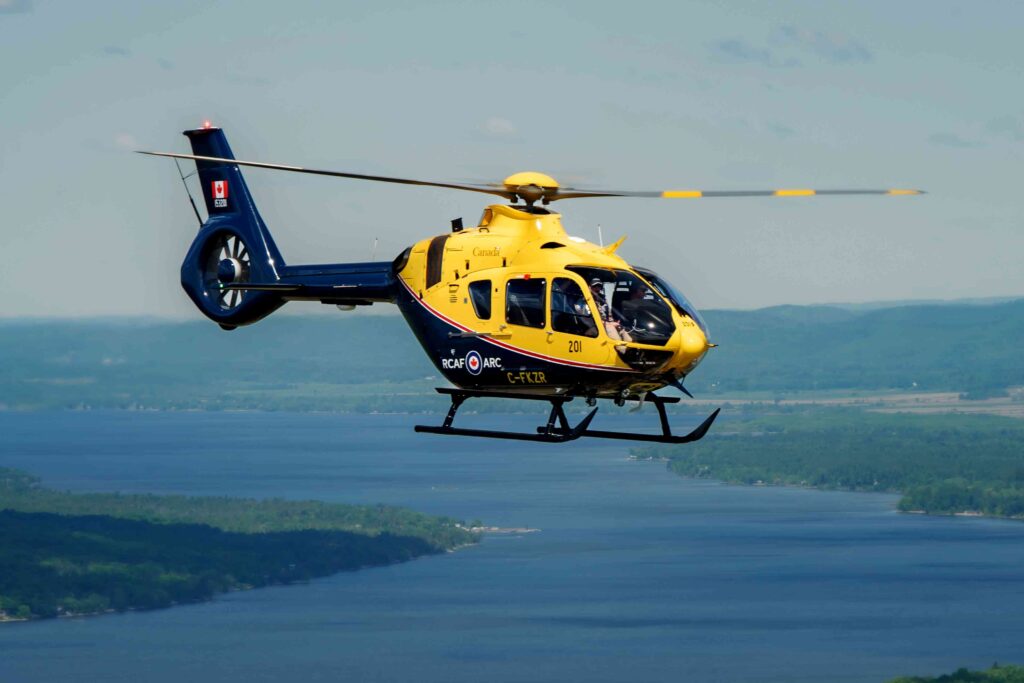
Airbus has delivered the first H135 helicopter for Canada’s Future Aircrew Training (FAcT) program, achieving a key milestone in the modernisation of pilot training for the Royal Canadian Air Force (RCAF). The aircraft, designated the CT-153 Juno for service in the RCAF, will support training the next generation of RCAF pilots, providing a modern, twin-engine training platform equipped with Airbus’ Helionix avionics suite. The H135 was selected by SkyAlyne, the prime contractor responsible for delivering the FAcT program, to meet the evolving training requirements of future RCAF rotary-wing pilots.
“It is our collective mission to make sure the RCAF has an unfair advantage in the skies. By working together collaboratively, we – industry, military, and Government – can deliver better work, faster, to make sure the RCAF has the best trained aircrew in the world, and our selection of the CT-153 Juno (Airbus H135) is a core component of that effort,” said Kevin Lemke, General Manager of SkyAlyne. “I extend a personal thank you to the teams across the FAcT Enterprise for their work together to bring the first CT-153 (H135) to the RCAF in just 18 months.”
“This first delivery is an important step forward for the Future Aircrew Training program and the next generation of Royal Canadian Air Force pilots, and it highlights the depth of capability being delivered here in Canada,” said Dwayne Charette, President of Airbus Helicopters in Canada. “It underscores our long-term commitment to supporting Canadian defence with trusted, in-country expertise and strengthens the foundation for the missions and partnerships ahead. We are proud to partner with the RCAF and the Government of Canada in delivering the CT-153 Juno and supporting the critical role it will play for years to come.”
The H135 is part of a family with over 1,600 aircraft delivered to 325+ operators globally. There are more than 200 H135 family helicopters delivered or on order for military training missions, having clocked more than 650,000 flight hours. The CT-153 Juno will support the development of core pilot skills including basic ab-initio, advanced IFR, and tactical training. The Airbus Helionix avionics suite additionally supports a seamless transition to larger, more complex aircraft.
With this delivery, the RCAF will join 12 other militaries around the world who are using the H135 to train their future air crews, including several of Canada’s close allies. Canada’s Juno fleet will be based at 15 Wing Southport with the 3 Canadian Forces Flying Training School.
The FAcT program represents a long-term investment by the Government of Canada to modernise pilot training across the RCAF. Airbus Helicopters will continue to support the program through the delivery of reliable, mission-proven platforms aligned with Canada’s operational requirements. The aircraft are completed and delivered from Airbus Helicopters’ industrial facility located in Fort Erie, Ontario, Canada. They are customised with a number of Canadian developed Supplemental Type Certificates, including modifications to the avionics suite and communications systems, as well as custom development in the cockpit. Deliveries for the remaining aircraft for the FAcT program will continue through 2028.

For Editorial Inquiries Contact:
Editor Kym Bergmann at [email protected]
For Advertising Inquiries Contact:
Group Sales Director Simon Hadfield at [email protected]