
 The Australasian Space Innovation Institute (ASII) announced its inaugural leadership team to support the organisation’s mission, bringing expertise across research translation, Earth observation, data science, software engineering and commercialisation – as SmartSat Cooperative Research Centre formally concludes.
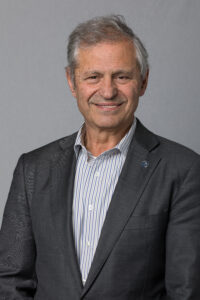
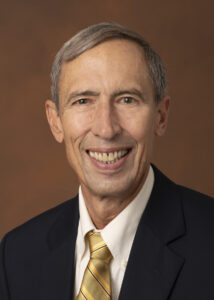
ASII will be led by Emeritus Professor Andy Koronios as Chief Executive Officer, alongside Andrew Beveridge as Chief Operating Officer, Dr Carl Seubert as Chief Technology Officer, and Lieutenant General Larry James USAF (Ret’d), former Deputy Director and Chief Operating Officer of NASA’s Jet Propulsion Laboratory, as Strategic Advisor.
“The conclusion of SmartSat CRC marks not an ending but a continuation – its impact will stay through ASII. The relationships established among industry, government, academia, and research organisations, together with the knowledge, intellectual property, workforce capability, and collaborative culture developed through SmartSat, provide a strong foundation for continued innovation. As these projects, partnerships and capabilities transition into ASII, the investment made through SmartSat CRC will continue to strengthen Australia’s space sector and shape the nation’s future space capability for many years to come,” said Professor Koronios.
There are 35 remaining SmartSat CRC key projects and 16 milestones being novated to ASII, ensuring continuity of funding, partnerships and delivery capability beyond the CRC term. This transition enables projects to mature and achieve their intended outcomes without disruption, preserving the value of Commonwealth and partner investment while maintaining momentum in strategically important areas of research and innovation.
Supported by a $55 million investment from the Australian Government through the Cooperative Research Centres Program, SmartSat CRC brought together researchers, industry, government agencies, entrepreneurs and end-users to translate world-class research into real-world outcomes. At a time of rapid growth for Australia’s space sector, the CRC provided a nationally coordinated framework that connected universities, research organisations, start-ups, SMEs, major industry participants and government around shared national priorities.
“When SmartSat CRC commenced operations in 2019, its objective was ambitious: to build a nationally coordinated space research and innovation capability that would accelerate the growth of Australia’s emerging space sector while delivering practical outcomes for industry, government and the broader economy. Seven years later, SmartSat concludes its journey under the Cooperative Research Centres Program, having established one of Australia’s largest and most collaborative space innovation ecosystems,” added Professor Koronios.
SmartSat leveraged more than $270 million in combined investment and delivered over 200 research and development projects across satellite communications, artificial intelligence, autonomous systems, Earth observation, space situational awareness, and positioning, navigation and timing technologies. The CRC engaged over 175 Australian and international partners and more than 400 researchers, creating one of the largest connected national innovation ecosystems ever assembled in Australia.
It strengthened Australia’s global engagement by positioning Australian organisations as trusted partners in global space collaboration: through initiatives such as the UK Space Bridge and the Australia–New Zealand Collaborative Space Program, participants established relationships with leading international space agencies, research institutions and commercial organisations. These partnerships supported collaborative research, technology exchange, project development and access to international markets.
The CRC also helped nurture Australia’s commercial space sector by supporting more than 60 space start-ups and emerging companies. Through access to funding, expertise, infrastructure, and collaborative networks, these organisations were able to progress technologies from concept through demonstration to commercial application, with many now making significant contributions to Australia’s growing space industry.
It is estimated that SmartSat-supported research, innovation, and industry development activities will generate over $1.2 billion in economic impact, delivering substantial returns on the Commonwealth’s investment while strengthening Australia’s sovereign capability in strategically important technologies.
RSL NSW names new CEO
The Returned & Services League NSW Branch (RSL NSW) is pleased to announce the appointment of Michael (Mick) Frewen GAICD as its new Chief Executive Officer. Frewen joins RSL NSW following an extensive executive search process and brings more than three decades of leadership experience spanning military service, emergency services, healthcare, not-for-profit management, and corporate leadership. He has served as Chief Executive Officer of CareFlight since 2018, leading one of Australia’s most respected aeromedical charities through a period of significant growth and operational expansion.
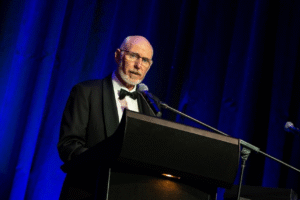
Prior to joining CareFlight, Frewen held senior executive roles with International SOS, the world’s largest medical and travel security services provider. Before entering the corporate sector, he served for 20 years in the Australian Army, including Commando and Special Air Service Regiment (SASR) appointments. During that service, Frewen deployed on Operation Tanager in 2001 (Timor Leste); Operation Sumatra Assist in 2005, in response to the Indian Ocean earthquake and tsunami; and Operation Slipper in 2006 (Afghanistan).
Frewen retired from fulltime service at the rank of Lieutenant Colonel in 2007 before re-joining as a reservist in 2022. He joined RSL NSW the same year and is currently a service member with Balmain-Rozelle RSL sub-Branch.
RSL NSW Chair Louise Sullivan said Frewen’s appointment marked an important step in the organisation’s ongoing renewal. “The Board was determined to appoint a leader with the experience, judgement, and character required to guide RSL NSW into its next chapter,” Ms Sullivan said. “Mick brings an exceptional combination of military service, executive leadership, and not-for-profit experience. He understands mission-driven organisations, values strong governance, and has a proven ability to bring people together around a shared purpose.

For Editorial Inquiries Contact:
Editor Kym Bergmann at [email protected]
For Advertising Inquiries Contact:
Group Sales Director Simon Hadfield at [email protected]