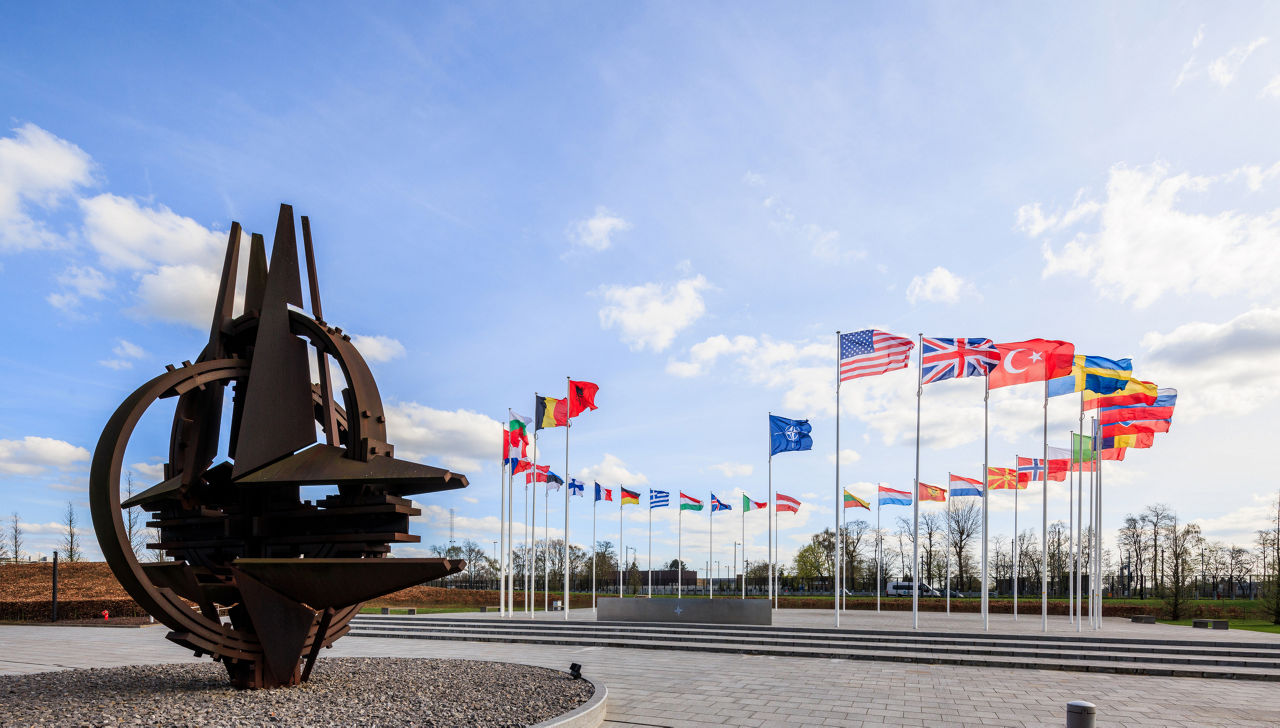
 The Australian Government has announced that Minister for Defence Industry and Minister for Pacific Island Affairs Pat Conroy will travel to Türkiye this week to represent the nation at the high-stakes 77th NATO Leaders’ Summit. The summit, which takes place in the Turkish capital of Ankara, marks the first time the alliance has convened on Turkish soil in 22 years. It arrives at a critical juncture for international relations, as global leaders grapple with expanding strategic uncertainties spanning both the Euro-Atlantic and Indo-Pacific regions.
Conroy’s attendance underscores Canberra’s deepening commitment to its northern hemisphere allies. While Australia is not a formal member of the North Atlantic Treaty Organization, its presence at the table reflects a growing recognition that contemporary security threats are interconnected and no longer confined by geography.
A primary pillar of Australia’s engagement at the summit will be its ongoing support for Ukraine’s sovereignty. The trip follows closely on the heels of the Albanese government’s announcement last month of an additional $100 million in military and self-defence assistance to Ukraine. This recent funding package is designed to bolster Ukraine’s military capabilities amid its ongoing conflict with Russia, aligning Australia’s practical actions directly with broader NATO mandates. According to defence officials, the contribution reinforces Australia’s standing as a highly dependable non-member partner dedicated to maintaining international law and resisting unilateral aggression.
During his address to NATO members and allies, Conroy is expected to emphasise how regional stability in Europe directly influences security dynamics in Australia’s own backyard—the Indo-Pacific. Australia’s relationship with NATO is built on decades of operational cooperation, most notably through shared deployments in Afghanistan and Iraq. However, in recent years, the partnership has evolved from tactical military cooperation into a robust, institutionalised strategic dialogue.
Australia is recognised by NATO as an “Indo-Pacific Partner”—part of an elite cohort often referred to as the Indo-Pacific Four (IP4), which also includes Japan, New Zealand, and South Korea. The inclusion of the IP4 at consecutive summits highlights a major structural shift within NATO’s long-term strategy. As the alliance faces pressure to address global supply chain vulnerabilities, cyber warfare, and the geopolitical rise of China, Western allies have increasingly looked to democratic partners in Asia and Oceania to build a unified front.
The Ankara summit is expected to focus heavily on defence burden-sharing and increasing conventional military capabilities, with high-profile leaders like U.S. President Donald Trump in attendance. In this environment, Australia’s presence ensures that Pacific priorities are heard by the world’s most powerful military alliance.
For Conroy, the summit also presents a vital economic and industrial opportunity. In addition to formal addresses, Conroy will hold a series of high-level bilateral meetings focused on defence industrial collaboration. This push aligns with the government’s recently unveiled 2026 Defence Industry Development Strategy, which seeks to scale up Australia’s domestic manufacturing, sovereign supply chains, and technological self-reliance. By talking directly with NATO primes and defence ministers, Canberra hopes to open doors for Australian defence exports and foster joint research initiatives in next-generation military tech.
“In an increasingly complex and challenging world, Australia’s partnership with NATO serves to support a world that is peaceful, stable and prosperous,” Conroy said ahead of his departure. “While our regions may be far apart, our interests are increasingly connected and cooperation is vital to our shared security, resilience and opportunity.”

For Editorial Inquiries Contact:
Editor Kym Bergmann at [email protected]
For Advertising Inquiries Contact:
Group Sales Director Simon Hadfield at [email protected]